Ali review
AliExpress over-door wardrobe organizer: measure before filling it with clothes
A practical look at an AliExpress over-door wardrobe organizer and a closet-rod fabric shelf: door clearance, pocket depth, sagging, and folded-clothes fit.
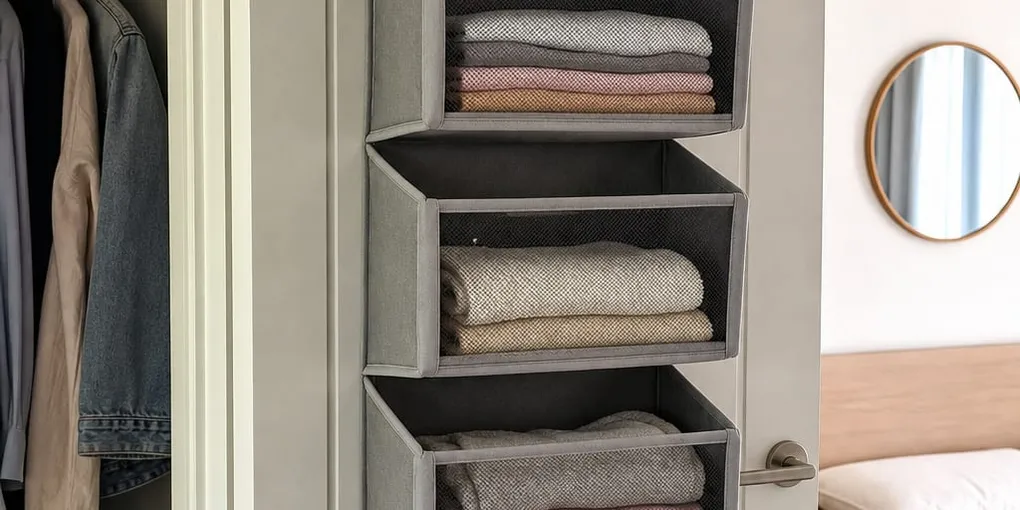
When a wardrobe is short on shelves, a hanging organizer can look like an easy fix. Folded T-shirts and towels get their own vertical space, and the whole thing feels like adding a small drawer. The catch is that most of these products are fabric pockets, not rigid shelves, so the load path matters.
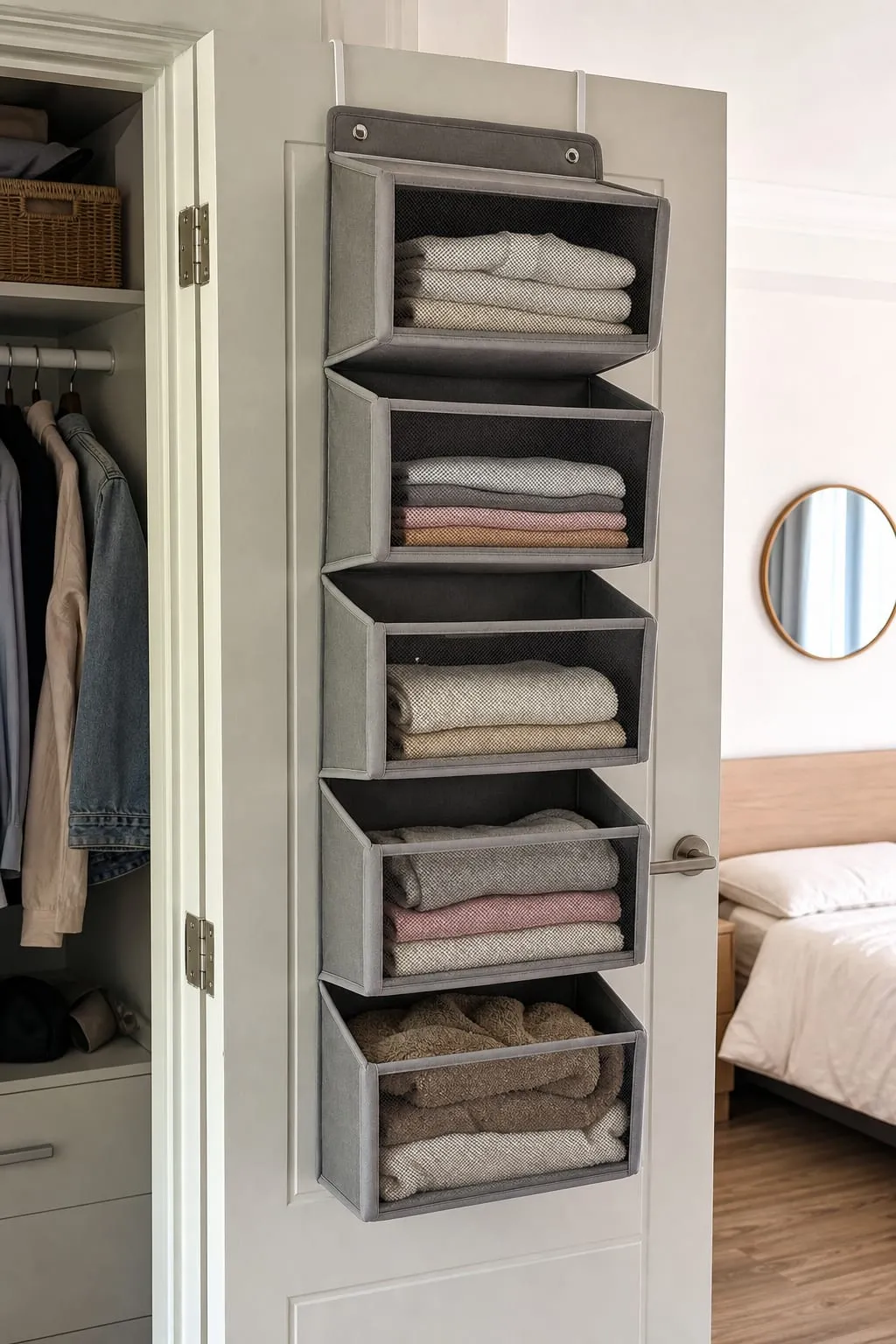
The first item I would check is this 5-tier over-door hanging organizer. It hangs from the top of a door rather than from the closet rod, so it does not add more weight to a rod that may already be full of clothes.
Check The Door First
The number of pockets is not the first question. The first question is whether your door can actually take the hooks. Check door thickness, top clearance, frame clearance, and whether the door still closes without scraping. This is the kind of product that can look right in photos but feel annoying if the hooks are too tight.
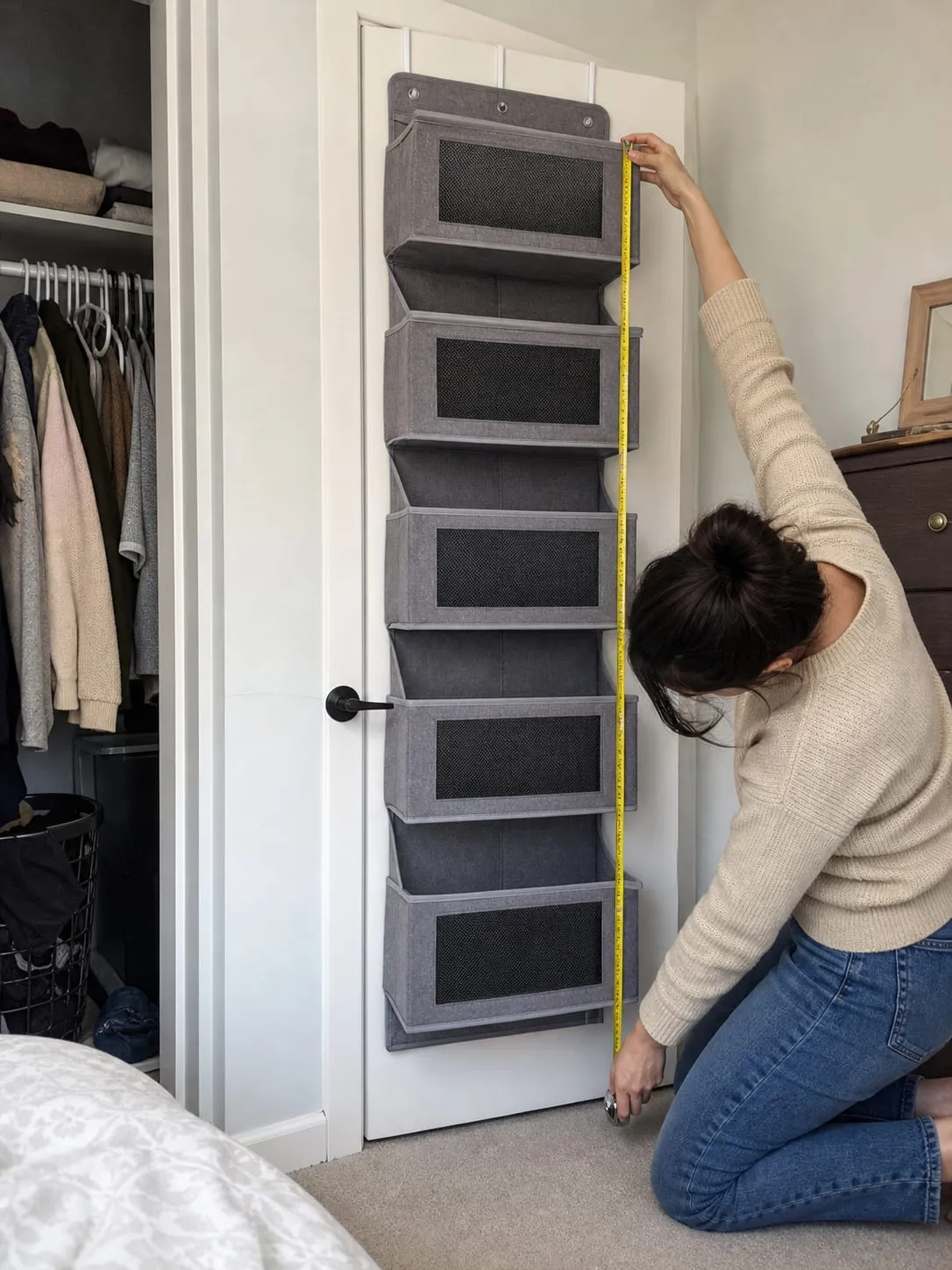
The total drop also matters. A five-tier organizer can run close to the handle area or sit too low on a shorter door. It can work behind a bedroom door, wardrobe door, or bathroom door, but a door that opens and closes all day will make the lower pockets swing more.
Keep Folded Clothes Light
This style is best for thin T-shirts, small towels, underwear, socks, light knitwear, or soft accessories. One modest stack per pocket is the cleanest use. Leaving some space in each pocket helps the organizer keep its shape.
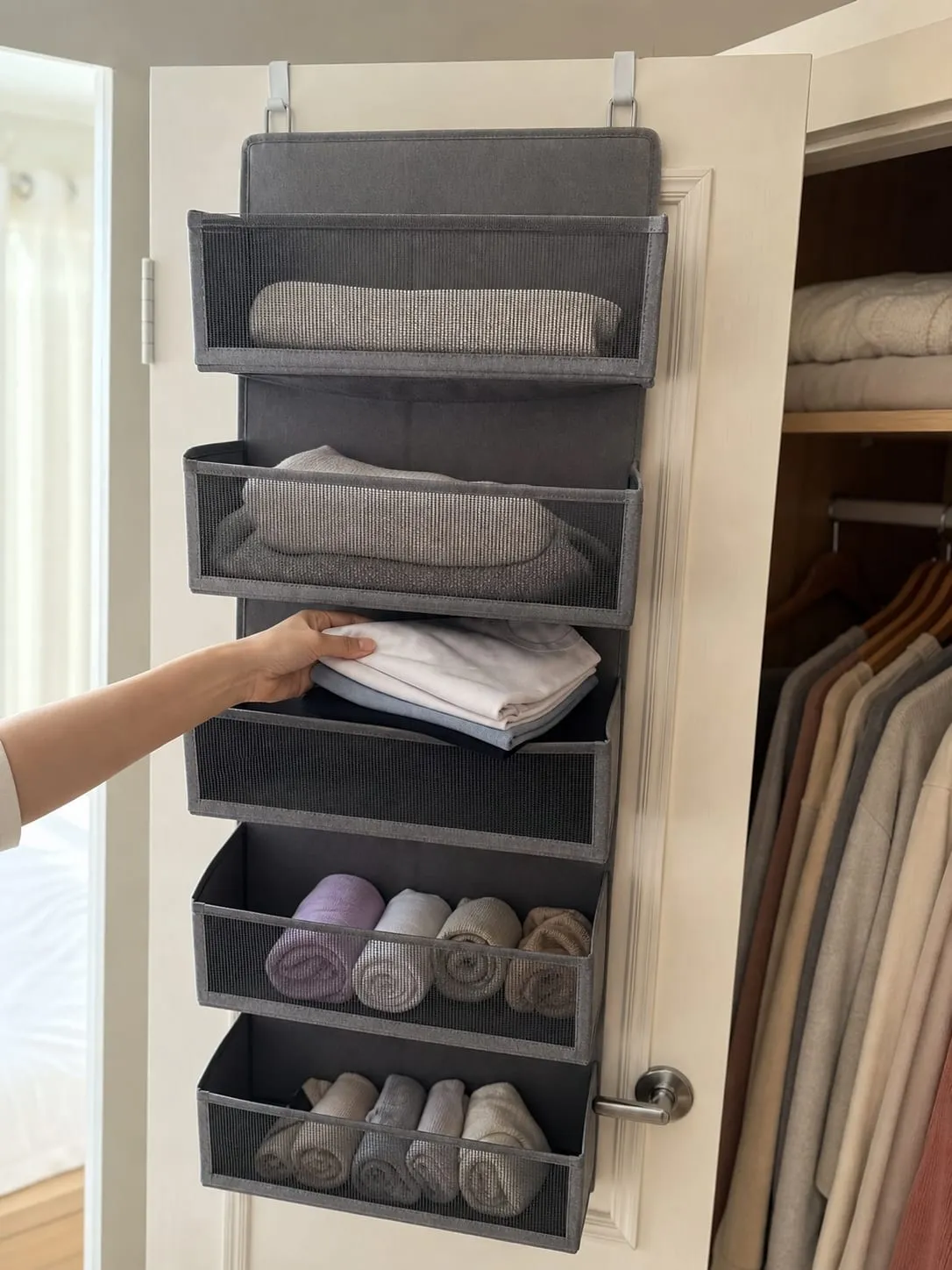
I would not treat it as storage for dense items such as jeans, heavy hoodies, bags, books, or shoes. Those push the pocket fronts outward and can make the whole organizer lean. Think of it as moving light clutter onto the back of a door, not as creating a real set of shelves.
Some Sagging Is Part Of The Category
Product photos can make the pockets look very square, but fabric organizers usually rely on stitched panels and light inserts. If you pack them tightly, the bottoms can bow and the front openings can spread. The lower pockets are where this tends to show first.
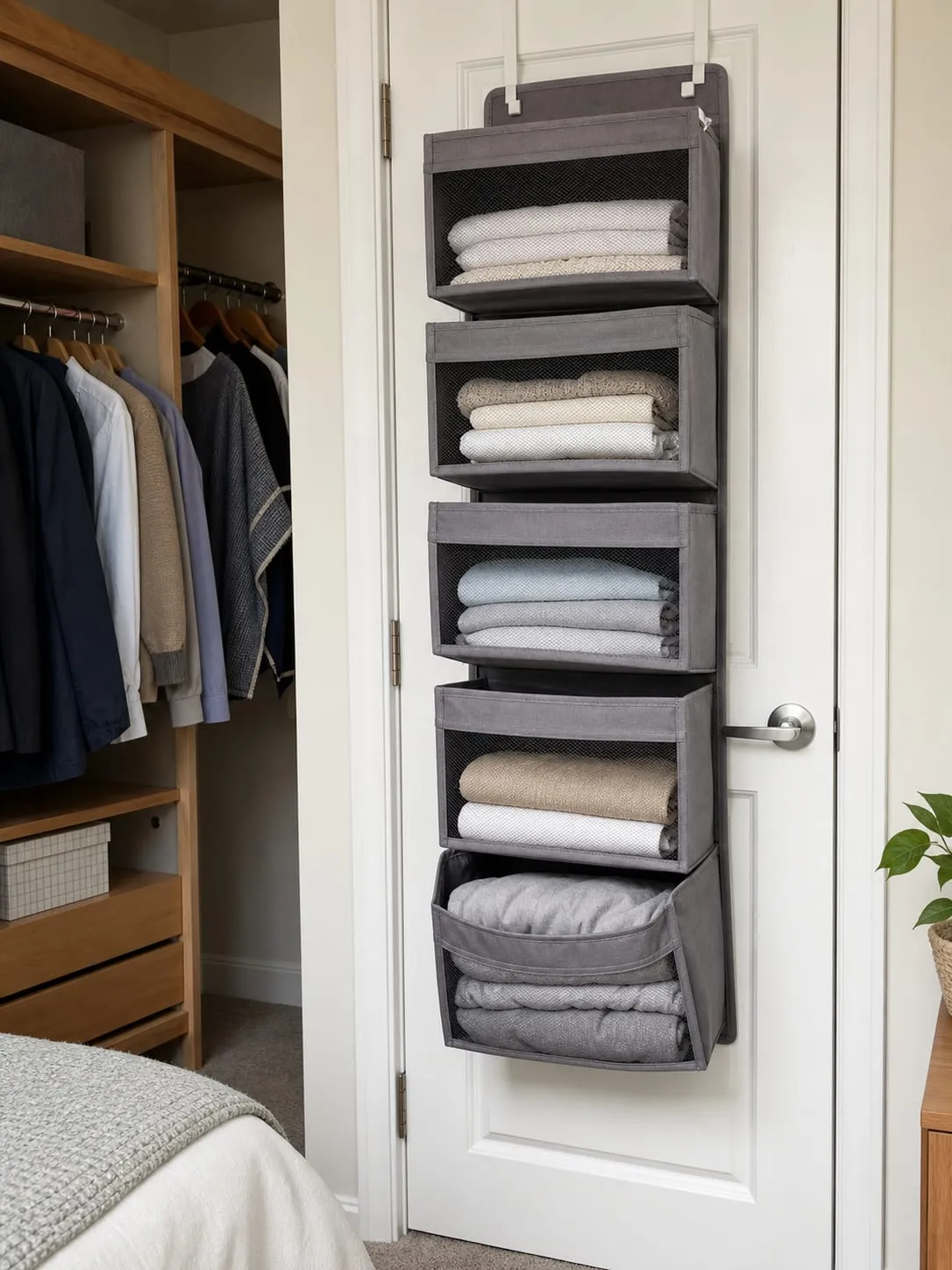
That does not make the product useless. It just means expectations need to be modest. Daily towels, thin homewear, kids’ clothes, and small soft items make sense. Heavy folded stacks do not.
For Inside The Wardrobe, Compare A Rod Shelf
If the goal is folded clothes inside the wardrobe, a fabric closet-rod hanging shelf is the more direct comparison. It hangs from the closet rod with straps or loops, then creates cubbies below the rail.
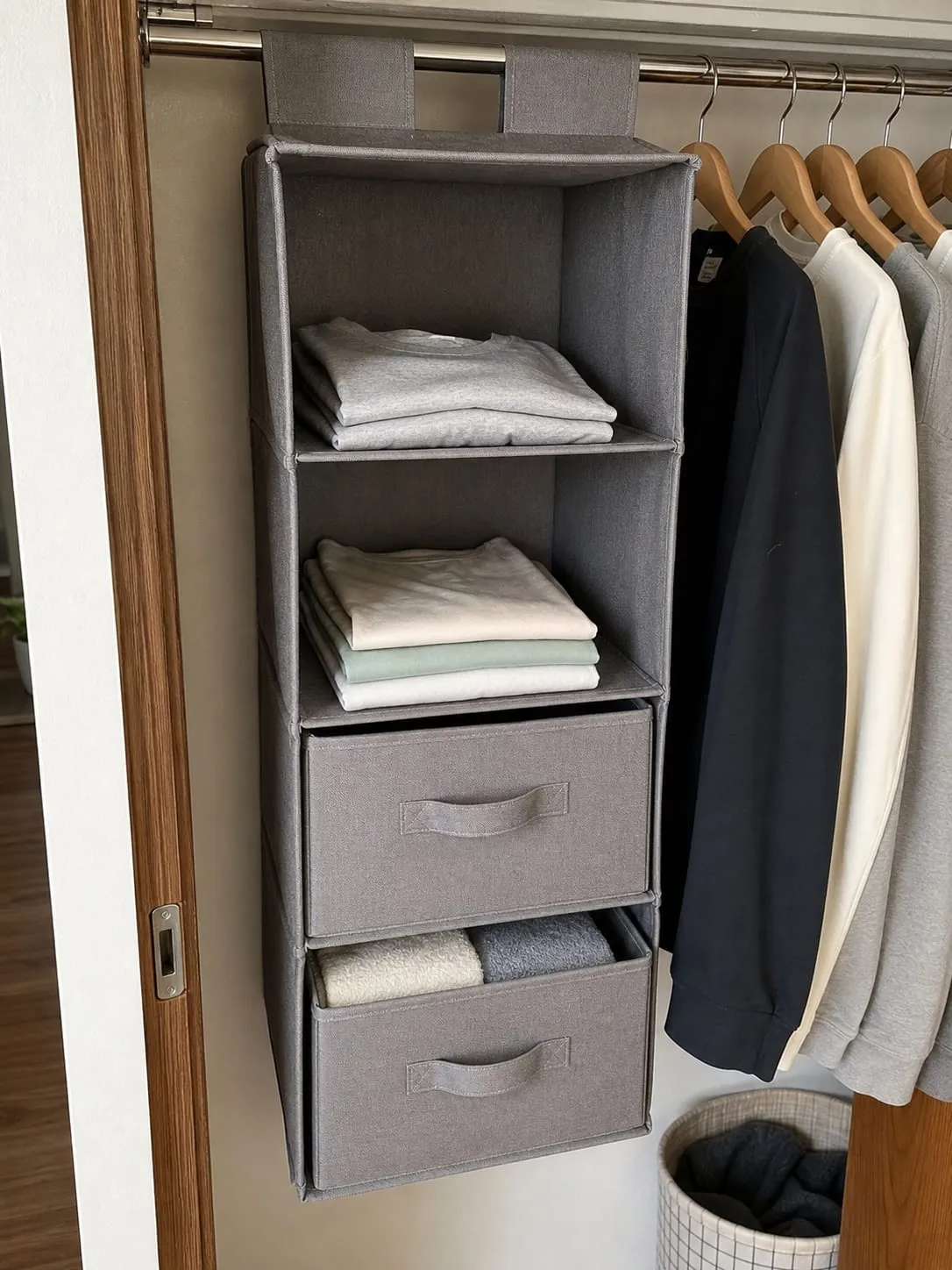
The tradeoff is obvious: the closet rod carries the weight. If the rod brackets are loose, the rod is a tension type, or the wardrobe side panels feel weak, load it very lightly. Also measure the full drop and depth, especially with sliding wardrobe doors or longer hanging clothes nearby.
Who It Suits
The 5-tier over-door organizer is worth a look if you want light storage behind a bedroom or closet door: towels, thin clothes, socks, small accessories, or everyday soft items. It is also useful when the closet rod is already too crowded.
I would skip it if you want to stack a lot of heavy folded clothing, if your door has almost no top clearance, or if the handle area overlaps the organizer. It is also not ideal for a door that gets slammed or moved constantly.
Final Take
An over-door wardrobe organizer is not a magic closet upgrade. It turns unused door space into light, visible storage. If the hooks fit, the drop length works, and you keep the load modest, it can be genuinely handy.
For heavy folded clothes or a clean shelf-like look, I would compare closet-rod fabric shelves or a more rigid storage unit instead. This one is best when you need light separation, not serious load-bearing storage.