Ali review
An Under-Shelf Hanging Basket Can Use The Empty Space Below A Shelf
AliExpress under-shelf hanging basket review, with notes on shelf thickness, door clearance, light storage, surface marks, humidity, and coating cautions.
Upper cabinets and pantry shelves often have unused air above small items while everything below gets stacked together. Tea bags, food wrap, napkins, pouches, and dish cloths are light, but they get messy fast. In that kind of space, a slide-in under-shelf basket can be simpler than adding a new shelf.
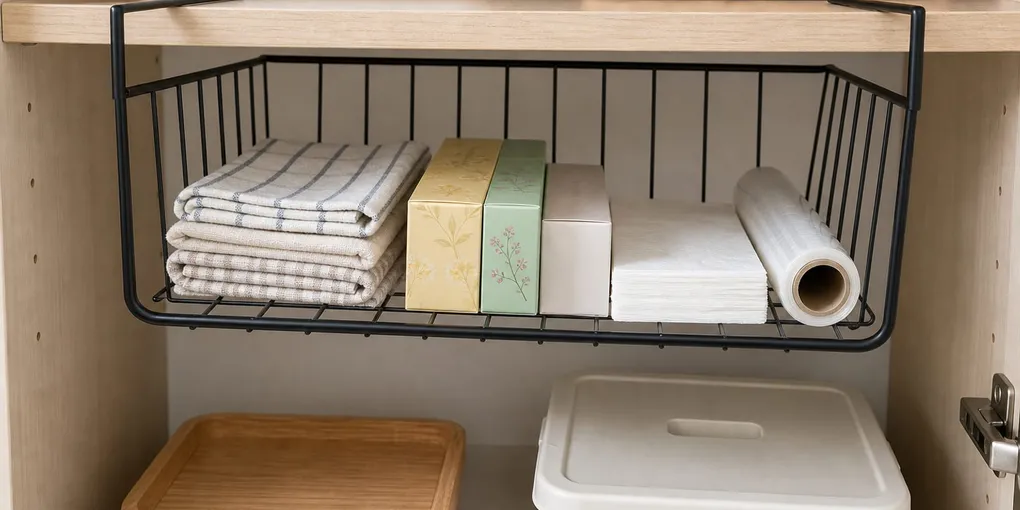
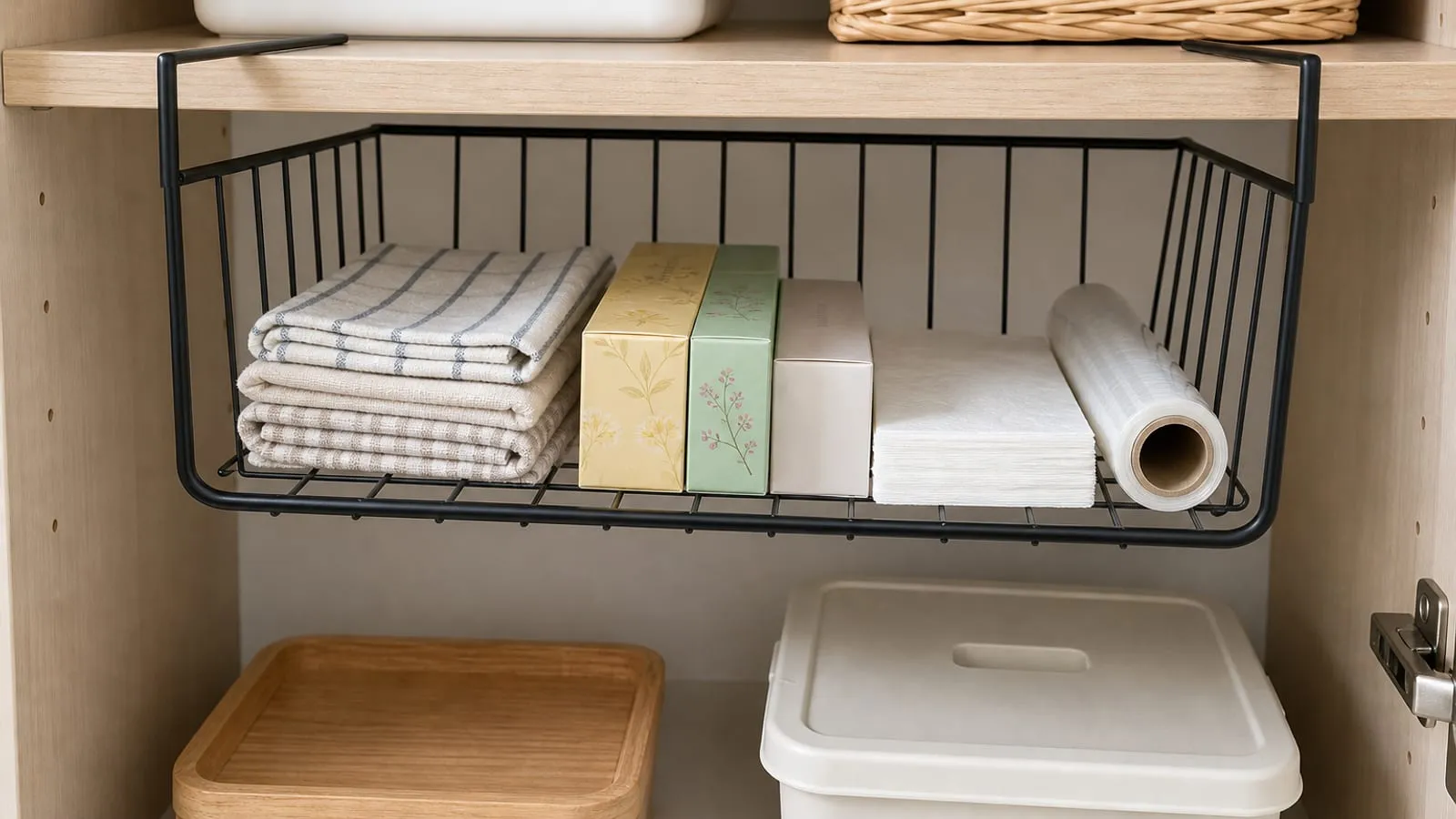
The first option worth checking is this wire under-shelf hanging basket. Based on the product photos, it is a black open wire basket with two long arms that slide over an existing shelf, leaving the basket hanging underneath.
Best For Light Everyday Items
The appeal is simple: it creates one more visible layer under a shelf. In a pantry, it can hold food wrap, zipper bags, tea boxes, napkins, and small snack packets. In a closet, it can work for scarves, pouches, thin cloth items, or other light accessories.
It is not a storage fix for heavy items. Plates, glass cups, cookware, large bottles, and cans are better kept on a fixed shelf. The no-drill structure is convenient, but the basket is still relying on the existing shelf and the slide-in arms.
Check Shelf Thickness And The Front Edge
Installation looks simple, but fit is the real question. The shelf has to be thin enough for the arms to slide fully over it. A thick front lip, trim piece, face frame, or raised edge can stop the basket from seating properly.
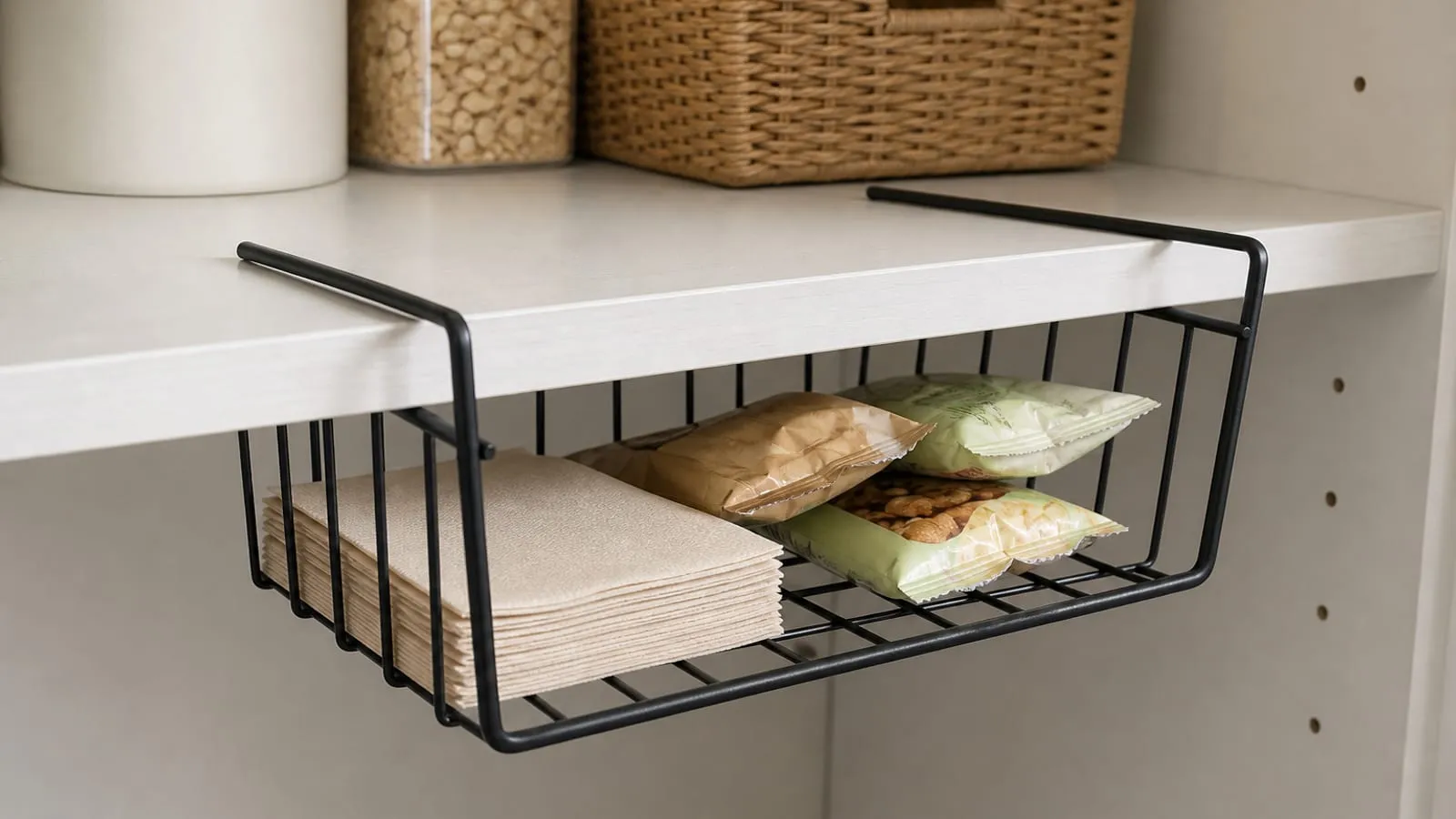
Vertical clearance matters too. If there is not enough room below the shelf, every item will scrape as you remove it. Before buying, check shelf thickness, basket height, lower clearance, and cabinet depth together.
Cabinet Doors Can Get In The Way
If the basket will live inside a cabinet, test the door path mentally before loading it. The front of the basket can hit the inside of the door or the hinge area. Cabinets with inner lips or framed doors can be more annoying than flat-front doors.
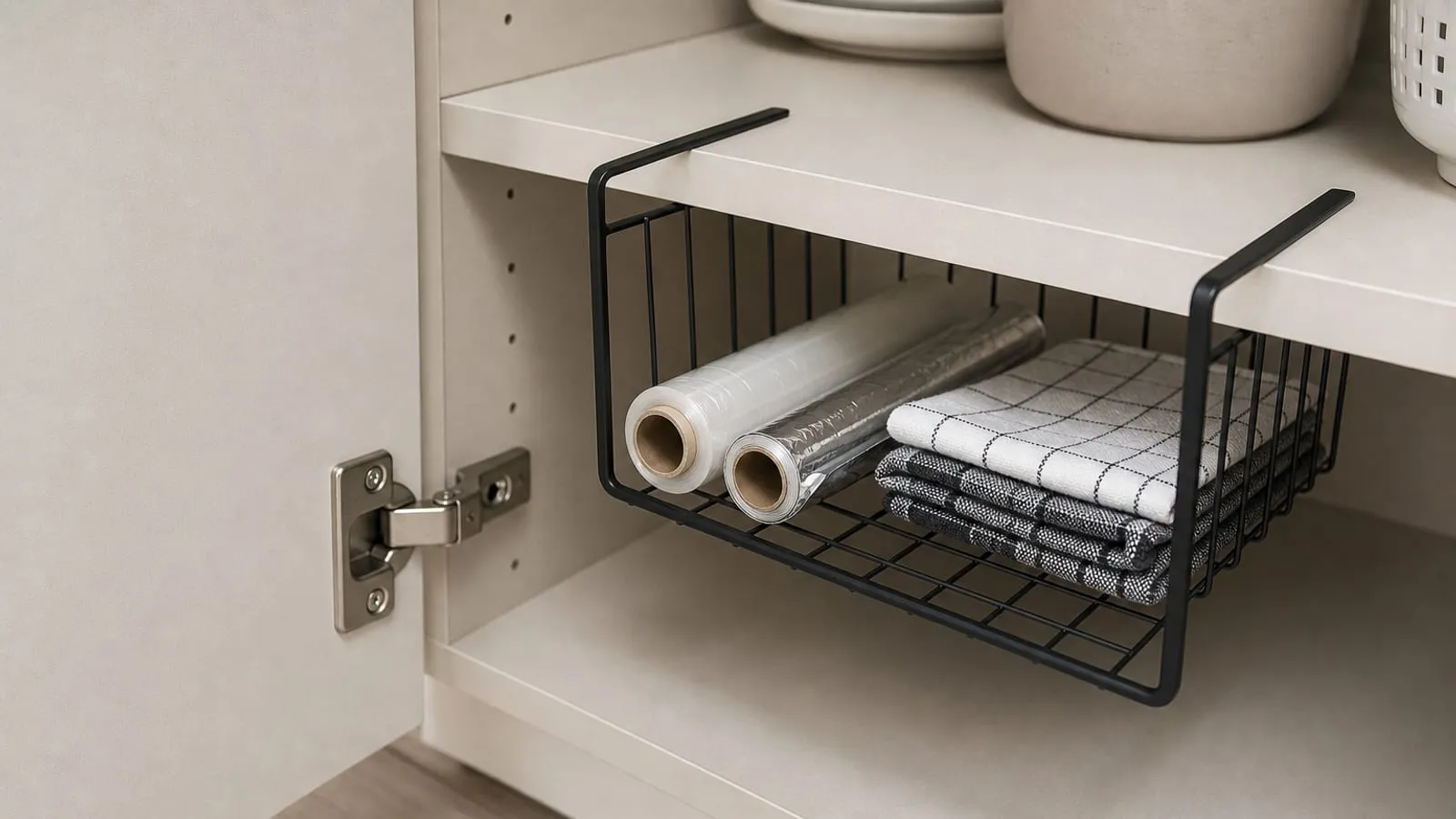
Avoid using it half-seated on the shelf. The arms should slide in fully to reduce forward tipping. When taking things out, pull the item straight out instead of yanking the basket sideways.
Keep The Heavy Stuff Below
This kind of basket works best when it makes small light things visible. Dish cloths, tea packets, small pouches, and food wrap make sense. Plates and glass jars belong on the fixed shelf below.
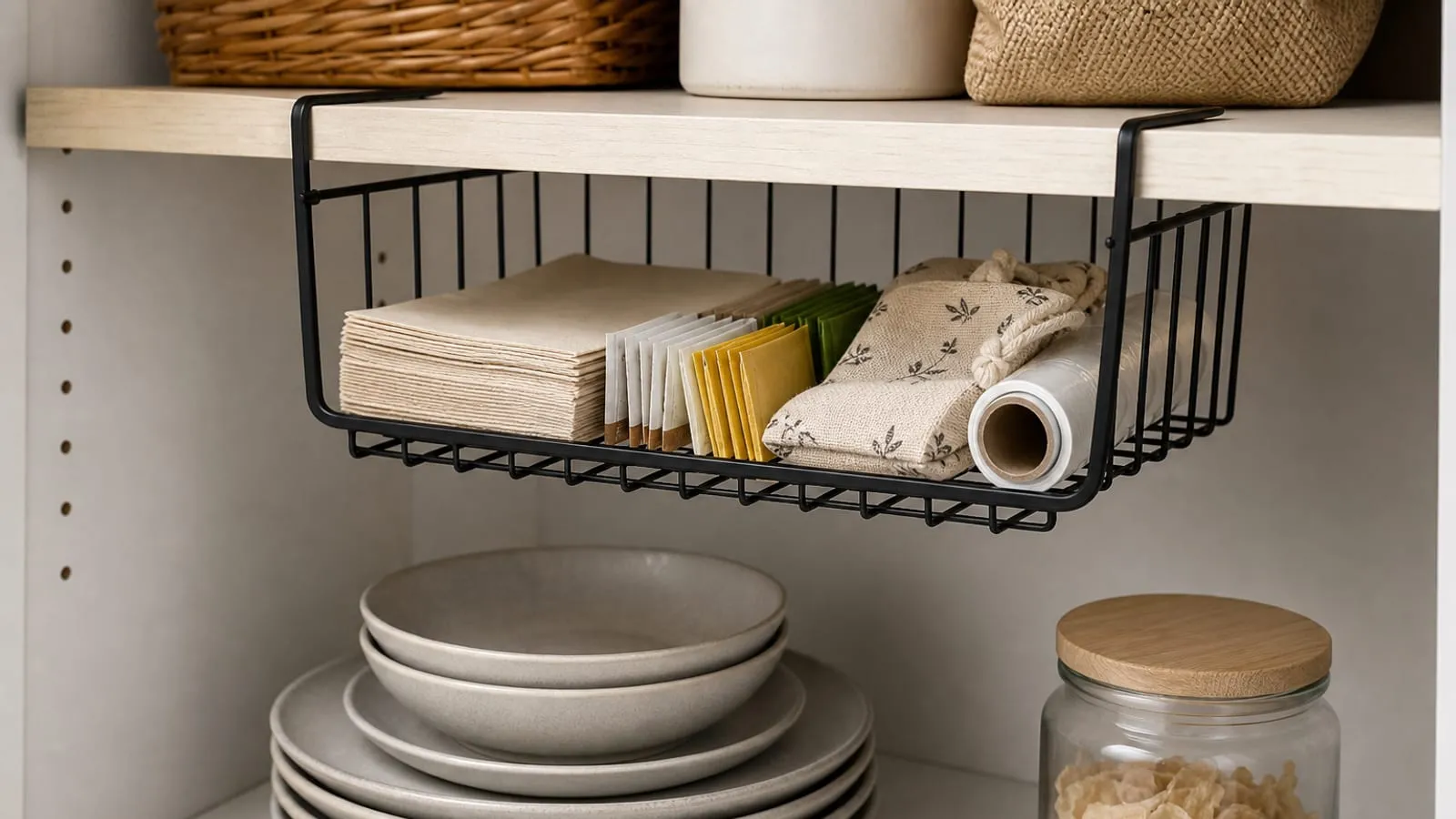
If the shelf already sags or feels thin, be extra careful. Even if the basket looks sturdy, the real support point is the original shelf. If the shelf bends or the basket leans forward after loading, remove weight right away.
Watch For Marks And Moisture
The coated metal arms press against the top and underside of the shelf edge. Painted shelves, laminate, soft wood, veneer, or peel-and-stick finishes can mark over time. Thin clear pads or felt pads may help, but they also change the fit, so test carefully.
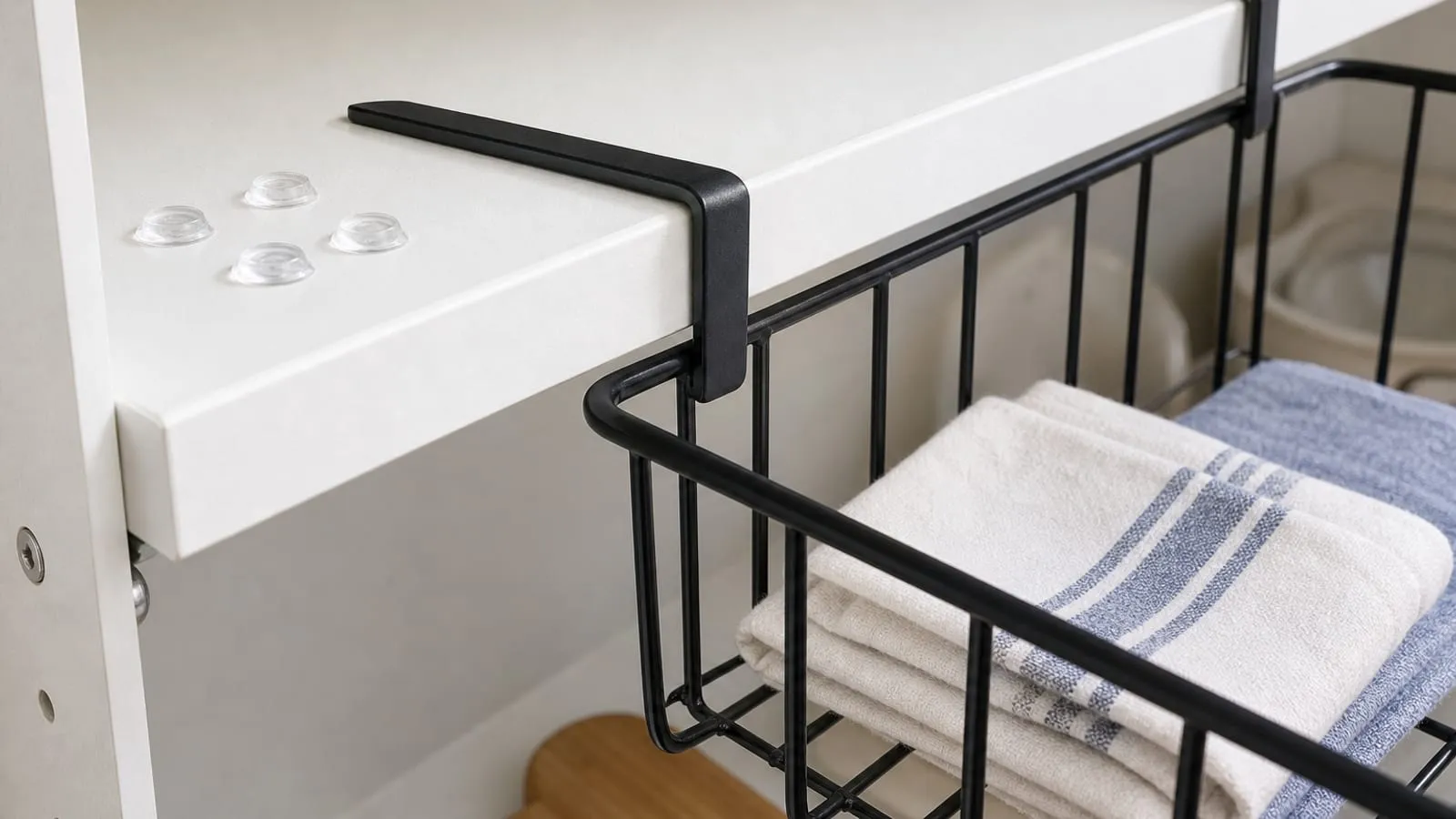
Moisture is another reason to be cautious. Near a sink or in a laundry room, chipped coating and rust become more relevant. A dry pantry or closet shelf is a calmer place for this style of basket.
Comparison Options
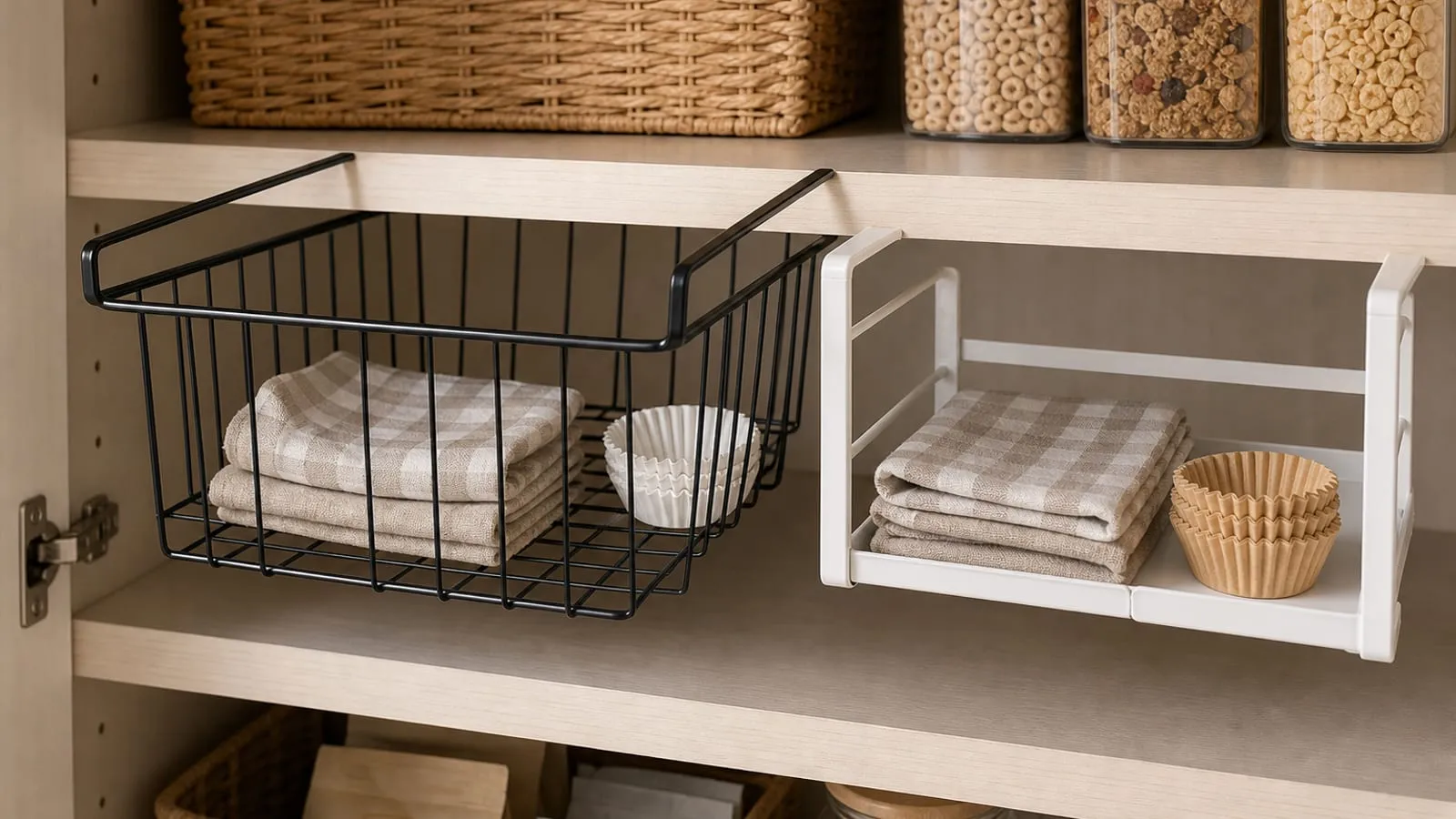
If you want a cleaner white tray look, the flat slide-in under-shelf holder is worth comparing. It is more like a shallow shelf than a deep basket, so it may suit cloths or flat pouches. The tradeoff is that small items can roll off more easily.
The extendable under-shelf basket is worth checking if width adjustment matters. Adjustable parts add more fit points, though. If you want a broader rack, the adjustable metal under-shelf rack is another comparison, but the more complex the structure, the more careful the measuring needs to be.
Bottom Line
The wire under-shelf hanging basket is worth considering if you want to use empty space below a pantry, kitchen, closet, or shelf for light items. It is especially useful where small things keep getting buried.
The key is fit, not strength. Check shelf thickness, front lips, door clearance, lower height, and possible surface marks first. For dishes, bottles, cookware, or anything heavy, a fixed shelf or another storage method is the better direction.