Ali review
T-shirt stacking boards are for access, not more closet space
A practical AliExpress review of plastic T-shirt stacking boards for closet shelves, covering shelf size, panel count, thin plastic flex, thick clothing limits, packaging bends, and dry wardrobe use.
Folded T-shirt stacks look tidy until you pull one shirt from the middle. Then the shirts above move, the pile shifts, and a clean shelf starts looking messy again.
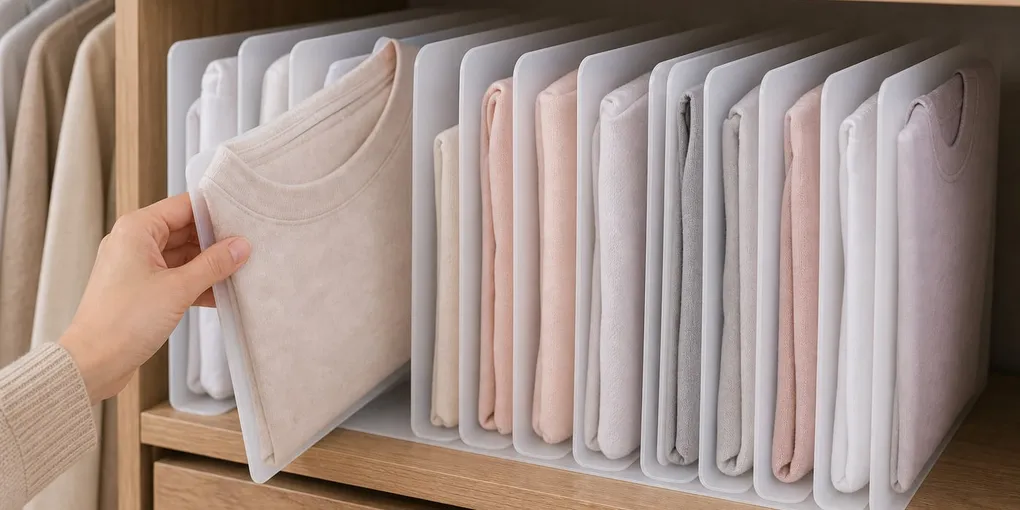
The product here is a plastic T-shirt stacking board organizer. Based on the product photos, it uses thin translucent plastic boards as layers between folded clothes, so the shirts stand on a shelf more like files.
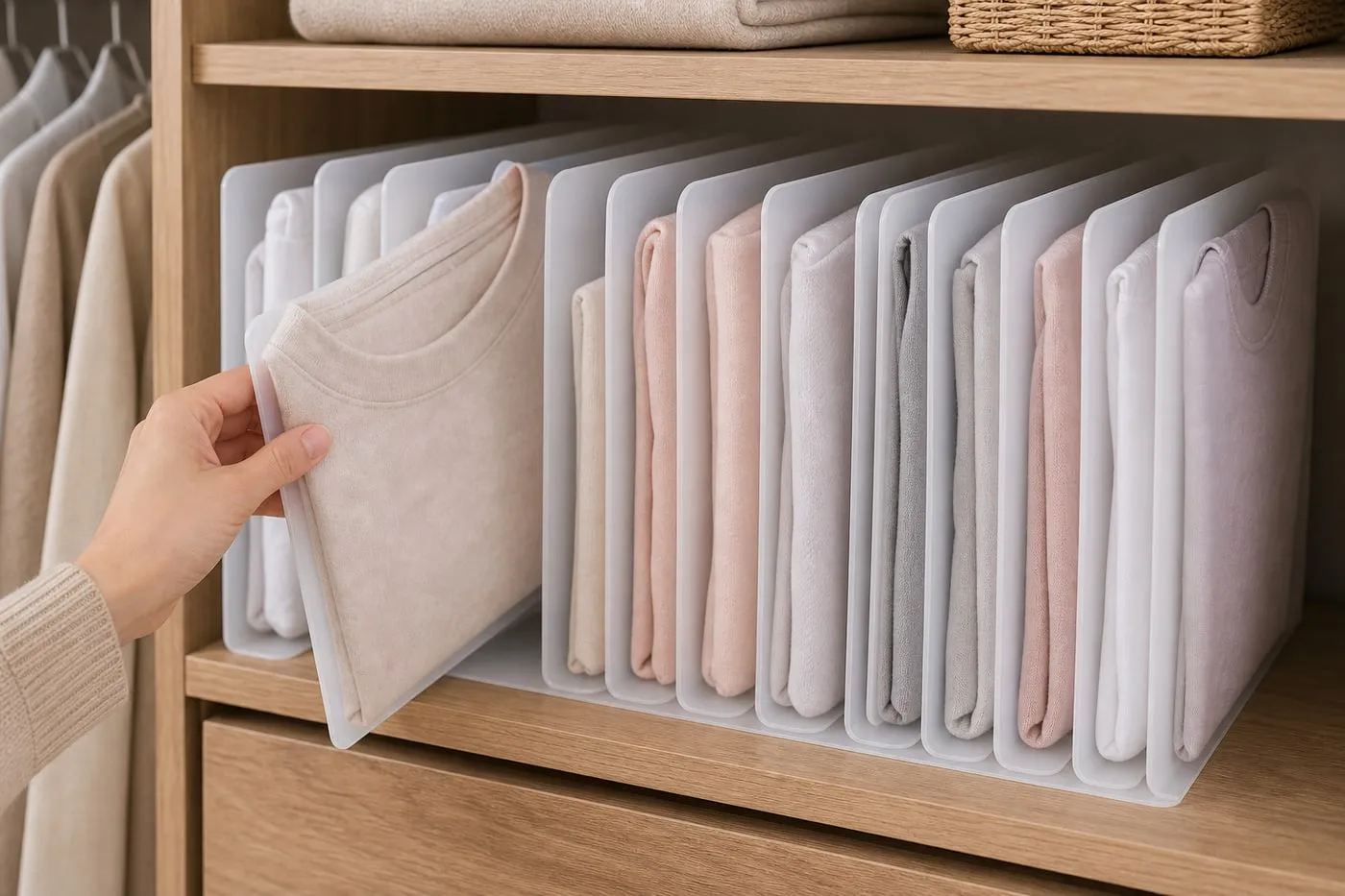
It is about access, not capacity
This is not a way to make the closet larger. It is a way to separate folded layers so you can see and pull one item more easily.
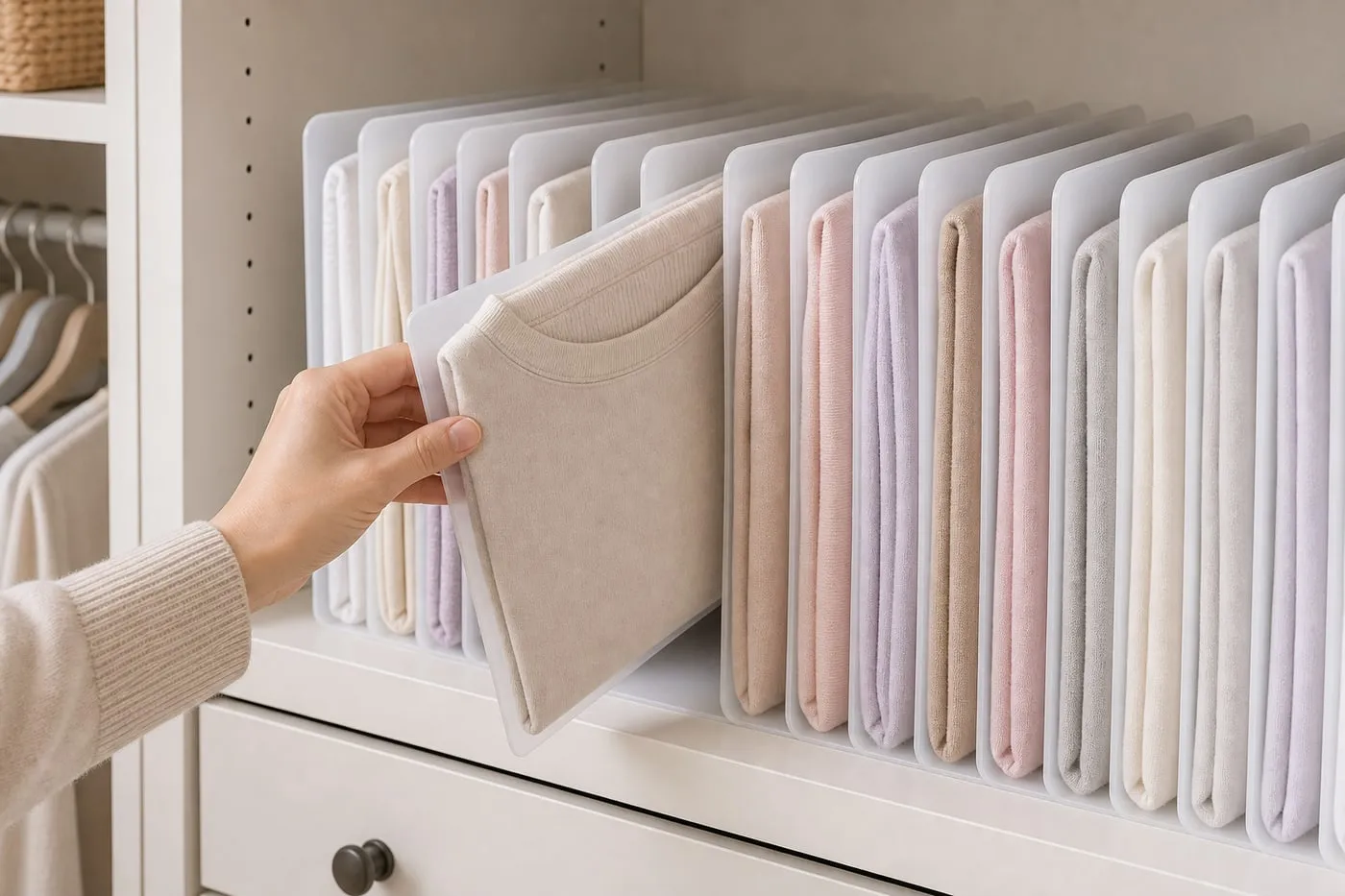
It makes the most sense for T-shirts, light homewear tops, and thin long-sleeve shirts that fold to a similar size. If every piece has its own layer, the shelf becomes easier to scan.
Measure the shelf first
Before choosing a set, check the shelf width, depth, and height. The boards need to sit flat, and the full stack still needs room below the shelf above it.
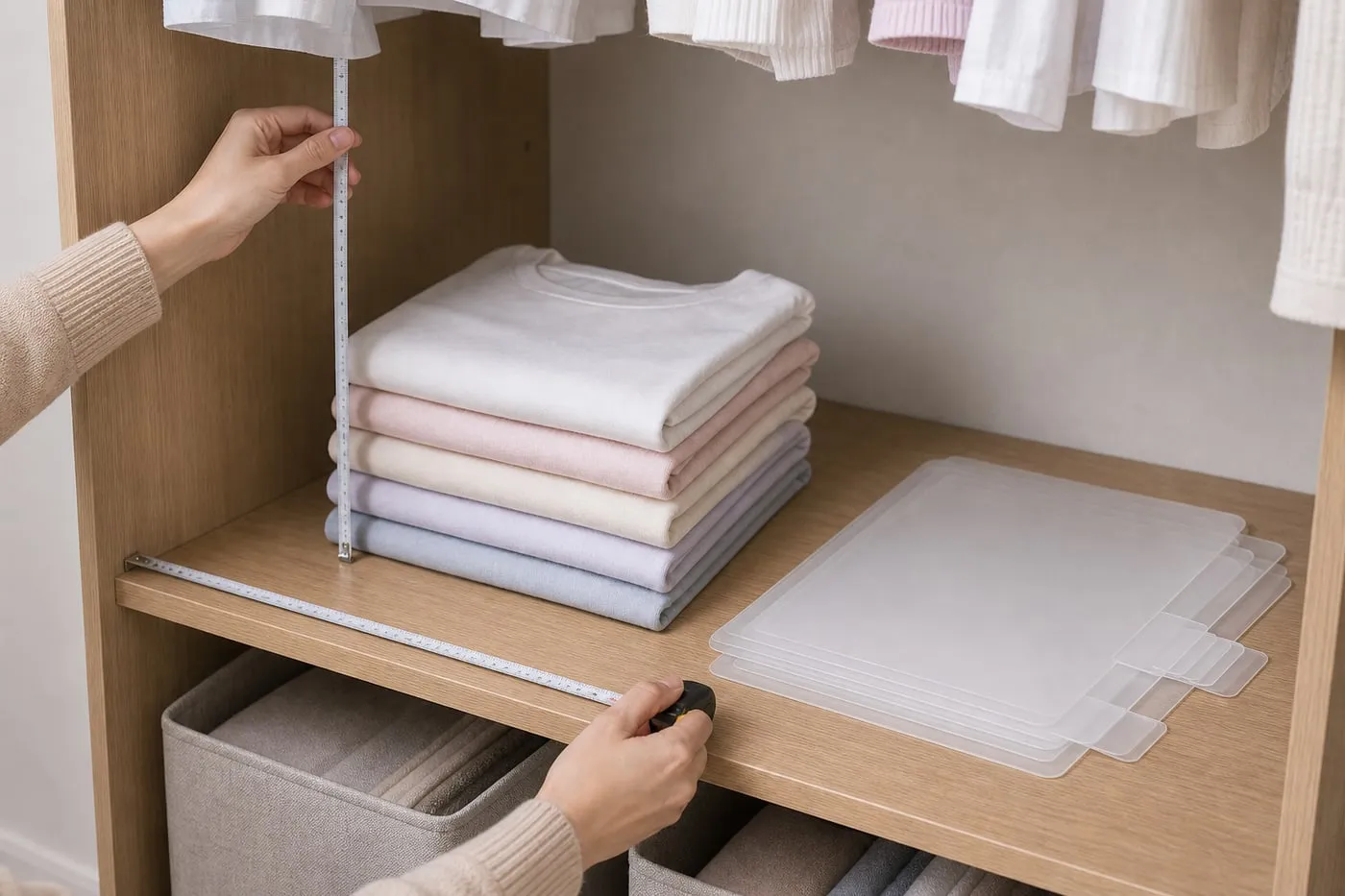
If the shelf is shallow, the boards can stick out. If the shelf is low, the board thickness plus folded clothes may use more vertical space than expected.
Match panel count to your shirts
Set size matters. If you have many shirts but only a few boards, the shelf may become half-organized and half-pile.
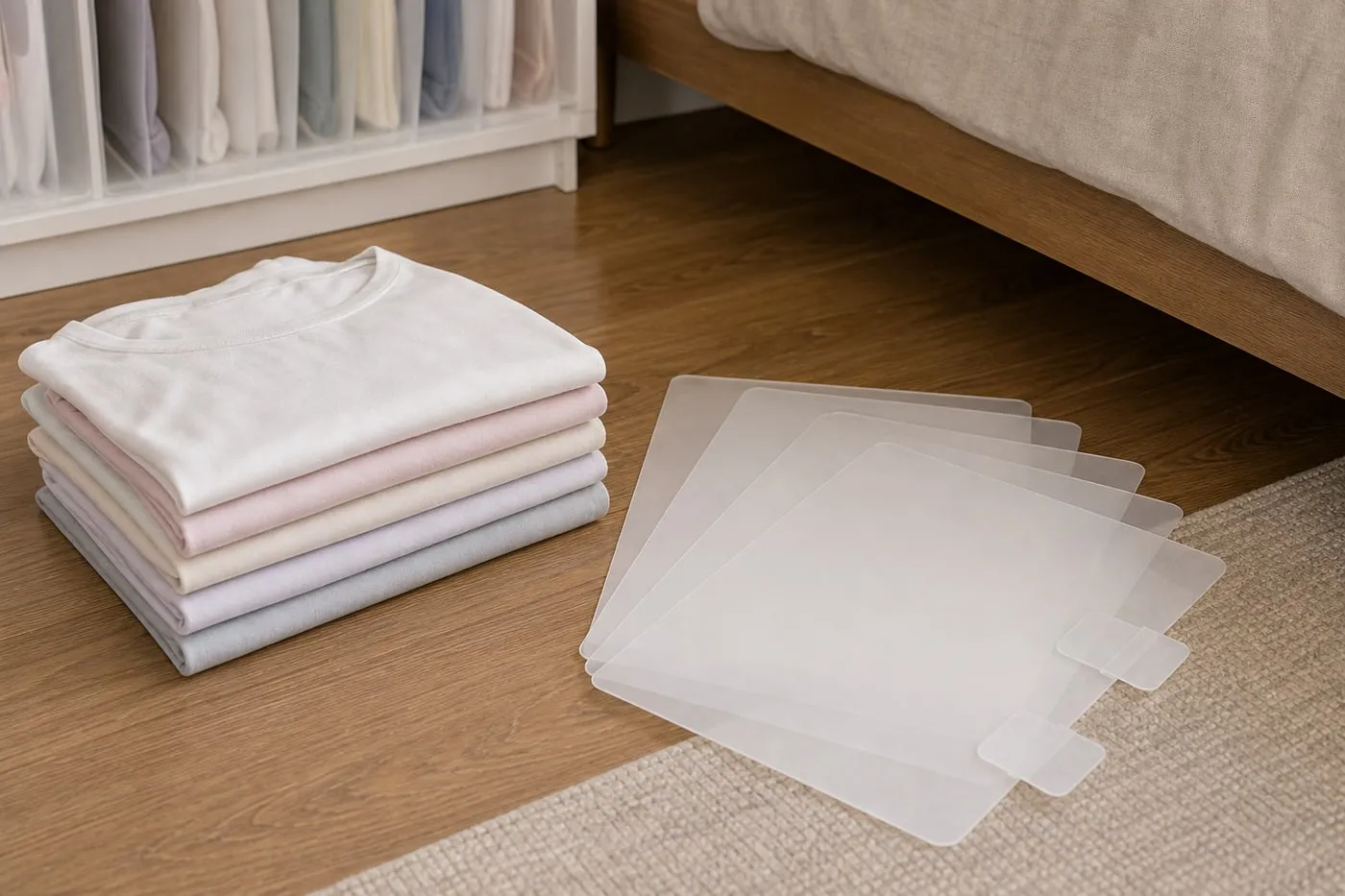
Too many spare boards can also become another loose plastic stack. Count the shirts you actually want to separate before picking an option, and start with the items you reach for most often.
Thick clothing is a poor match
The board style is best for thin folded tops. Bulky hoodies, thick sweaters, denim, and winter layers take up height quickly and can make the boards flex.
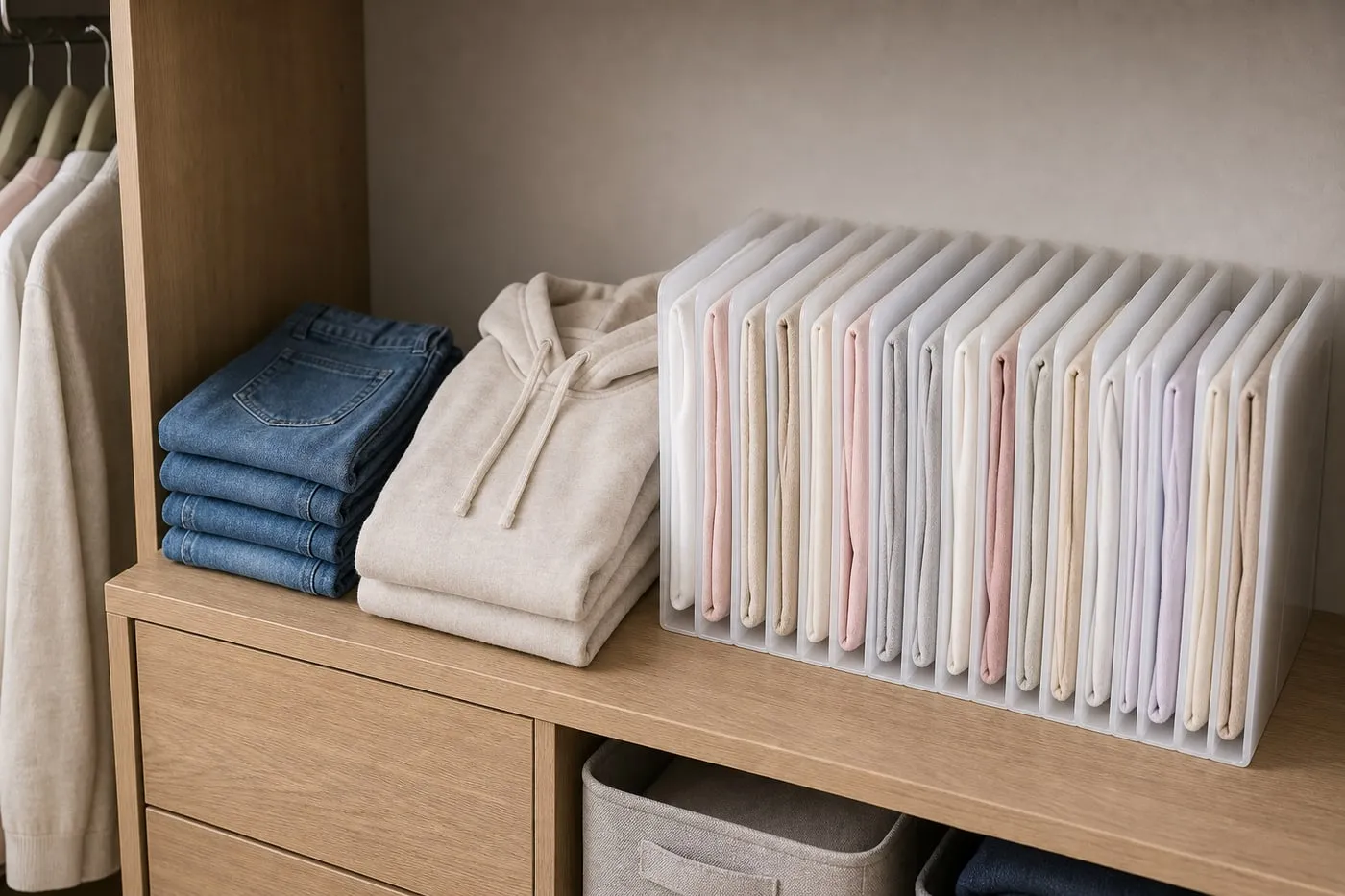
If you try to put every seasonal item into this system, the closet may feel tighter. Use it where similar thin tops are the main problem.
Thin plastic needs a check
The product is built around thin plastic boards. That means the condition of the panels matters: flatness, corner finish, tabs, and whether any panels arrive bent.
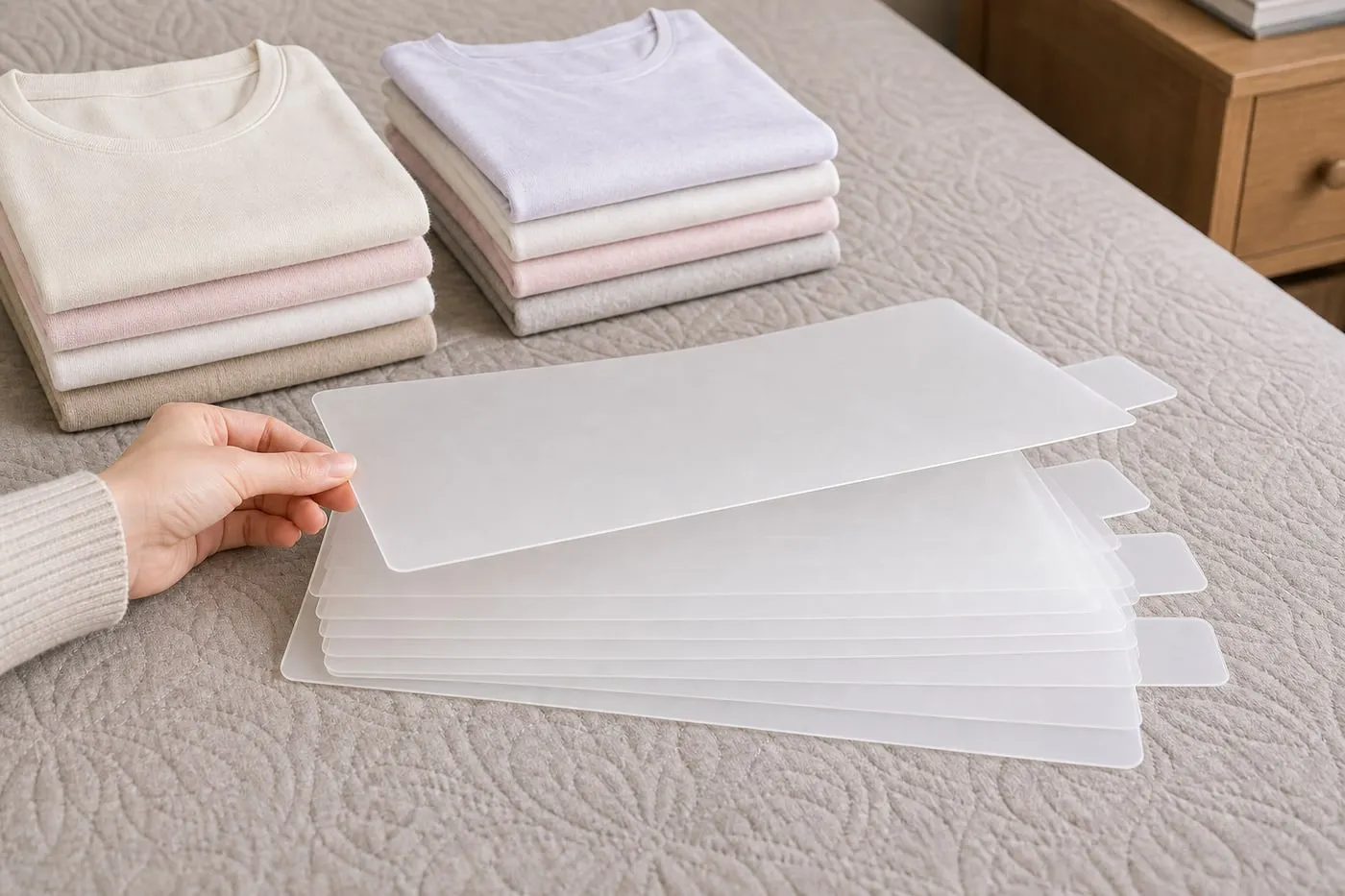
If there is packaging smell, air the boards out before placing them with clothes. Keep the use case simple: dry folded clothes on a dry wardrobe shelf.
Verdict
The plastic T-shirt stacking board organizer is worth considering if folded shirts collapse into a messy pile whenever you pull one from the middle. It is a visibility and access tool, not a capacity upgrade.
Check the shelf size, panel count, shirt thickness, and plastic condition before buying. For light folded tops, the idea is clear. For thick clothing or crowded shelves, it may add structure without solving the main space problem.