Ali review
A stackable desk paper tray is for active papers, not everything
A practical AliExpress review of a white multi-layer desktop paper tray for active printouts, envelopes, thin notebooks, and light folders, with checks for shelf spacing, desk footprint, assembly, and light use.
Desk paper clutter is different from stored document clutter. Printouts, envelopes, thin notebooks, and papers to check later often need to stay visible because they are still in use. Once they become one flat pile, the bottom papers disappear.
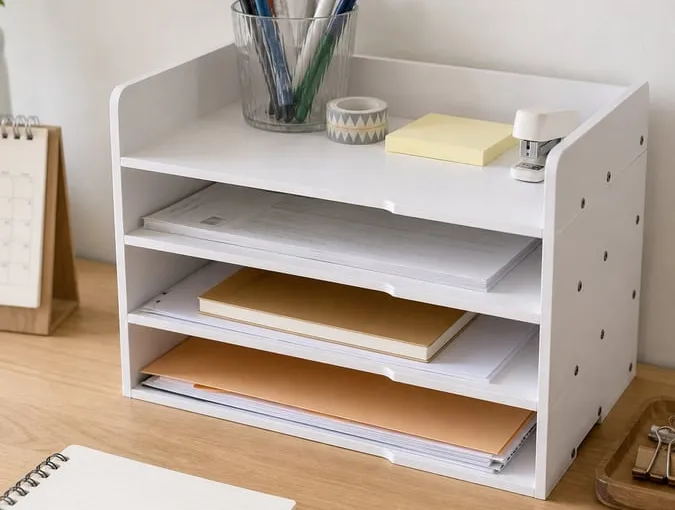
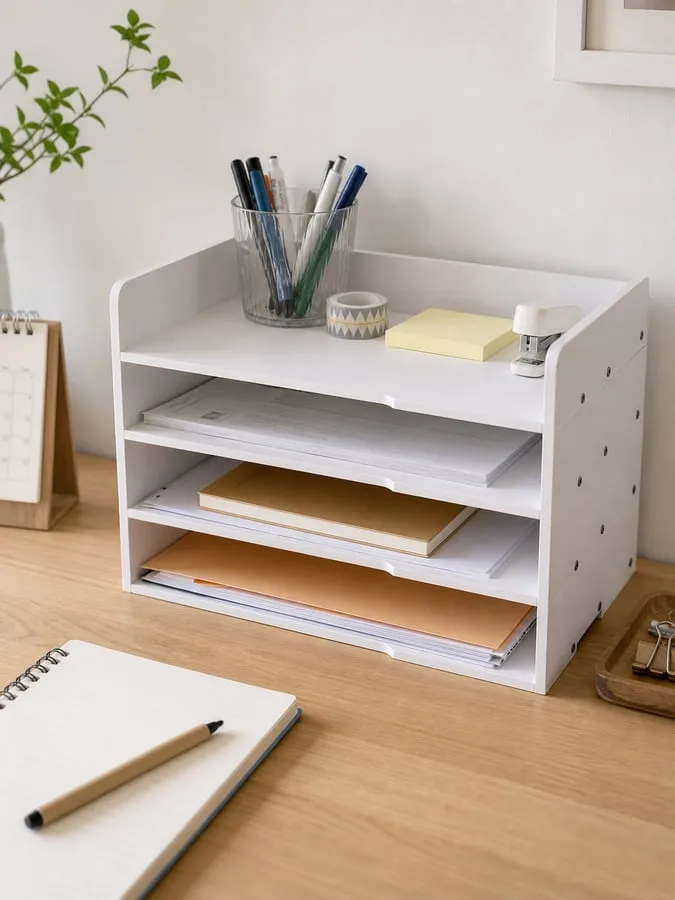
The product here is a white multi-layer desktop paper tray. Based on the product photos, it is an open-front white tray with multiple shelves for paper and a shallow top area for small stationery.
Think active-paper landing zone
This is not a long-term document case. It makes more sense for papers you still touch during the week: printouts, envelopes, worksheets, thin notebooks, and light folders.
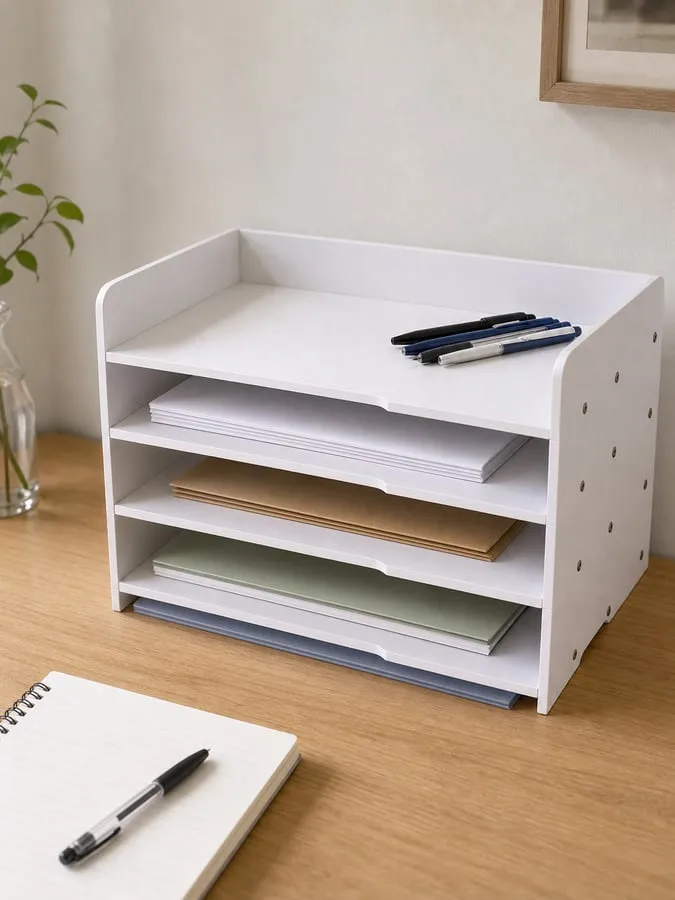
The open front is the point. You can slide paper in and out without opening a folder, but if every shelf becomes a random stack, the tray just turns into a taller pile.
Check shelf spacing before the title wording
Even if a listing title mentions larger paper sizes, the selected option dimensions matter most. A few sheets need little height; a tab folder, thin notebook, or envelope needs more space to slide in and out.
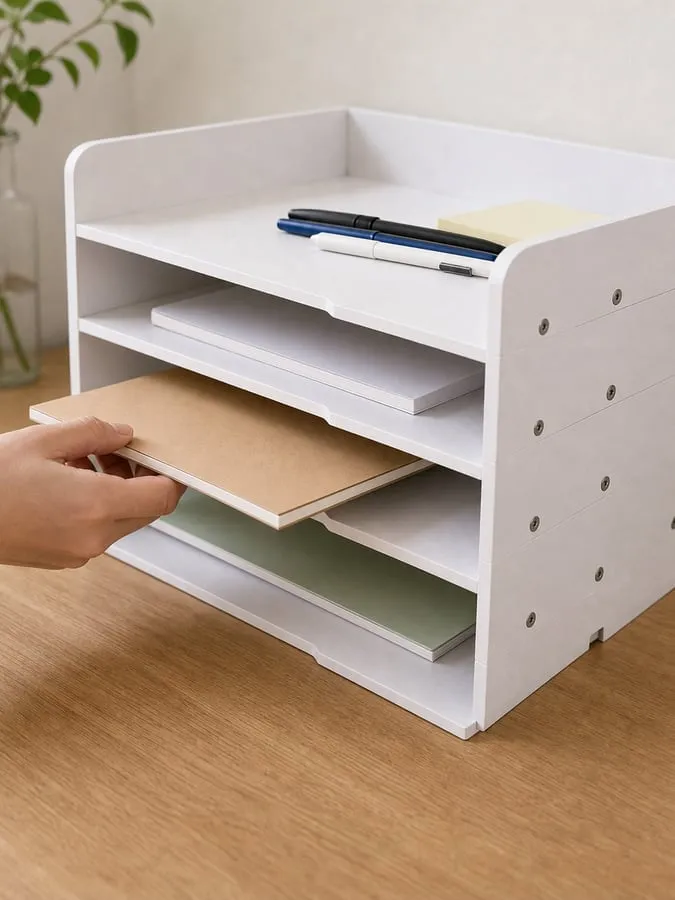
Before ordering, think about the papers on your own desk. Are they A4, Letter, envelopes, thin notebooks, or folders? The tray only helps if the shelf opening matches that mix.
Assembly details can matter
White desktop trays like this often look flat-pack in the product photos, with side panels, shelf panels, and small screws. A clean finished photo does not tell you everything about screw holes, panel bowing, edge finish, or leftover protective film.
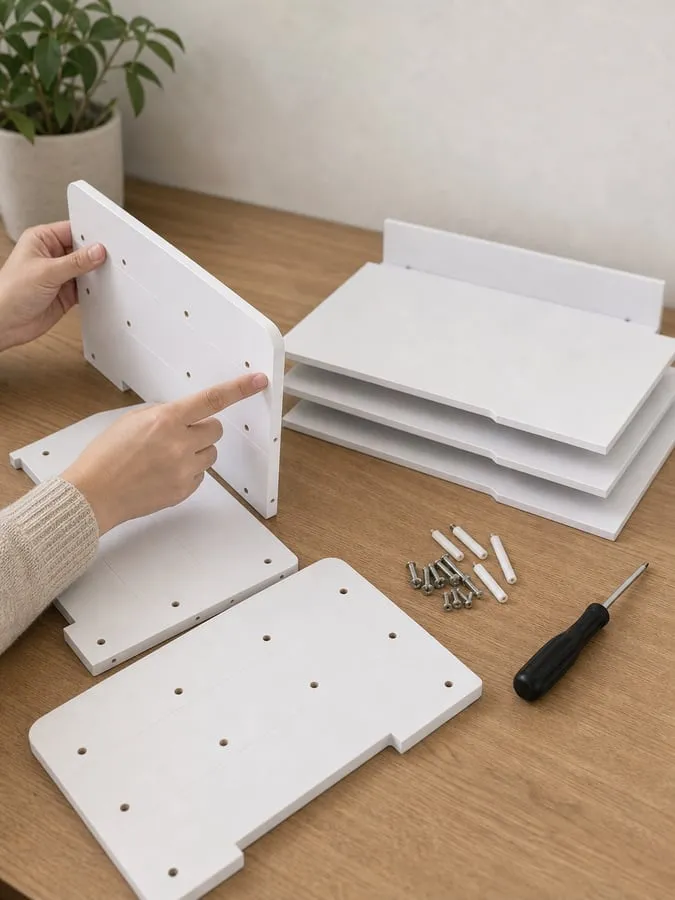
Start with a light load and check whether the shelves sit evenly. If the side panels spread or the shelves visibly bow, reduce the stack.
Paper gets heavier than it looks
Loose paper feels light until it becomes a stack. This tray should not be treated as a shelf for books, devices, tools, or dense paper bundles.
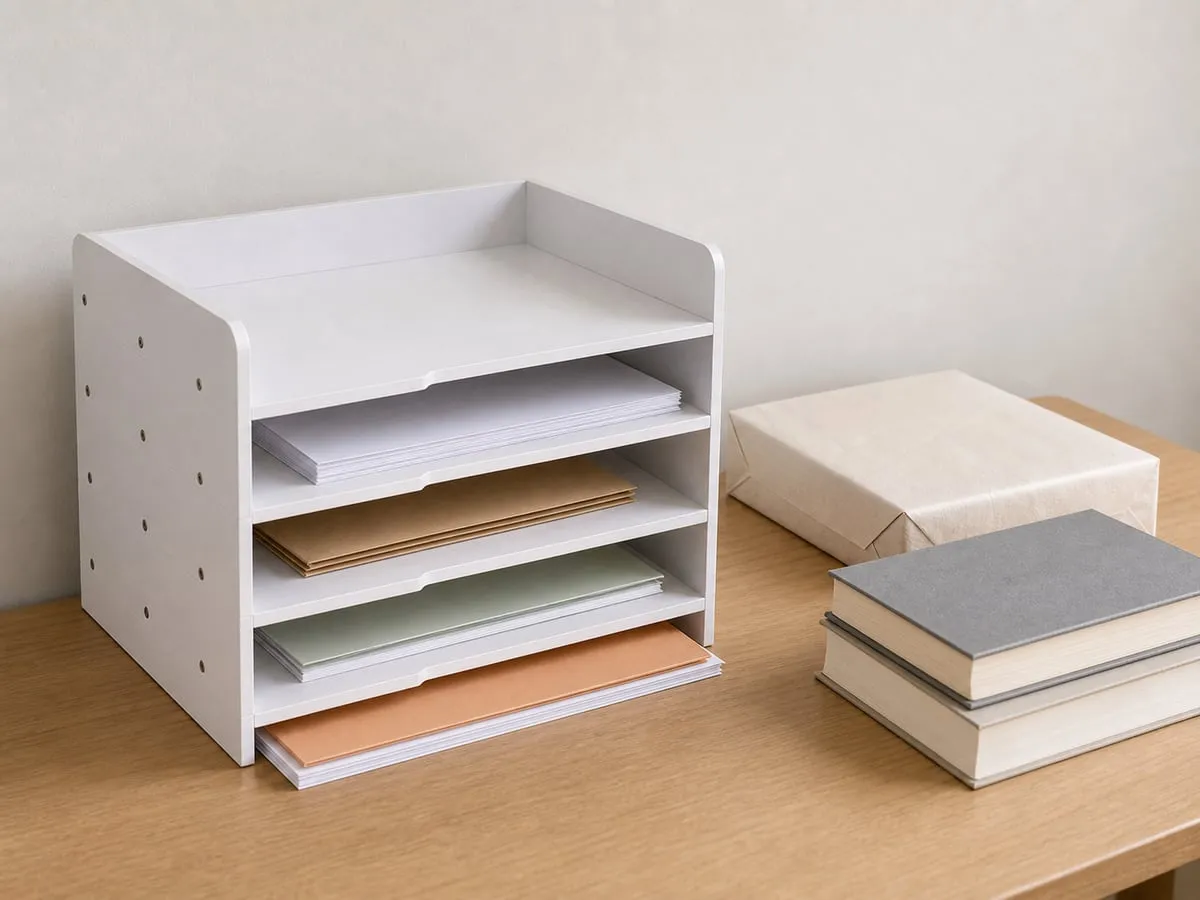
The safer expectation is shallow paper sorting: incoming papers, current project sheets, envelopes to handle later, and light folders you want visible.
Desk footprint still matters
Going vertical does not remove the footprint. You still need desk depth for the tray itself and front space to pull papers out.
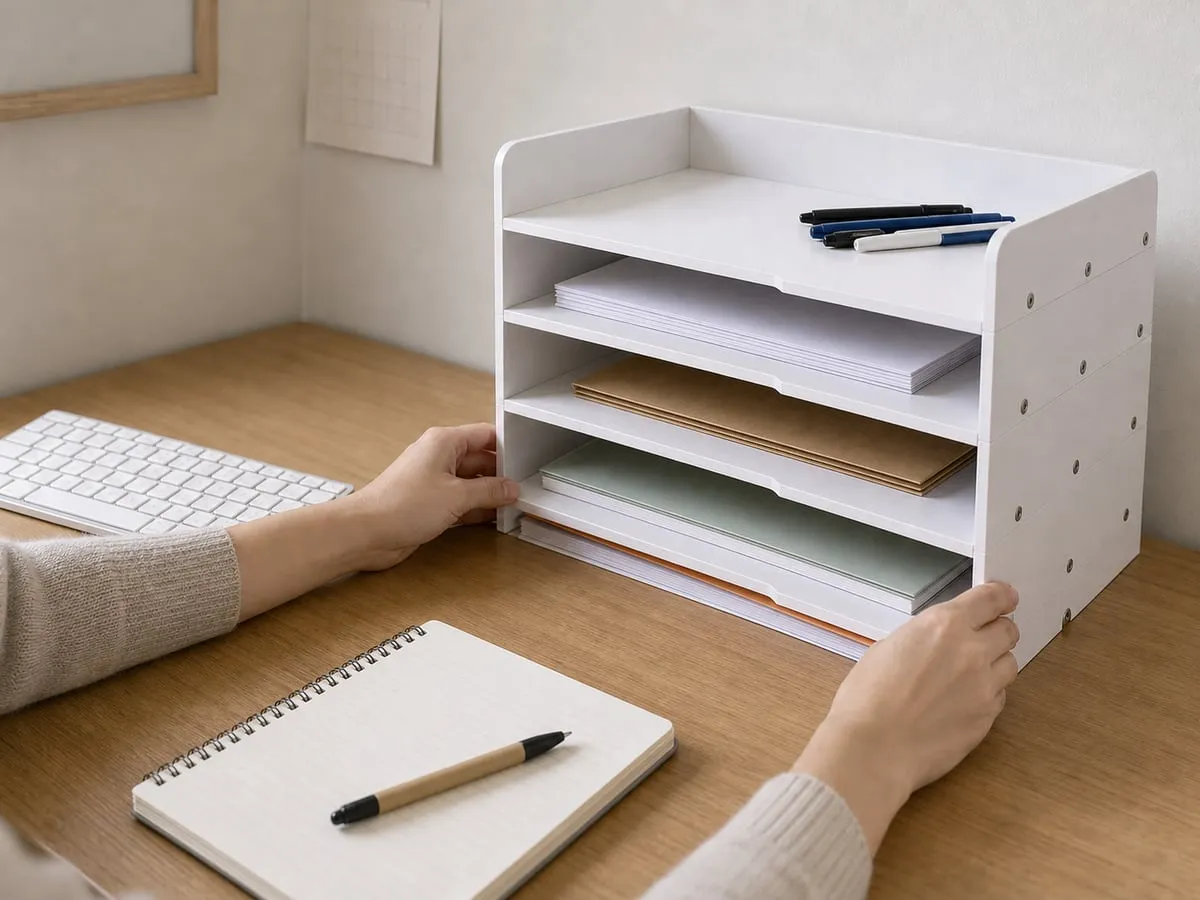
On a small desk, this can be the deciding point. A tray placed too far back may look neat but feel awkward when you need to grab the middle layer.
Check the underside and surface
The tray also touches the desk. If the bottom edge feels rough or a screw head sits proud, glossy or soft desktop surfaces may need a thin pad.
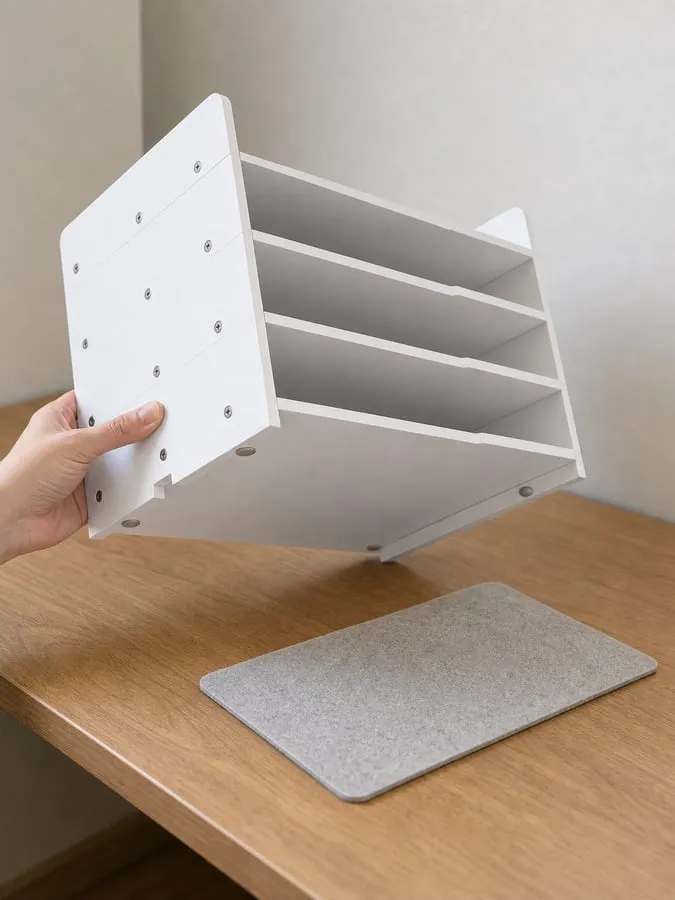
Keep it on a flat, dry surface. Wet counters, food areas, and places where paper can be splashed are a poor match for this kind of organizer.
Verdict
The white multi-layer desktop paper tray is worth checking if active papers keep spreading across the desk. It is best understood as a visible sorting tray, not an archive box.
The important checks are inner width and depth, shelf opening height, desk footprint, assembly fit, and underside finish. If you need storage for books, devices, paper stacks, or long-term documents, use a different organizer.