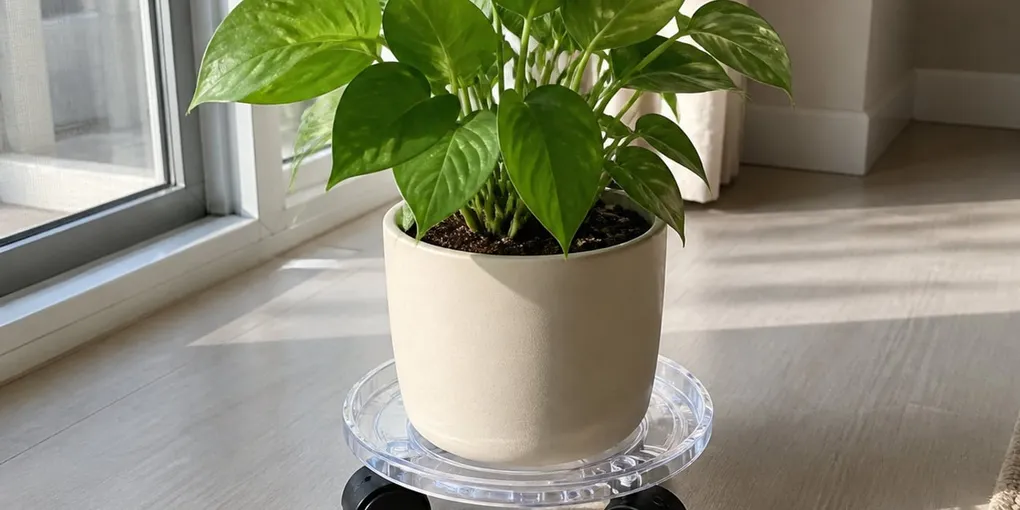
Ali review
A Rolling Plant Stand Is Useful Only If The Pot And Floor Fit
A practical AliExpress rolling plant stand review covering pot-bottom diameter, rim fit, flat floors, thresholds, grout lines, water droplets, and adjustable stand comparisons.
Indoor planters are awkward when you only want to move them a little. Cleaning the window corner, turning the plant toward the light, or checking the floor after watering can become annoying if the pot always has to be lifted.
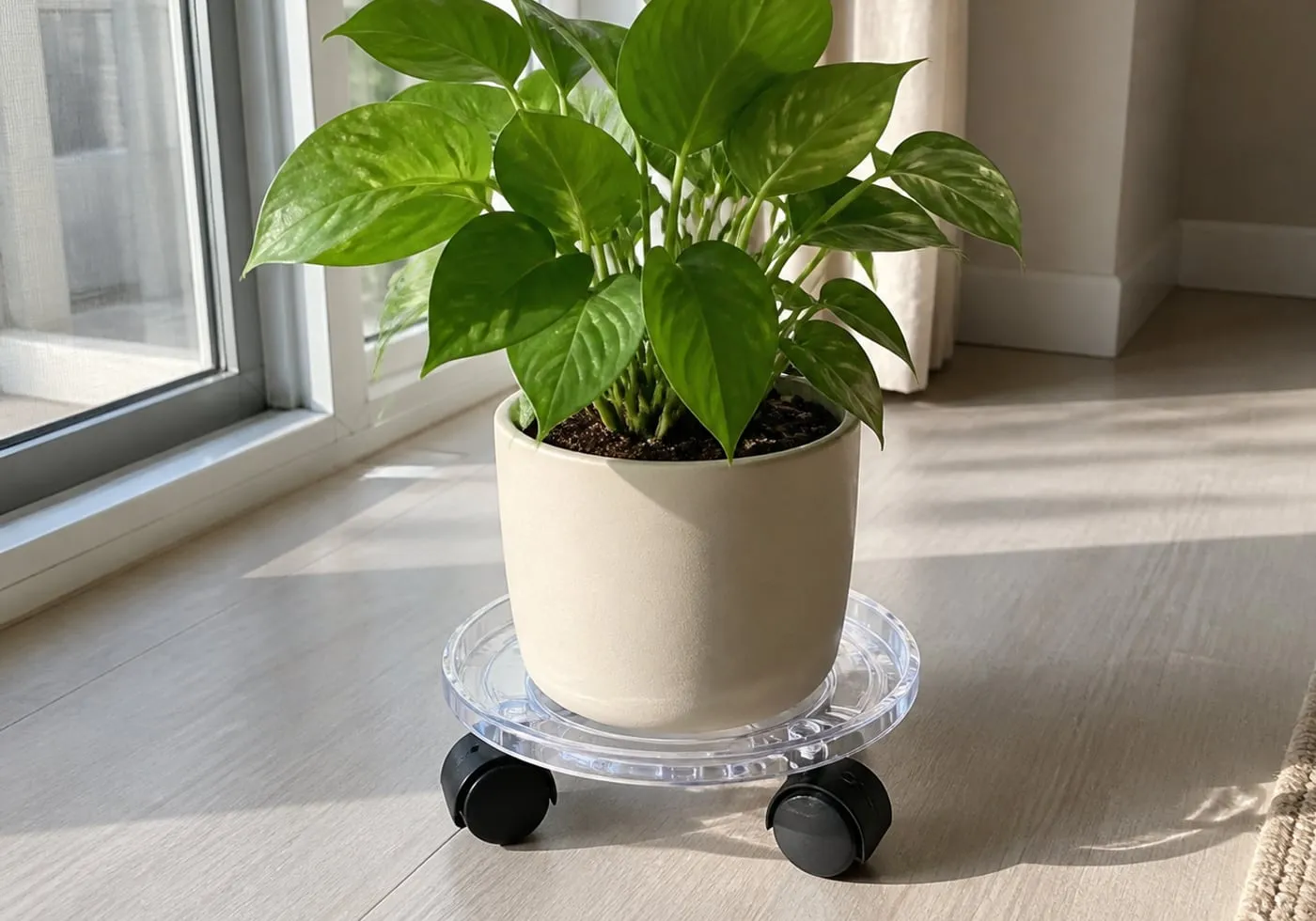
This rolling plant stand is a low transparent caddy with small wheels. It makes the most sense as a small position-adjusting base for a flat indoor floor.
Start With The Pot Bottom
The widest leaves or top rim do not tell you much. What matters is the bottom of the pot and how it sits on the support surface.
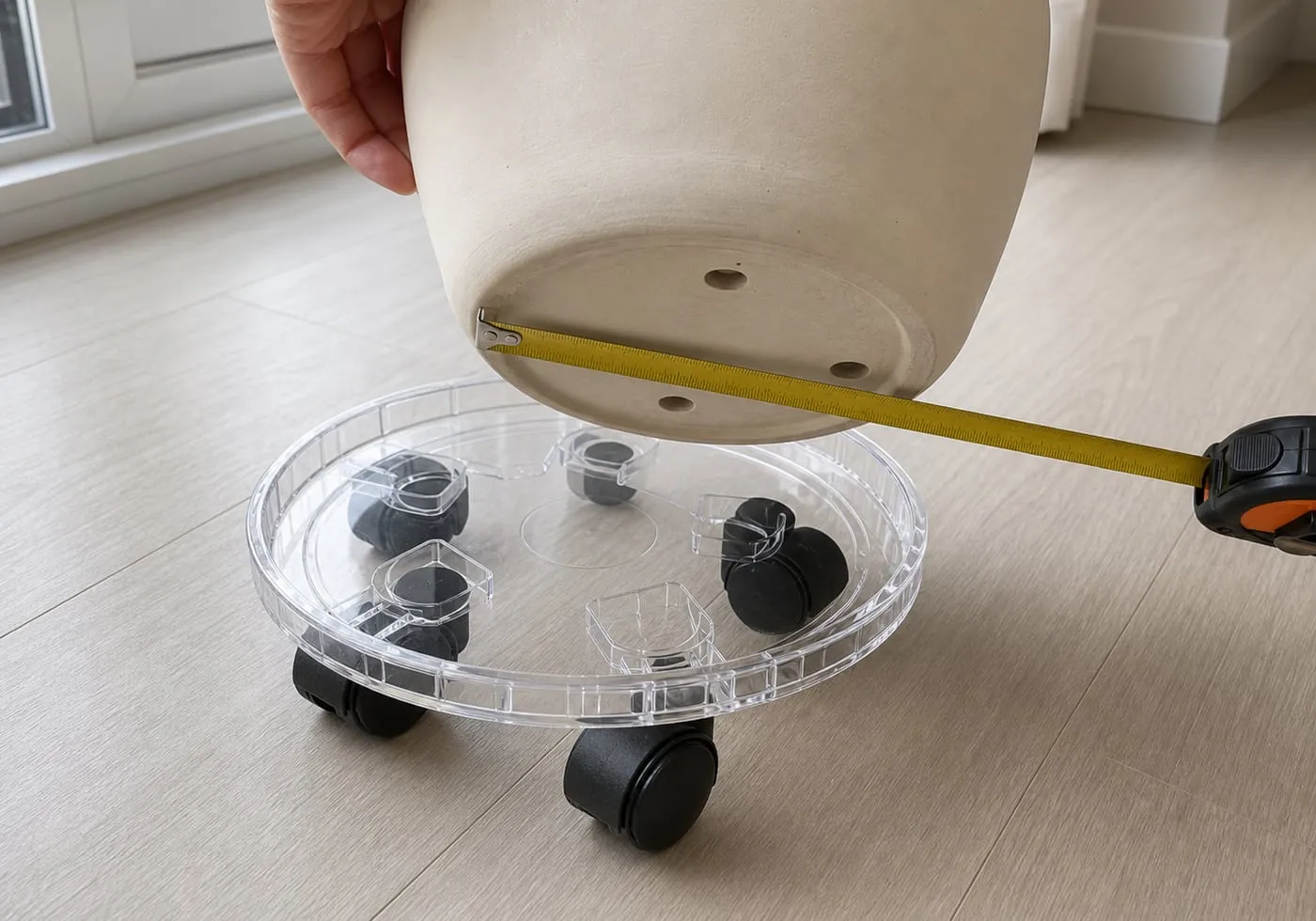
The pot base should sit fully inside the raised edge and stay centered. Some pots have a recessed bottom or a narrow foot ring, so a size that looks fine from above can still rock when the wheels start moving.
Flat Floors Are The Best Match
Small wheels like smooth tile, vinyl, or level laminate. Rugs, thresholds, deep grout lines, balcony grooves, and uneven concrete can make the caddy catch or tilt.
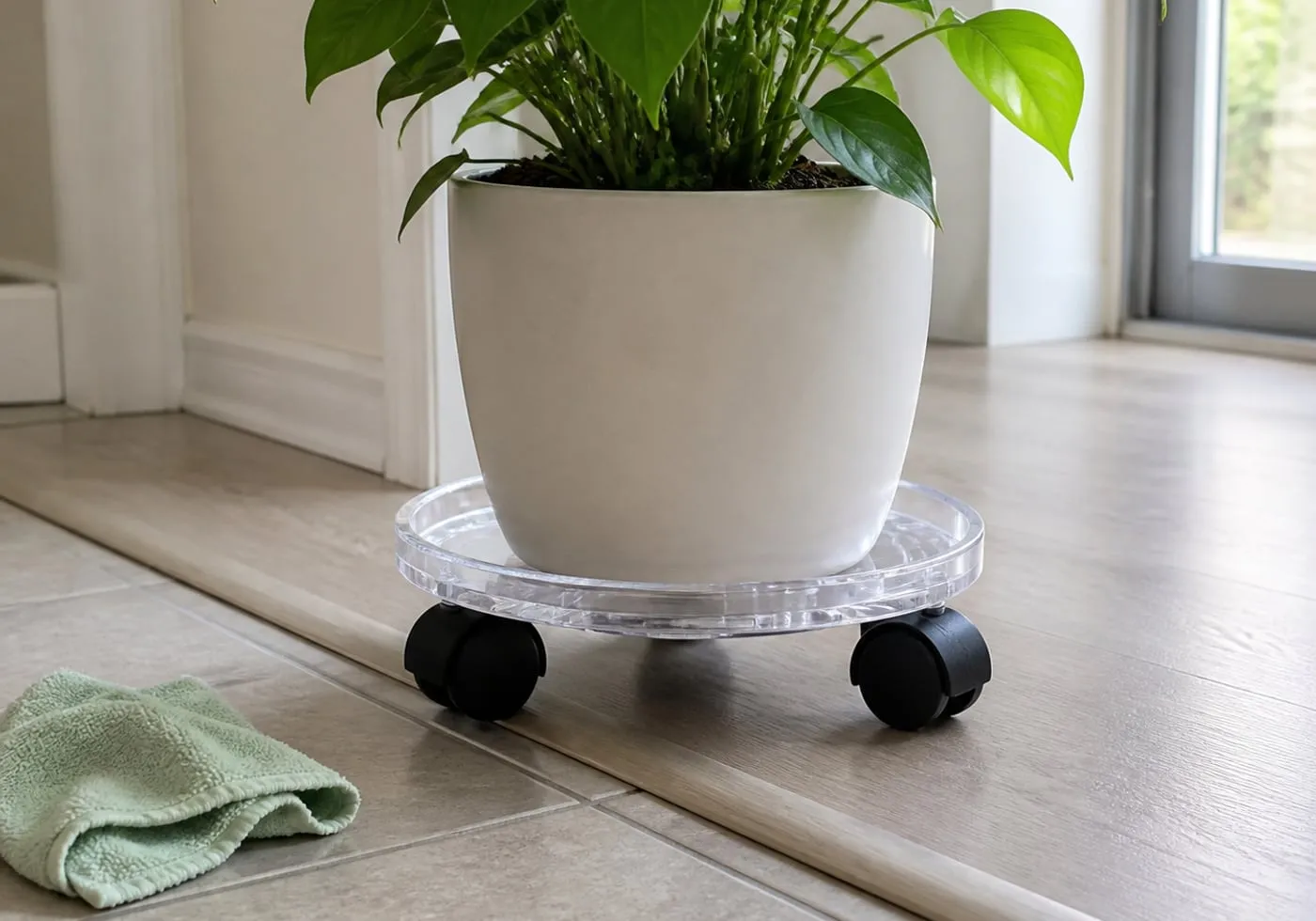
This is why the product is better for short moves around a plant corner than for dragging a pot across the home. Think window cleaning, rotating the plant, or shifting it a little before watering.
Check Water Right Away
A tray under a pot can help with small drips, but it should not be treated like a basin. After watering, check the tray edge and the floor below it instead of assuming the floor is covered.
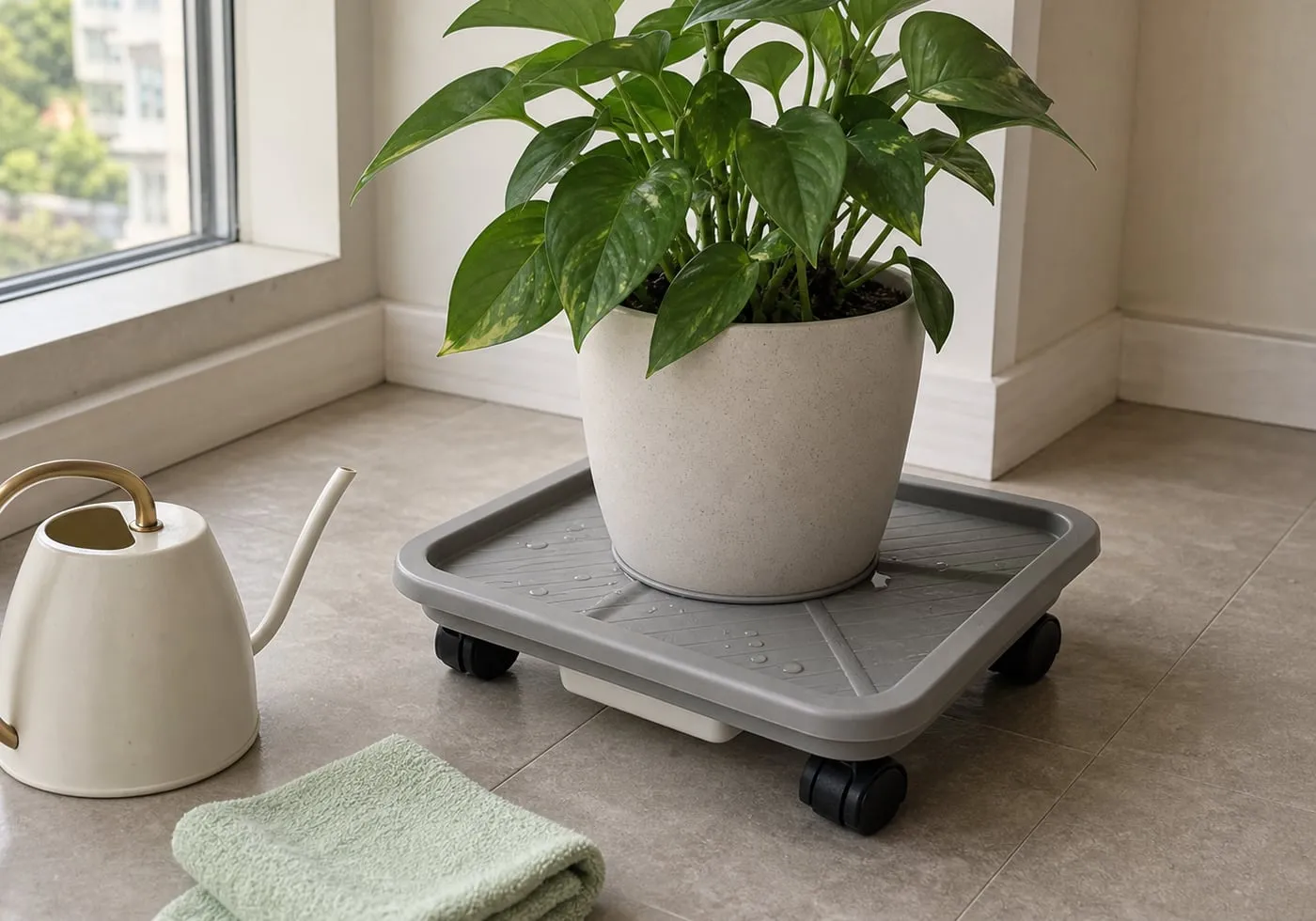
Wood and laminate floors especially do not like moisture sitting unnoticed. If the tray catches droplets, empty or wipe the area before it stays there for a long time.
Best Use: A Small Cleaning Shift
The most realistic use is moving a planter slightly away from a window or wall so the floor can be wiped. It is also useful when the plant needs to face a different direction for light.
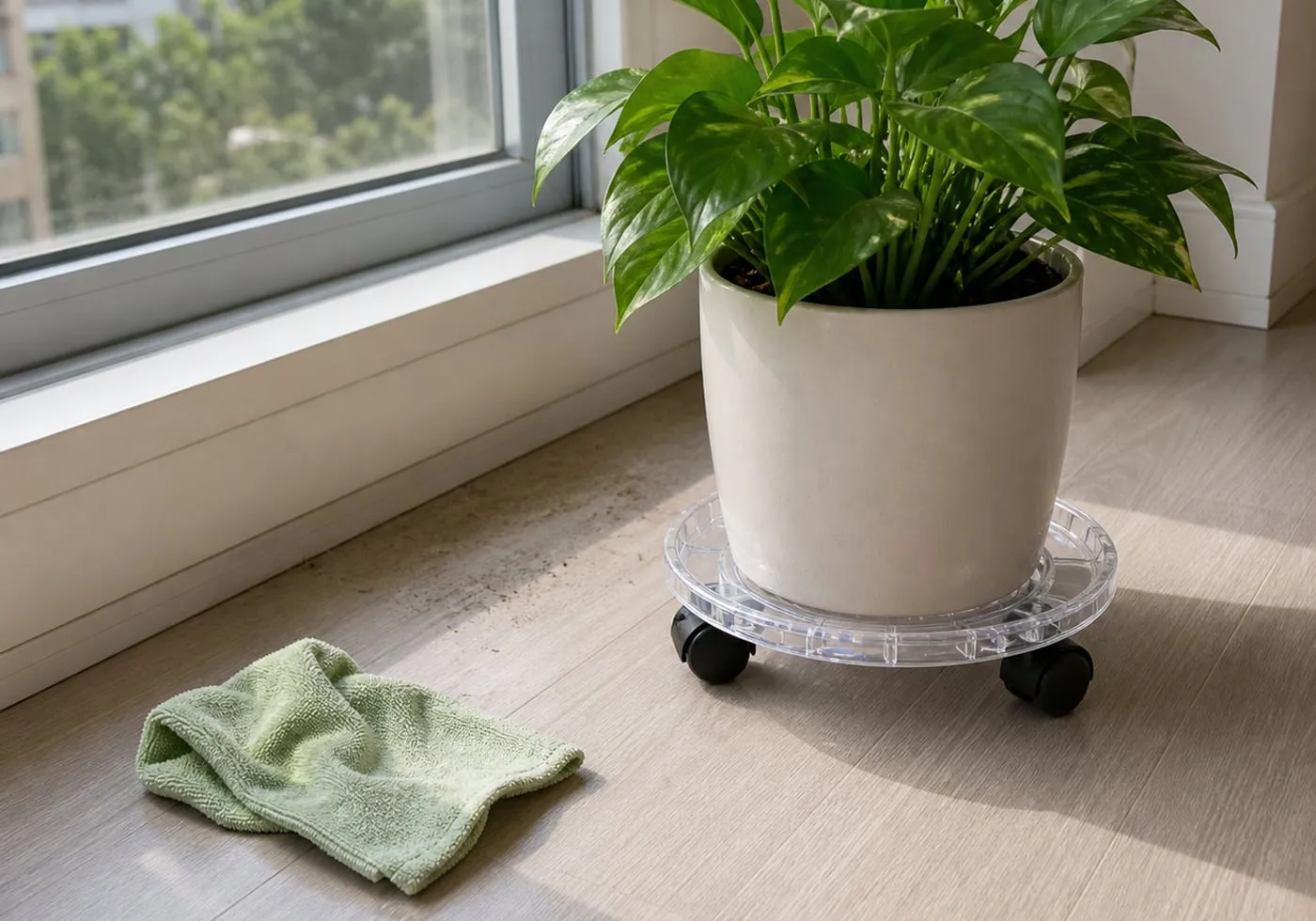
Before moving, make sure the pot is centered and push slowly. If the soil is freshly watered, the pot may feel different than usual, so short and careful movement is the better habit.
Tray And Adjustable Versions Have Different Tradeoffs
If small drips are the main concern, this rolling tray style is worth comparing. It gives the pot a more defined tray shape, but it still needs the same floor check after watering.
If pot sizes vary, this adjustable rolling plant stand is another route. It has more sizing flexibility than a fixed round caddy, but the support points and wheel positions matter more.
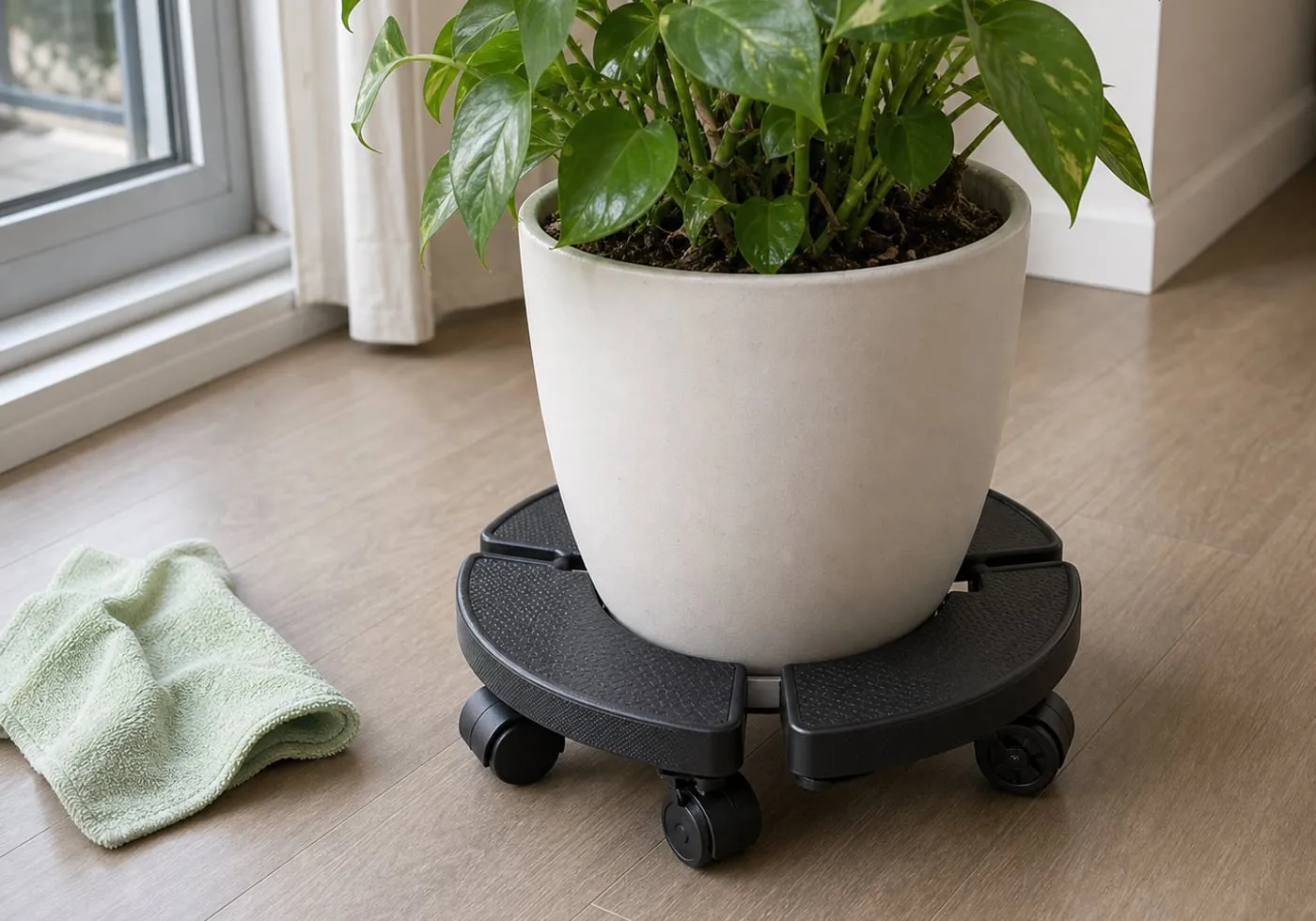
The adjustable type should support the pot bottom evenly. If the base only touches a few points, rolling can feel less predictable than a fixed tray that already matches the pot.
Final Take
The rolling plant stand is worth checking when an indoor planter needs small position changes for cleaning, light, or watering routines. It is not just about adding wheels.
Measure the pot bottom, check the raised edge, look at the floor path, and think about water after watering. If those details line up, a rolling caddy can make a plant corner easier to manage. If they do not, a fixed plant tray may be the calmer choice.