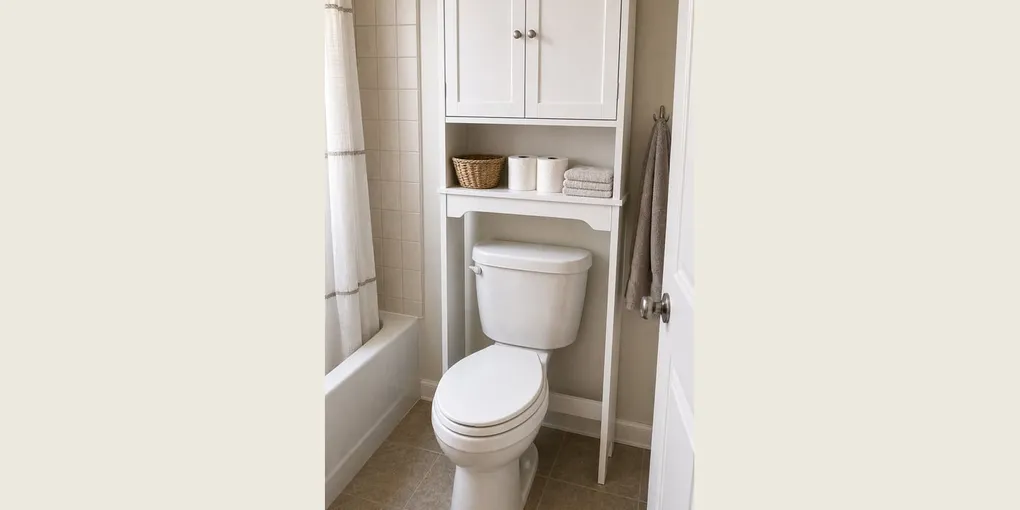
Ali review
An Over-Toilet Cabinet Needs Measurements Before It Needs Styling
A practical AliExpress over-toilet storage cabinet review covering toilet tank clearance, plumbing, bidet hoses, door swing, bathroom humidity, wall bracket checks, and light bathroom storage.
The space above a toilet looks useful, but it is awkward. Spare toilet paper, dry washcloths, wipes, and small bathroom supplies are nice to keep close, yet floor storage quickly makes a small bathroom feel cluttered.
This over-toilet storage cabinet is one way to use that space. It has upper doors, an open shelf, and tall side legs, so it looks tidy. The real buying question is fit, not styling.
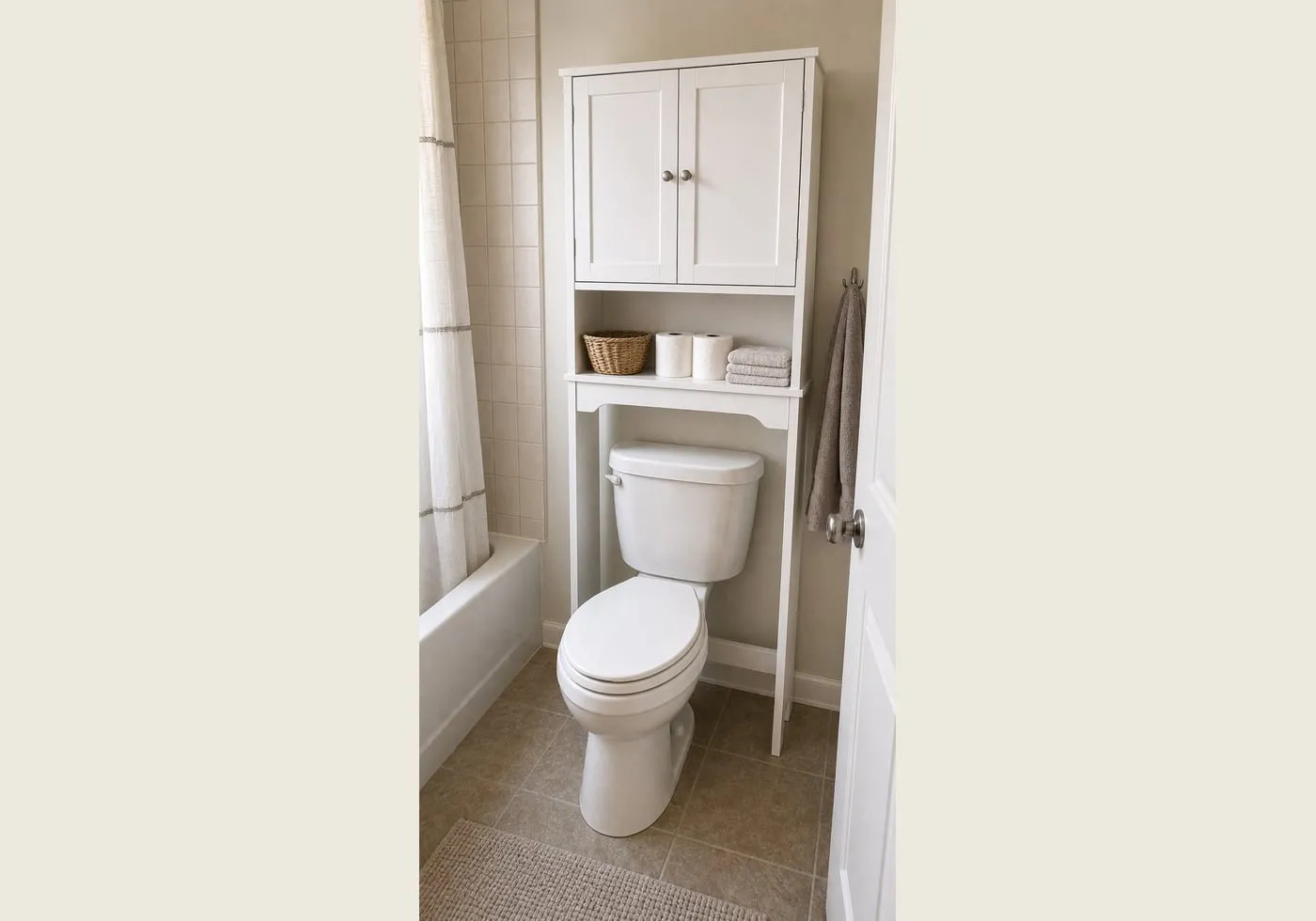
Measure Around The Tank First
Start with the toilet tank area. Measure tank width, tank height, distance from the wall, and the depth from the wall toward the front of the toilet.
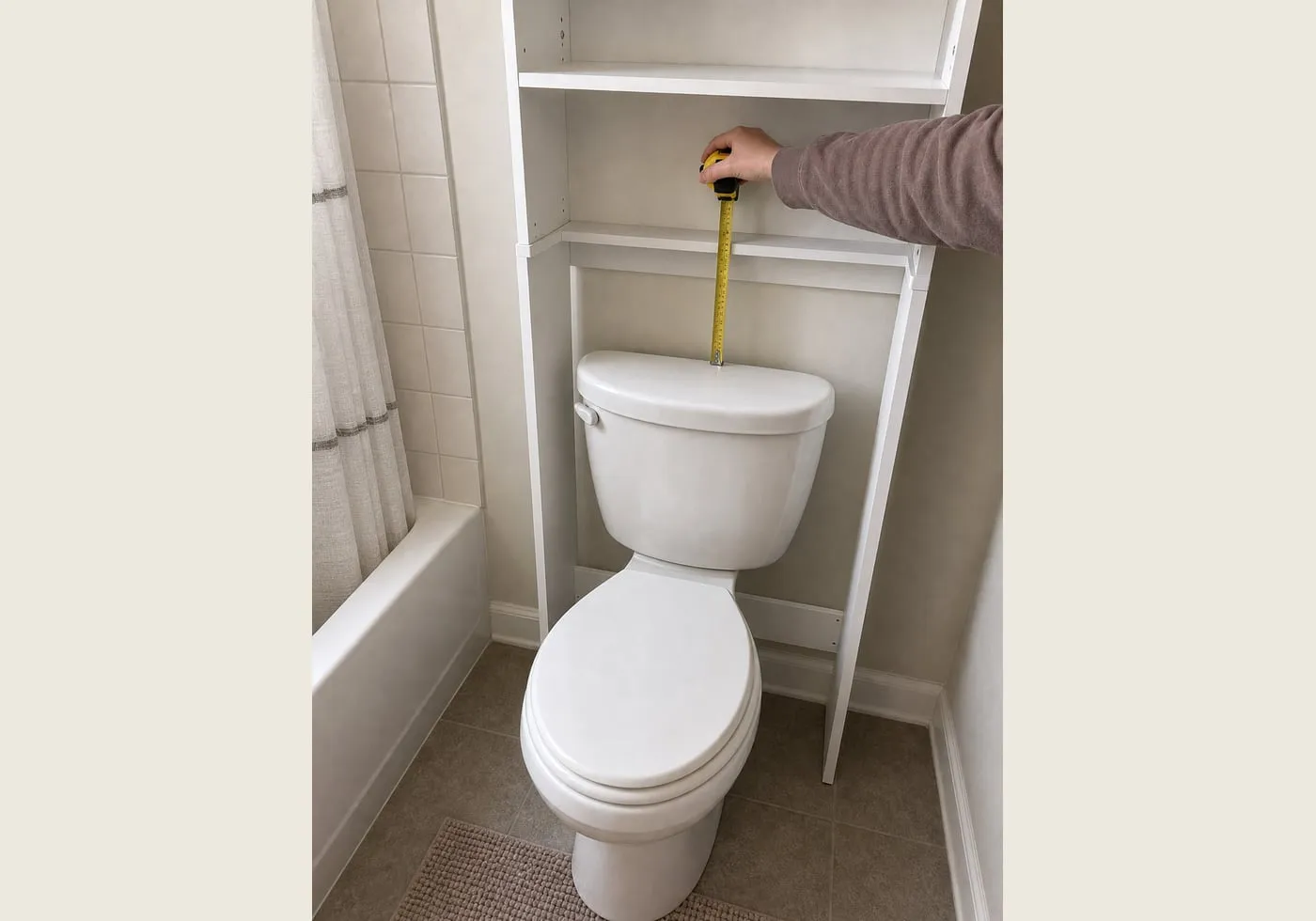
Flush buttons and handles matter too. If the cabinet blocks the button or makes your hand reach awkwardly, the storage space will become annoying immediately.
Plumbing Can Decide The Fit
The cabinet legs pass around the toilet area, so the water valve, bidet hose, power outlet, and baseboard can all interfere.
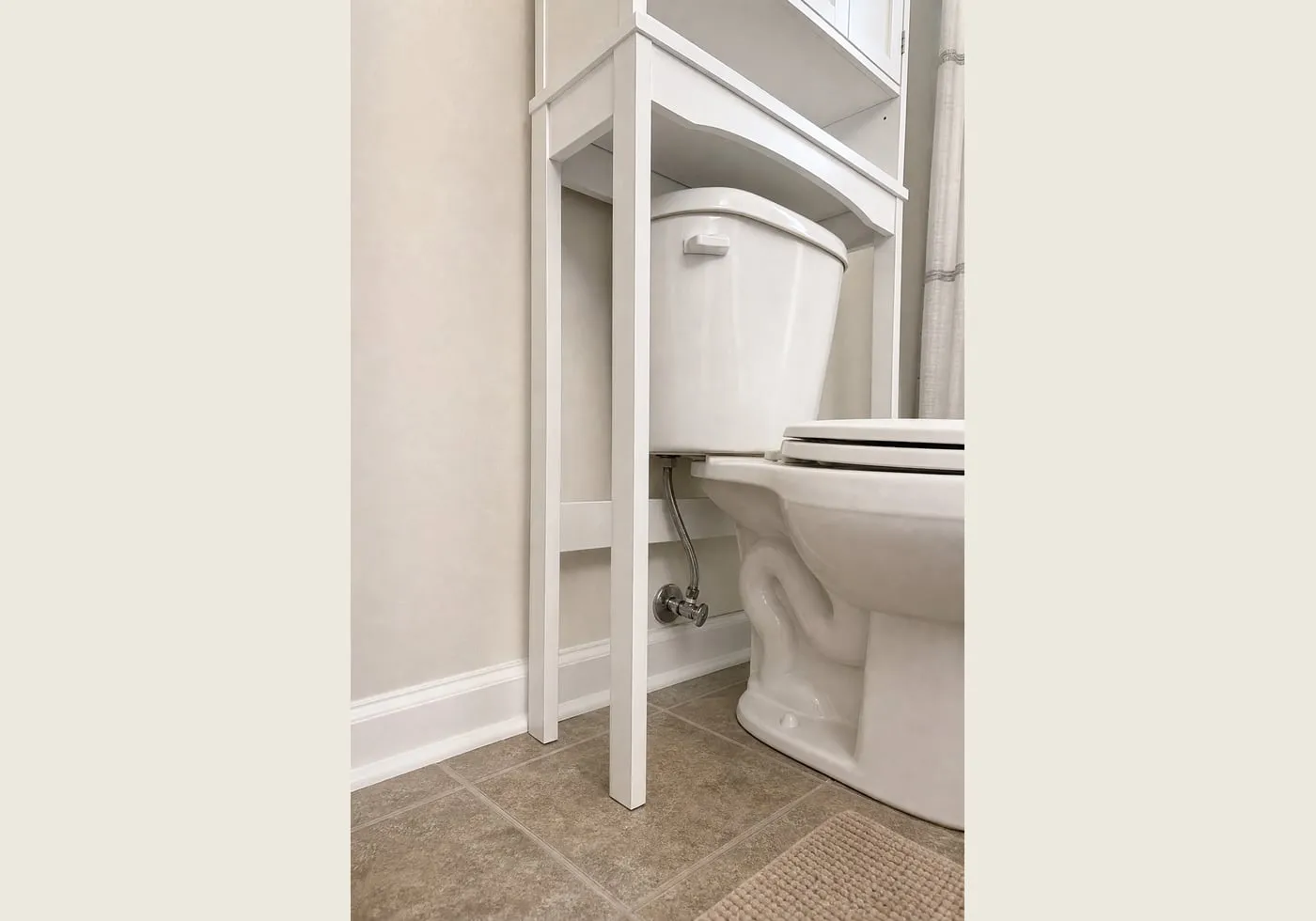
If a leg hits plumbing, the cabinet may not stand square. That can make doors feel uneven and increase wobble when the cabinet is opened.
Check The Wall Bracket Situation
Tall bathroom storage needs more attention than a low floor bin. Uneven flooring, baseboards, door movement, and cabinet doors can all add side movement.
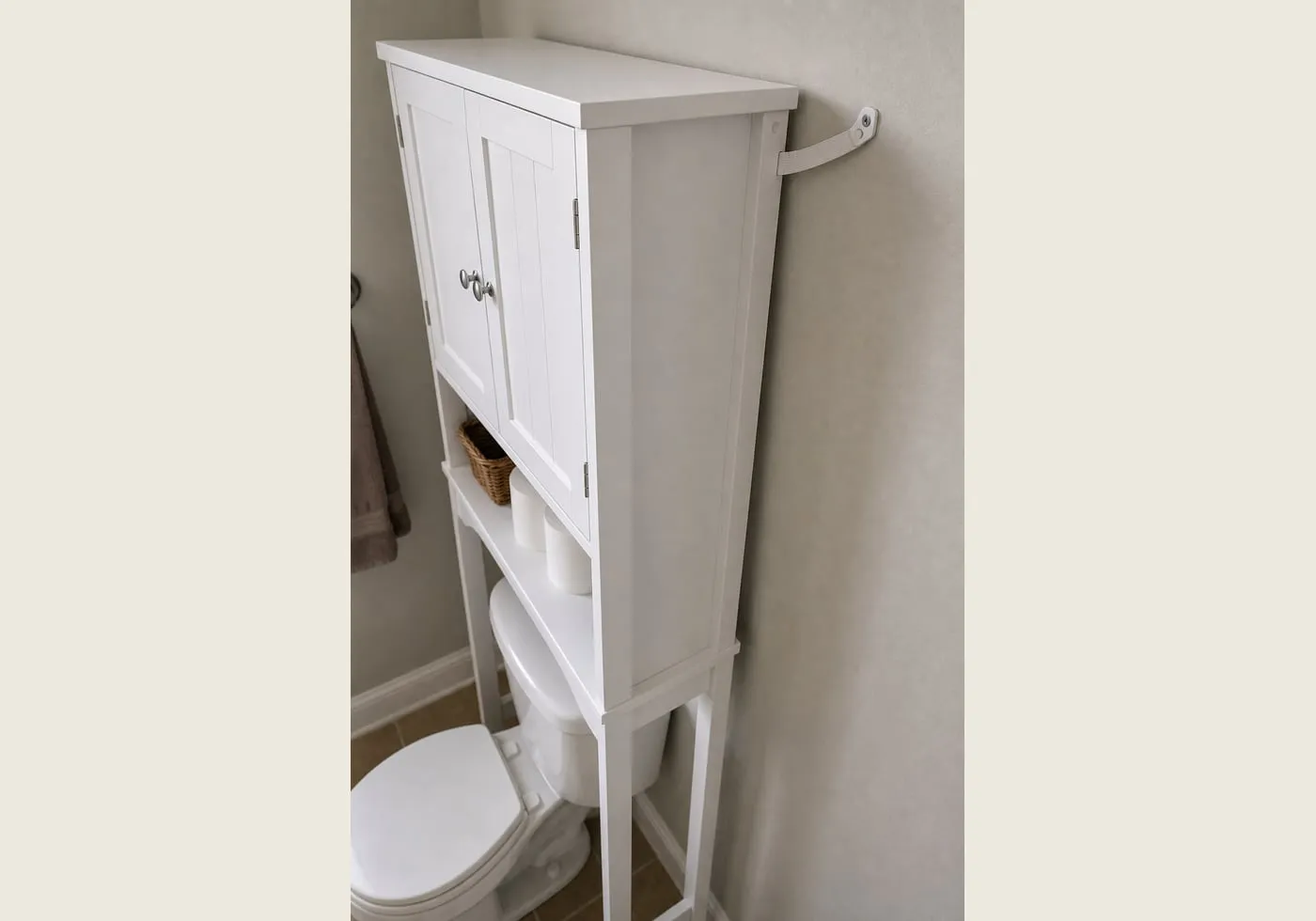
Check whether the package includes wall-fixing hardware and whether it fits your wall type. Tile, concrete, drywall, plaster, and painted walls may need different anchors. Renters should also check whether drilling is allowed.
Humidity Stays In The Picture
A bathroom is not a dry room. If shower water reaches the toilet area, a wood-look or MDF-style cabinet may be the wrong product category. Hinges, screws, and exposed edges all deserve caution in damp rooms.
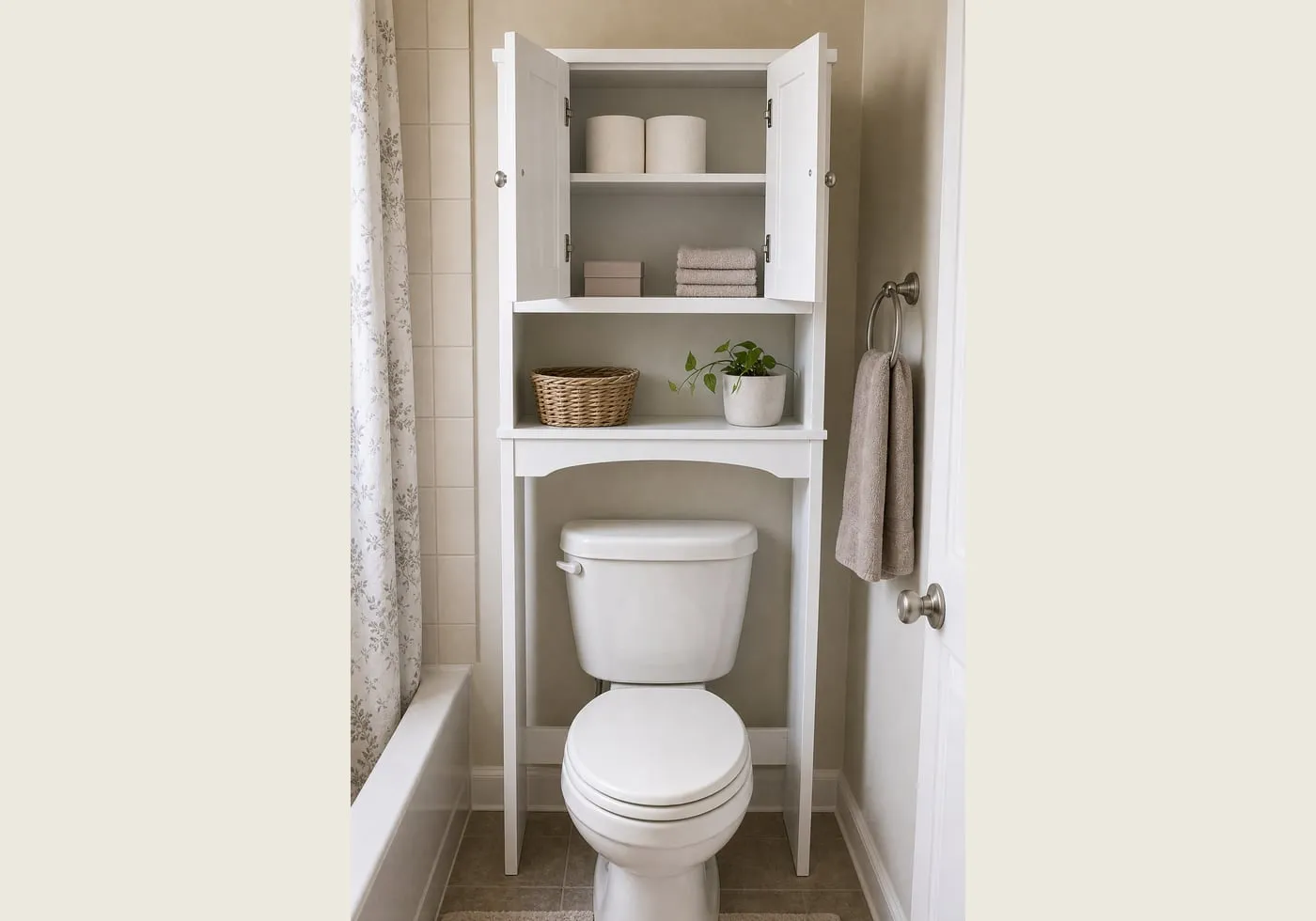
The better contents are dry and light: spare paper rolls, dry towels, wipes, small boxed supplies, and light baskets. Avoid storing damp towels inside a closed cabinet.
Keep The Contents Light
This is best treated as auxiliary bathroom storage, not a bathroom warehouse. Spare paper, light supplies, folded dry cloths, and a small basket are more suitable than large liquid bottles or dense items.
Do not treat it as something to lean on or pull against. The taller the cabinet and the higher the contents, the more you need to care about wobble and wall contact.
Open Shelf Or Door Storage
A similar over-toilet cabinet option is worth comparing. Door storage hides small clutter, while open shelves are faster to reach.
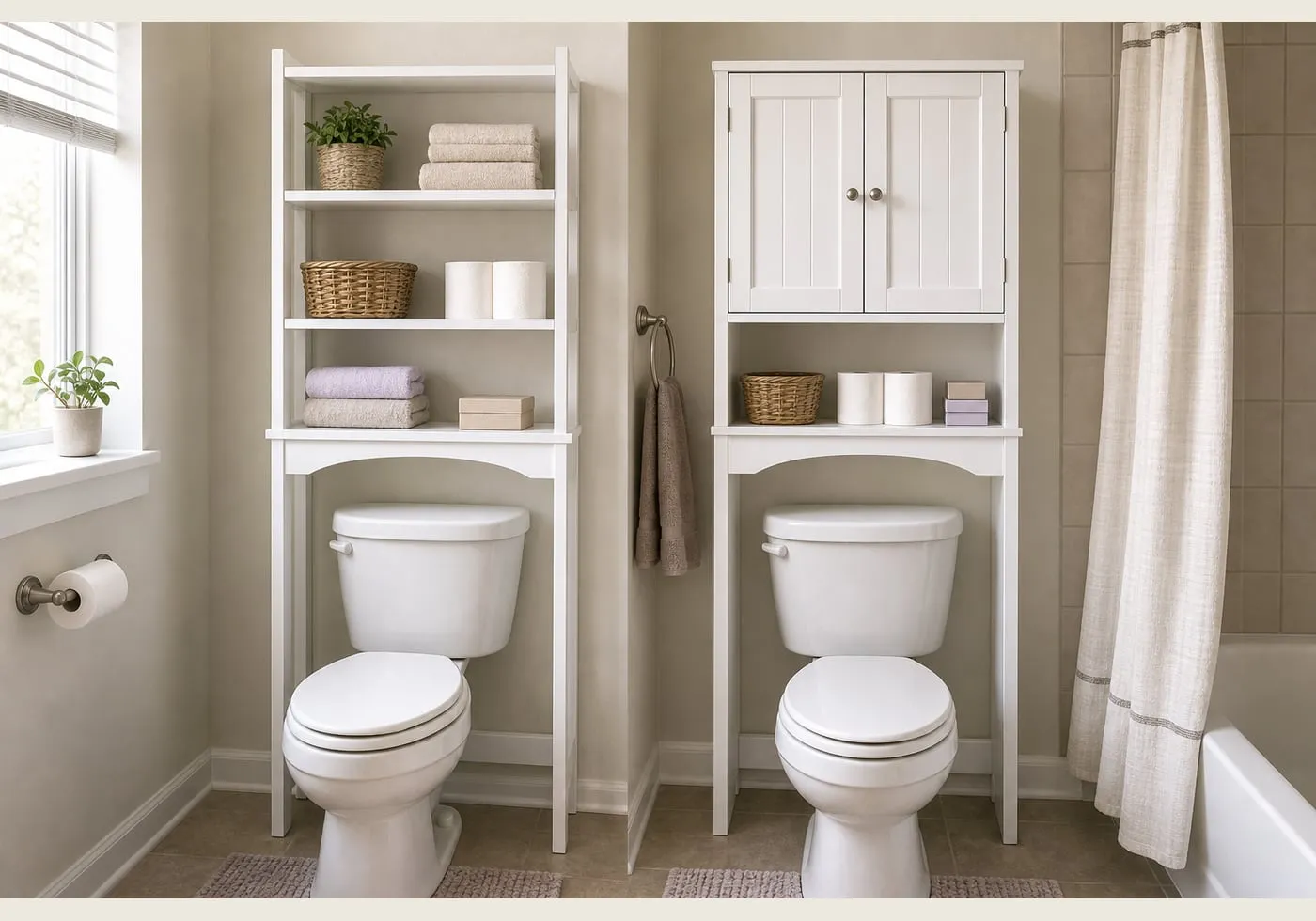
Open shelves ventilate better and are easier to grab from, but everything stays visible. Door cabinets look calmer, but the door swing, hinges, and enclosed humidity matter more.
Final Take
The over-toilet storage cabinet is worth checking if you want light bathroom supplies off the floor. Measure tank clearance, plumbing, bidet hose position, door swing, humidity exposure, and wall-fixing hardware before choosing it.
If the bathroom is wet, narrow, hard to anchor, or crowded with plumbing, a lower floor cabinet or another storage route may be easier to live with.