Ali review
An over-door shoe pocket organizer only works if the door has room
A practical AliExpress review of an over-door shoe pocket organizer, with notes on door thickness, top clearance, pocket depth, door swing, fabric creases, and light-shoe use.
Shoes can make a small entryway or closet floor look messy fast. Stacking shoe boxes slows everything down, and a freestanding rack eats width you may not have. If the back of a closet or bedroom door is unused, an over-door pocket organizer can be worth checking.
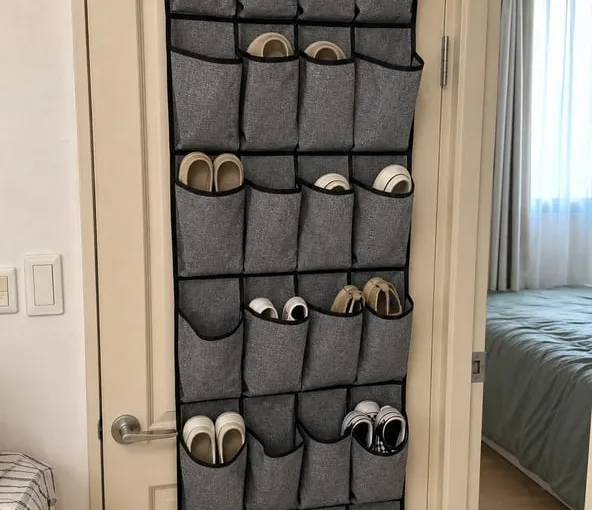
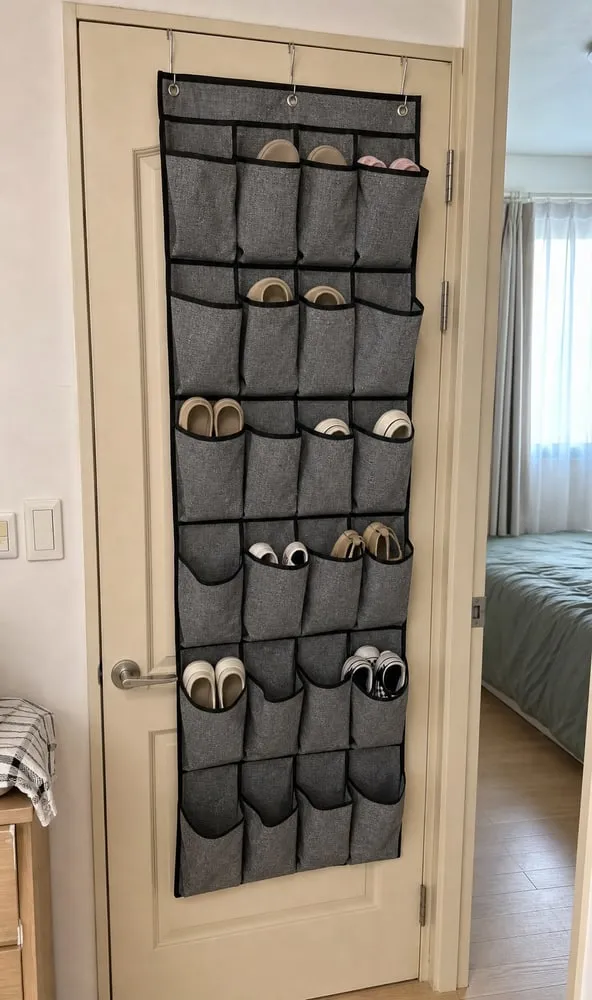
The product here is an over-door shoe pocket organizer. Based on the product photos, it is a grey fabric or mesh pocket panel with black trim, hung from hooks over the top of a door.
It clears the floor, but it is not a full shoe cabinet
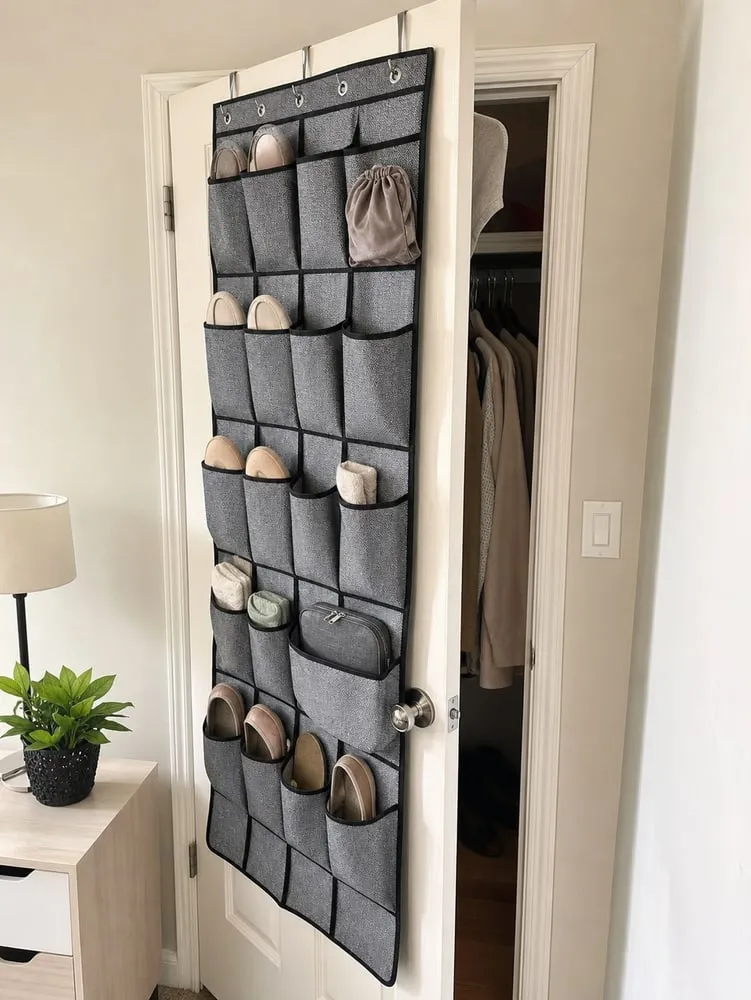
The useful part is simple: it moves light shoes off the floor. Slippers, sandals, flats, kids’ shoes, and low sneakers make more sense here than heavy footwear. It can also hold small soft items like folded socks or a shoe-care pouch.
It should not be treated like a rigid shoe shelf. The organizer moves with the door, so packing it tightly with bulky shoes can make the whole door annoying to use.
Check the door top before anything else
With over-door storage, the hooks can matter more than the pocket panel. If the hook is too thick for the top gap, the door may rub, scrape, or fail to close cleanly. A tight door frame can turn a useful organizer into daily friction.
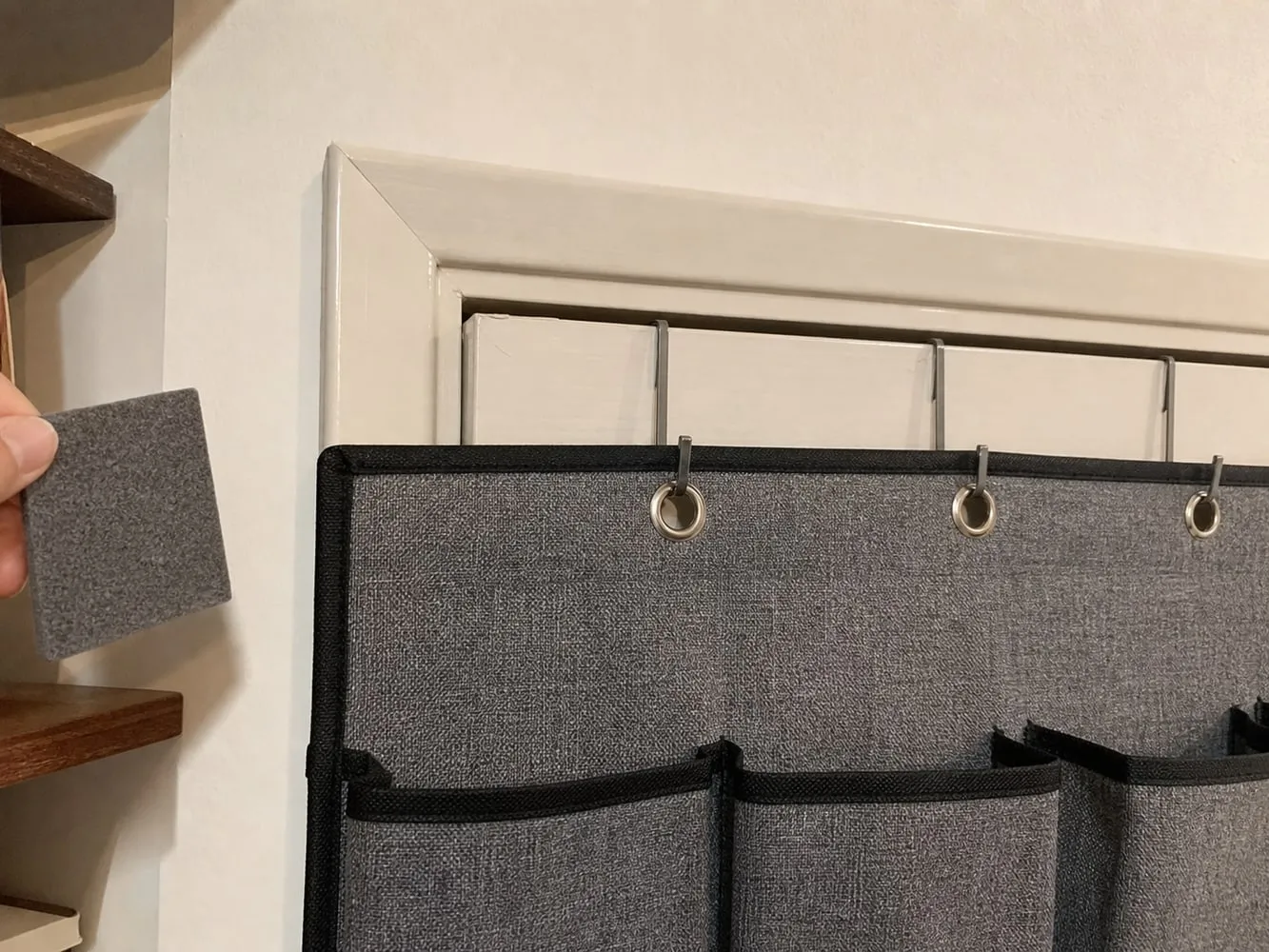
Measure the door thickness and look at the clearance above the door before buying. Sliding doors, doors with a raised top edge, or doors with a closer may be a poor fit.
Pocket depth matters more than the pocket count
Product titles often make the number of pockets look like the main point. In real use, the question is whether your actual shoes fit. Thin slippers and flats are easier than high-top sneakers, bulky running shoes, boots, or larger sizes.
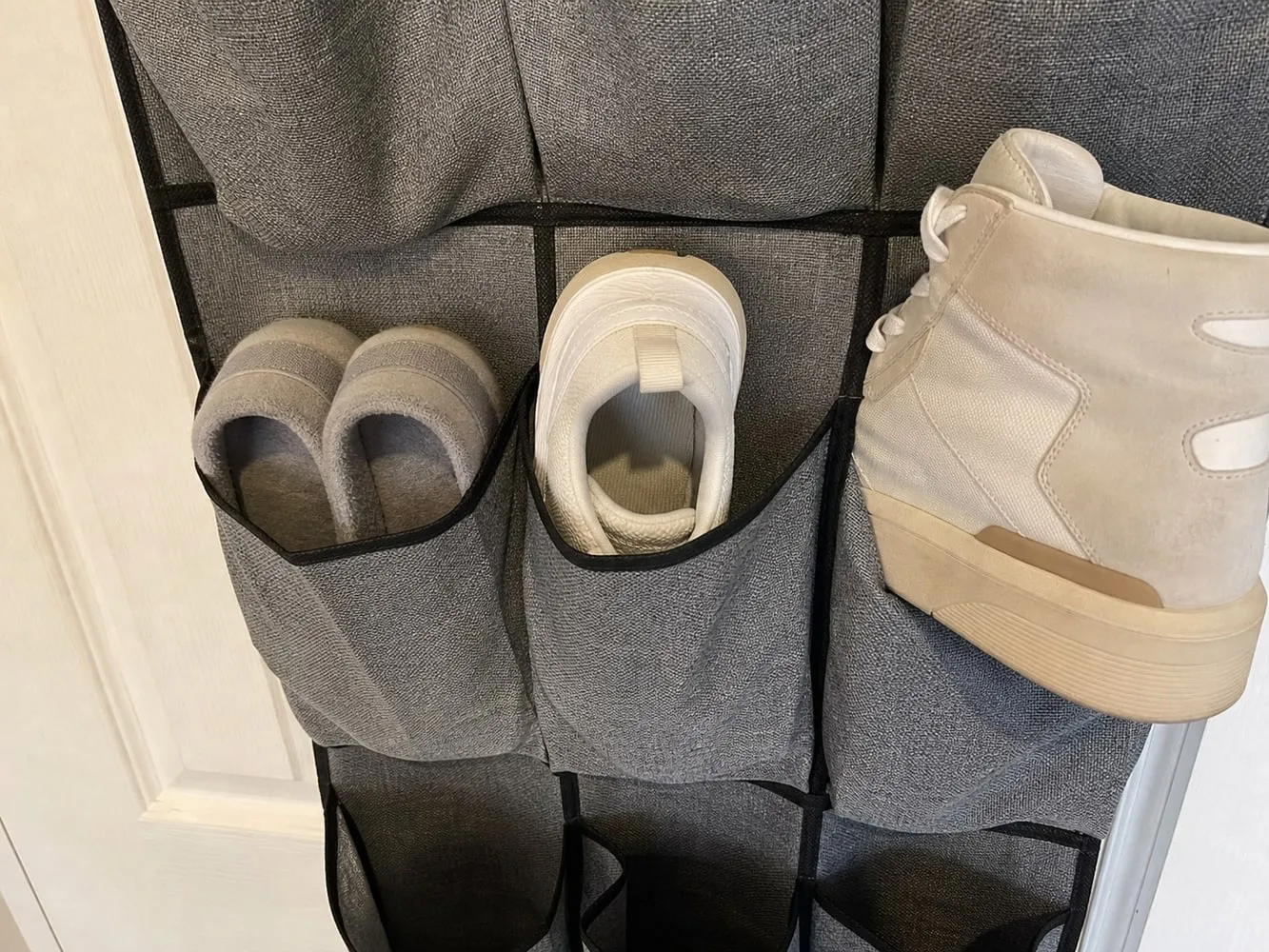
Some shoes may need to be stored one shoe per pocket rather than as a pair. Wet shoes, muddy soles, sharp heels, and heavy boots are poor matches for fabric pockets.
The door still needs to move
If the back of the door has plenty of space, the organizer is easier to live with. If the door opens near a wall, closet clothes, a mirror, or furniture, the loaded pockets can bump into things.
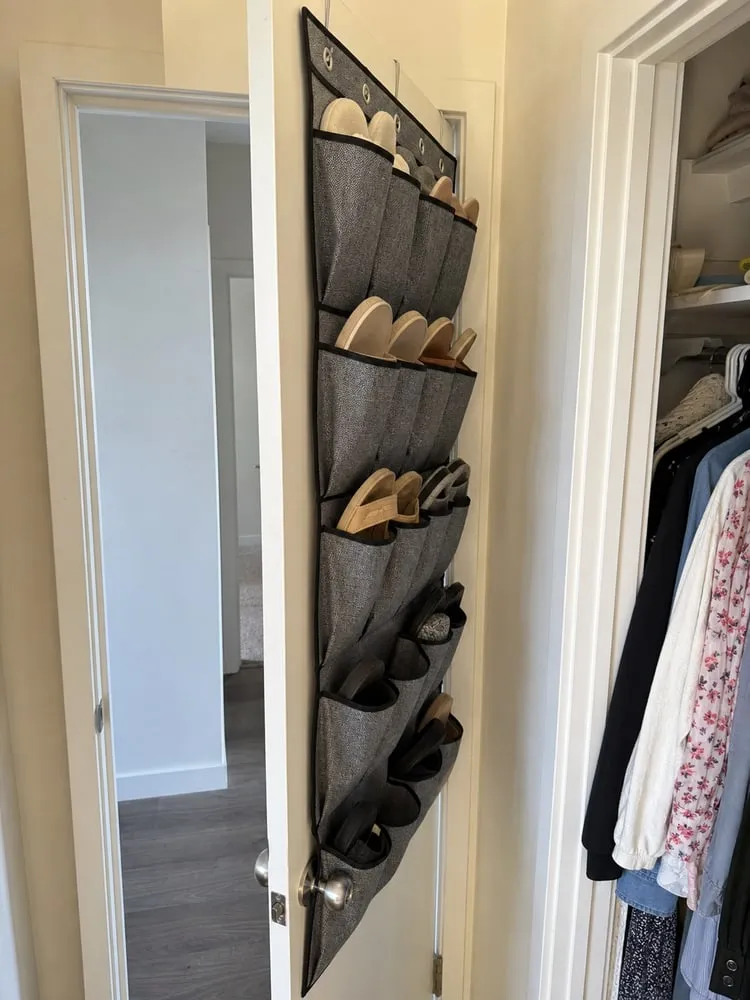
Also look at the handle and lock area. Pockets near the handle can get in the way, and lower pockets can hit the floor, baseboard, or door stop.
Folded fabric needs a quick check
Fabric pocket organizers often arrive folded. Creases, flattened pocket openings, and packaging smell are normal things to check before hanging it inside a closed closet.
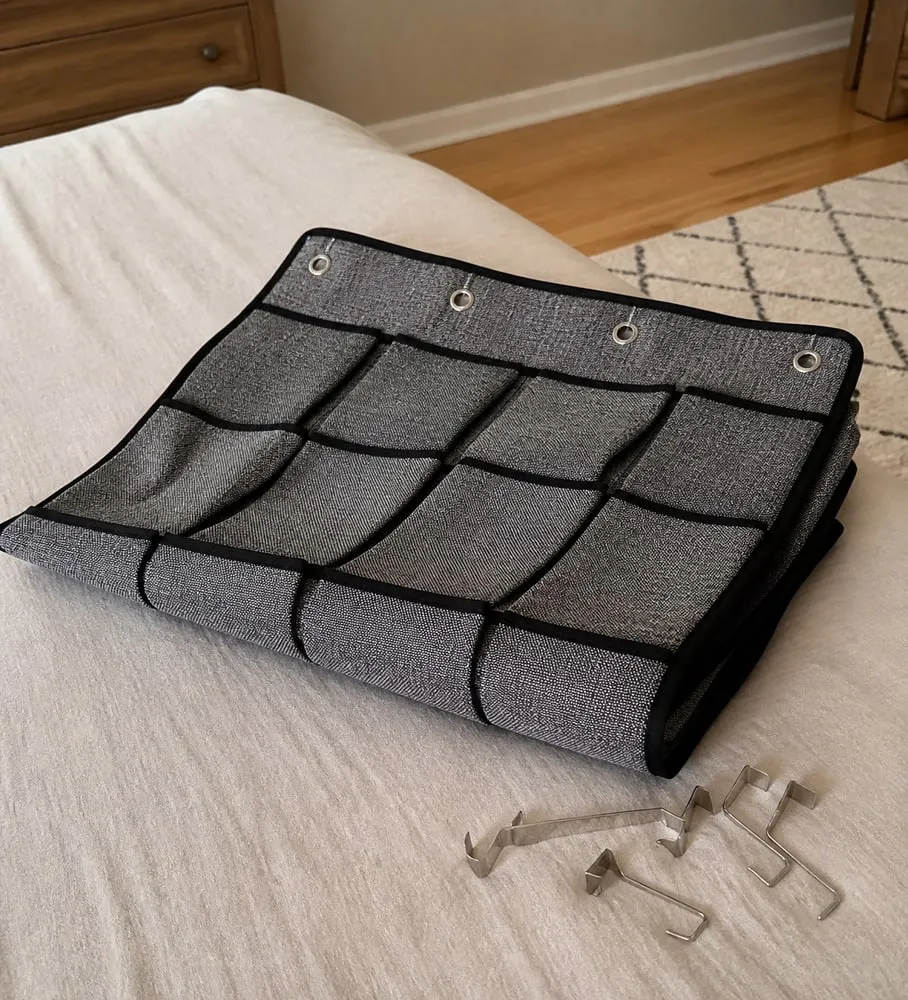
Look over the seams, grommets, and pocket corners too. Mesh or thin fabric can stretch or tear if bulky shoes are forced into it.
Deeper pockets are not automatically better
A deeper over-door pocket organizer may hold thicker low shoes more securely, but it also protrudes farther behind the door.
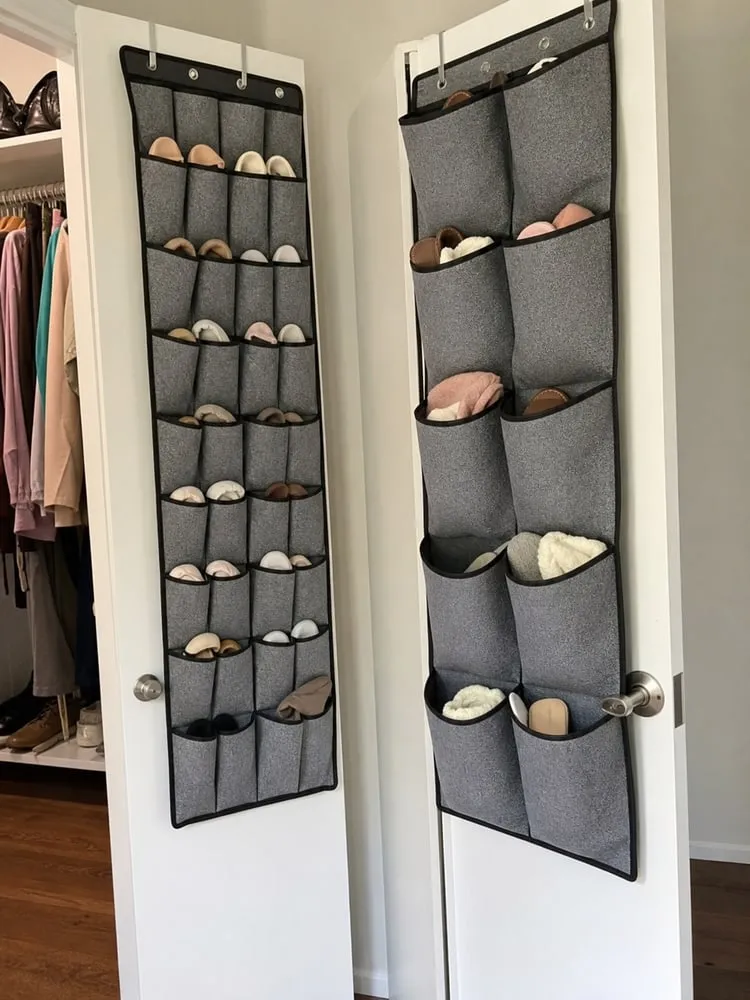
A general mesh pocket organizer can drift toward household-item storage instead of shoe storage. The best option depends less on the headline and more on door clearance, pocket depth, and what you actually plan to put inside.
Verdict
The over-door shoe pocket organizer is worth a look if light shoes are taking over your floor and the back of a door is unused. It fits best for slippers, sandals, flats, kids’ shoes, low sneakers, and small soft accessories.
Skip it if the door gap is tight, the door opens against a wall, or most of your shoes are bulky and heavy. Think of it as light door storage, not a guaranteed shoe-cabinet replacement.