Ali review
A narrow shoe rack makes sense when daily pairs need fast access
A practical AliExpress narrow closet shoe rack review for small entryway gaps and closet floors, covering width, depth, height, door clearance, shelf spacing, flat-floor placement, and assembly checks.
Shoe boxes can make a closet look cleaner, but they slow things down when the same pairs come out every day. If there is a narrow gap on a closet floor or beside an entry cabinet, an open upright rack can be more practical.
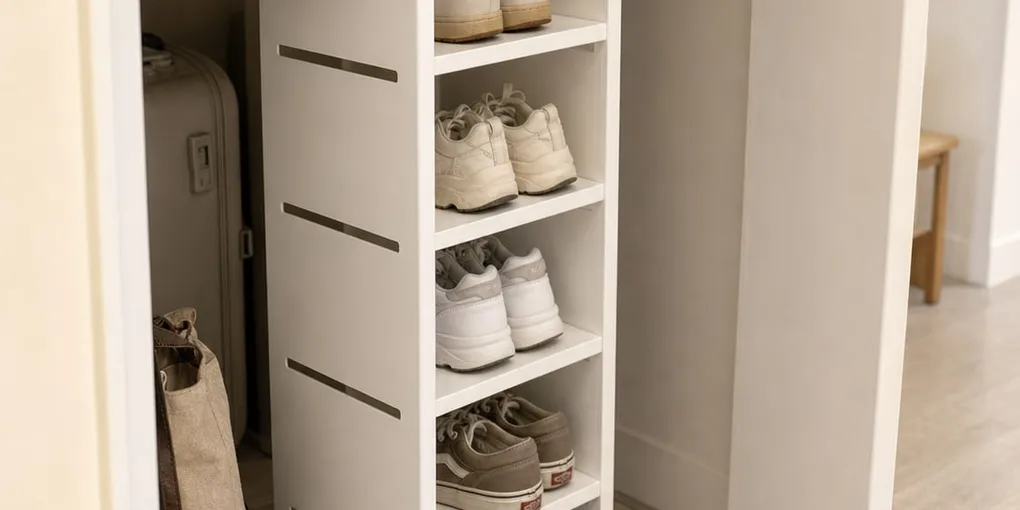
The product here is a narrow upright shoe rack organizer. Based on the product photos, it appears in black and white versions with several tier heights, so the key question is whether the rack and the shoes fit the actual gap.
It is different from shoe boxes
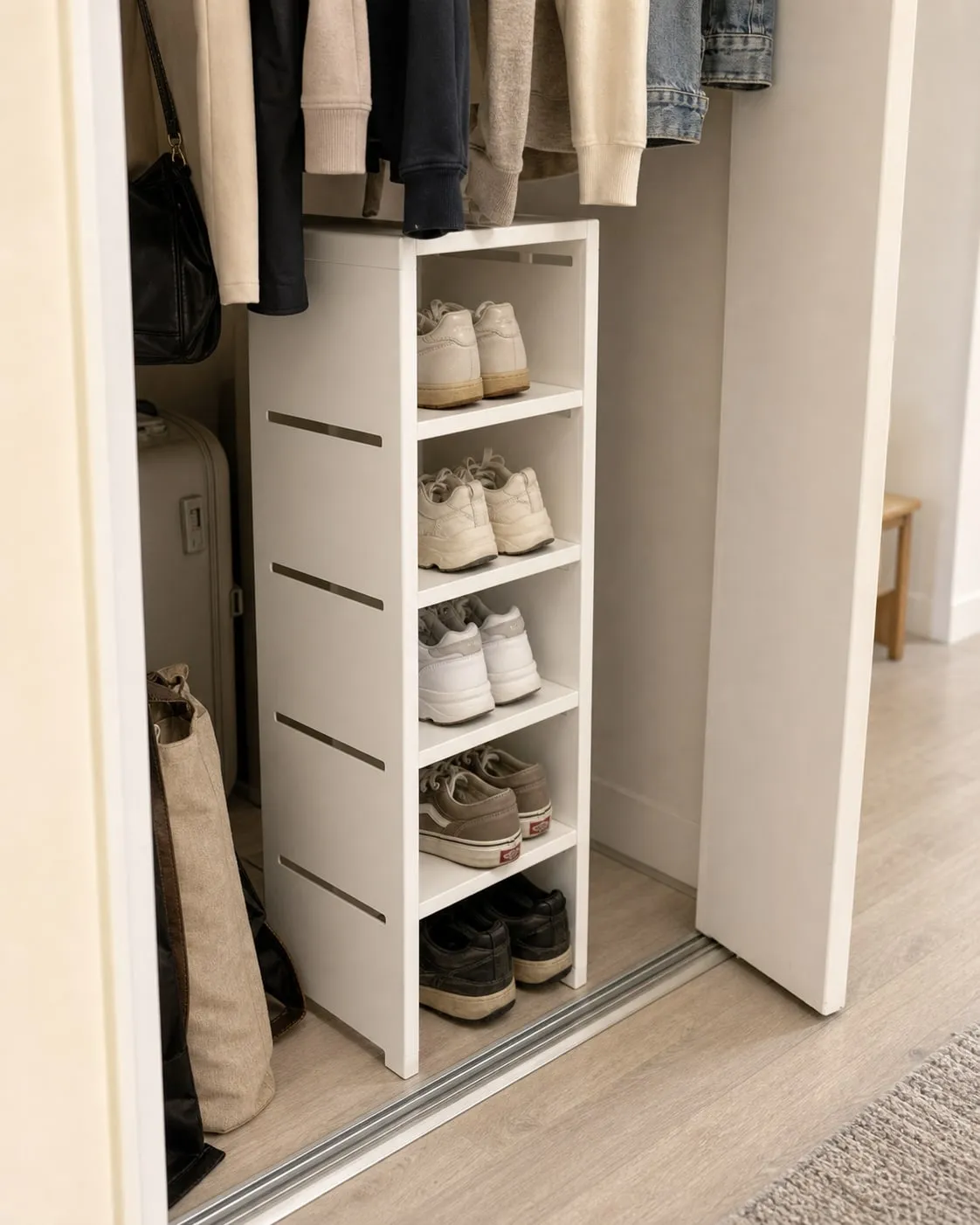
Individual boxes are better when you want each pair hidden. An open rack is better when the same shoes need to be visible and easy to grab.
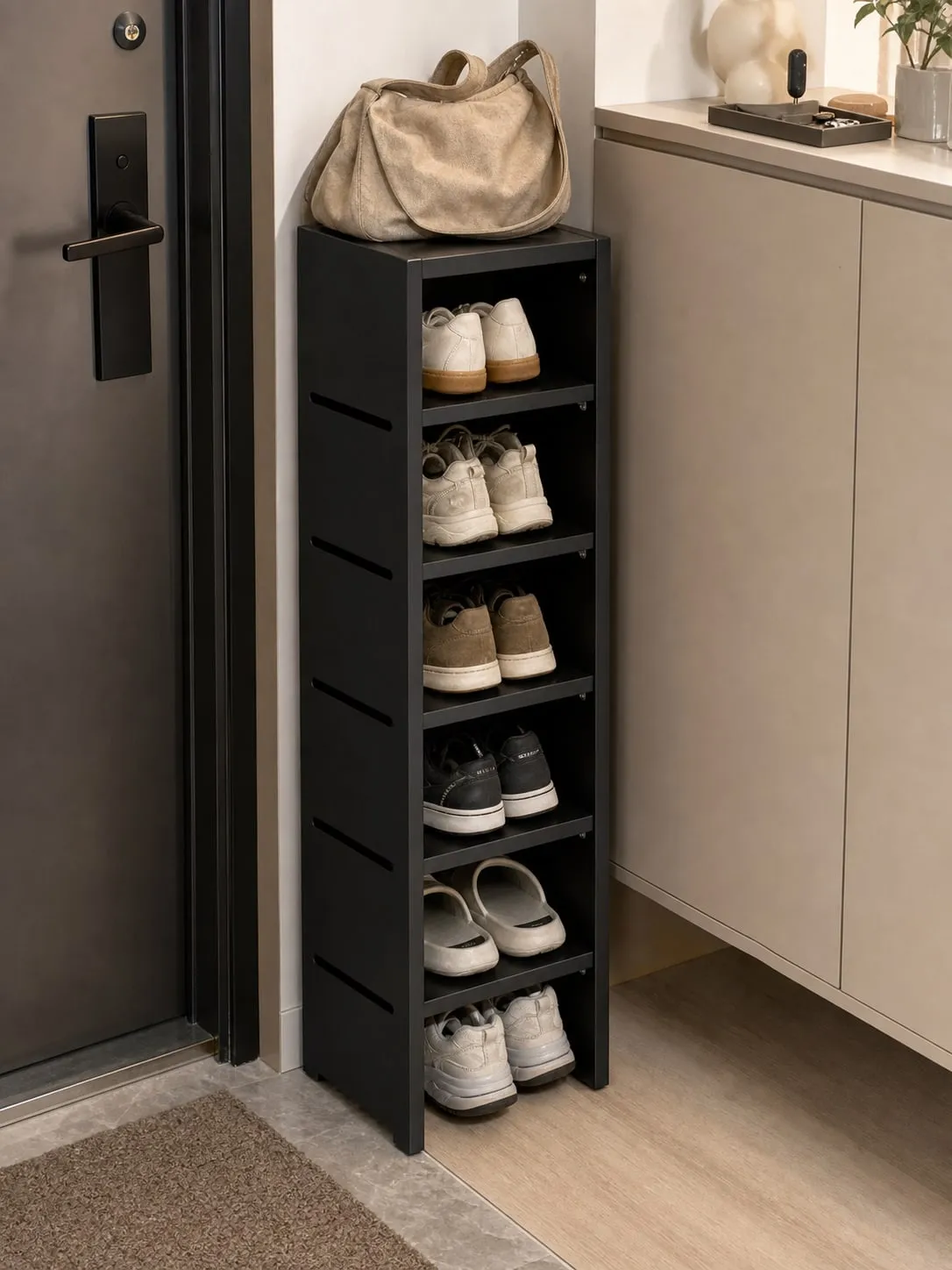
That makes this rack more of a daily-pair organizer than a full shoe storage system. It works best when the goal is to lift a few shoes off the floor without adding a wide cabinet.
Measure the real gap first
Check usable width, depth, and height before choosing a tier option. A narrow rack still needs space for the frame, the shoe length, and your hand when pulling out a pair.
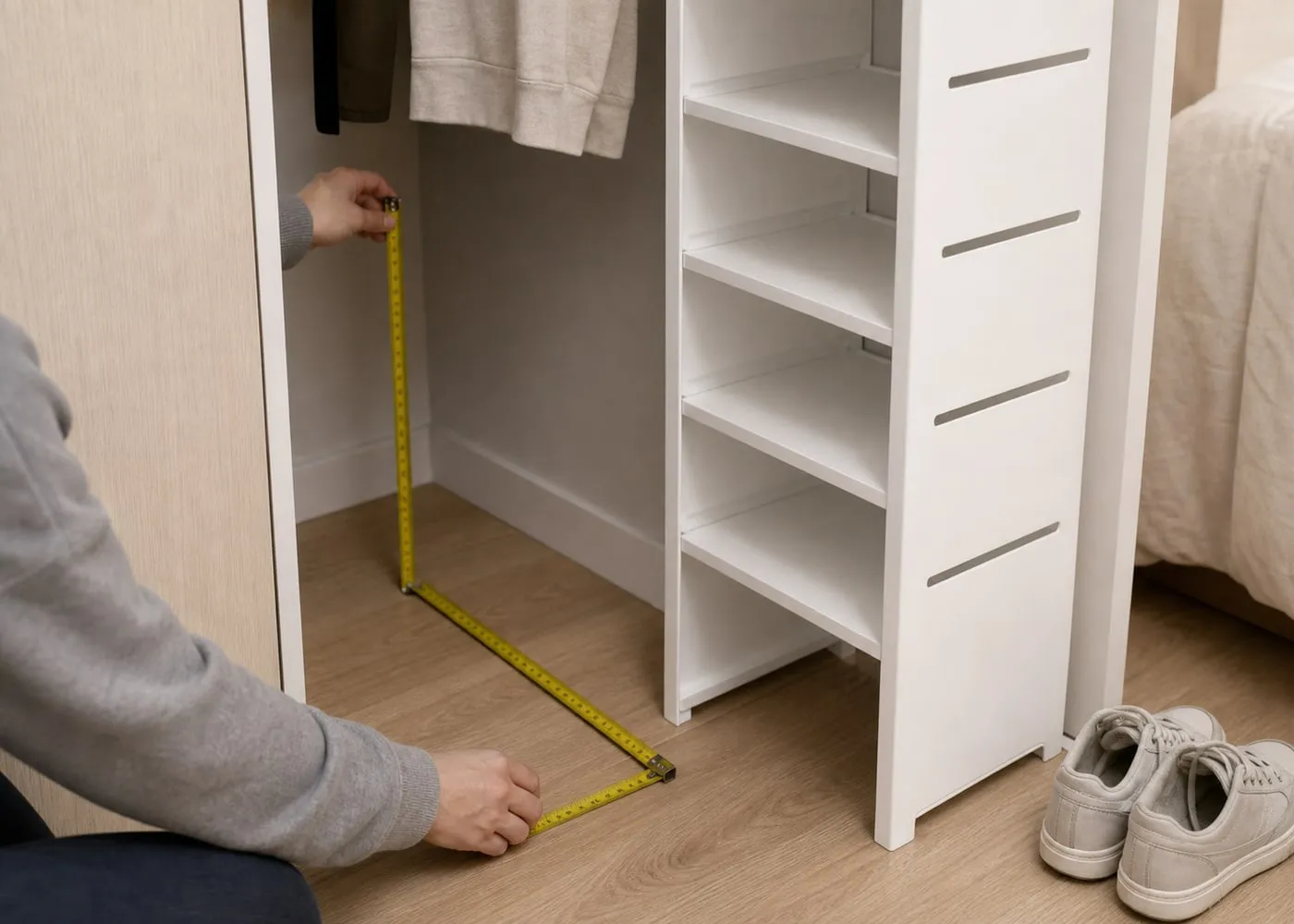
Depth matters more than product photos can suggest. Low-top sneakers and flats can protrude slightly from an open shelf, so measure the shoes in place, not just the rack frame.
Shelf spacing decides the shoe type
This format is strongest for low-top sneakers, flats, slippers, and light daily shoes. If the shelf spacing is tight, thicker sneakers may fit only on certain levels.
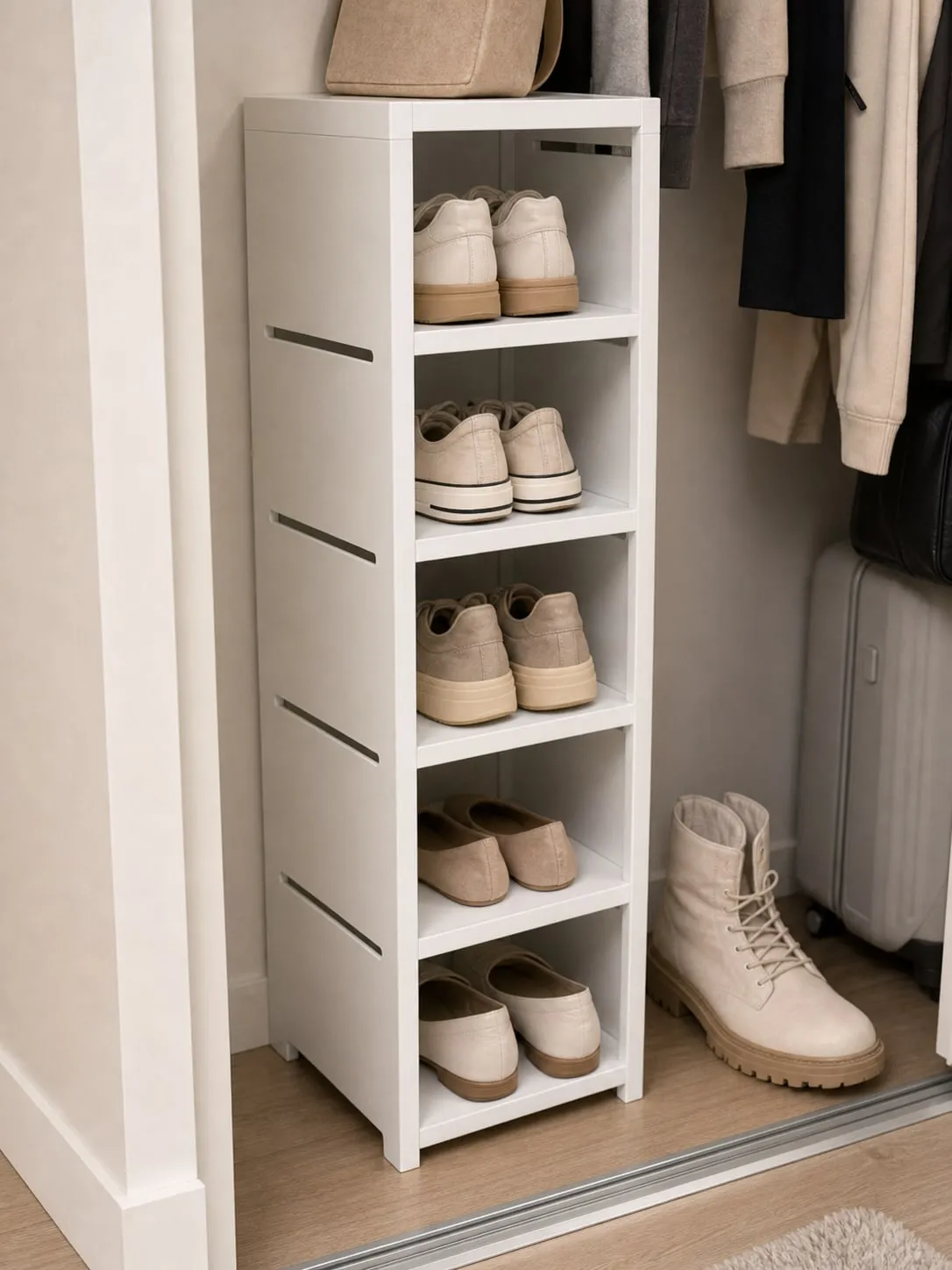
High-top shoes and ankle boots need extra caution. More tiers can hold more pairs vertically, but the extra height does not help if the shoes themselves do not fit comfortably between shelves.
Tall versions need calmer placement
A narrow tall rack should sit on a flat floor. It is easier to live with near a wall or closet side panel than in the middle of a busy walkway.
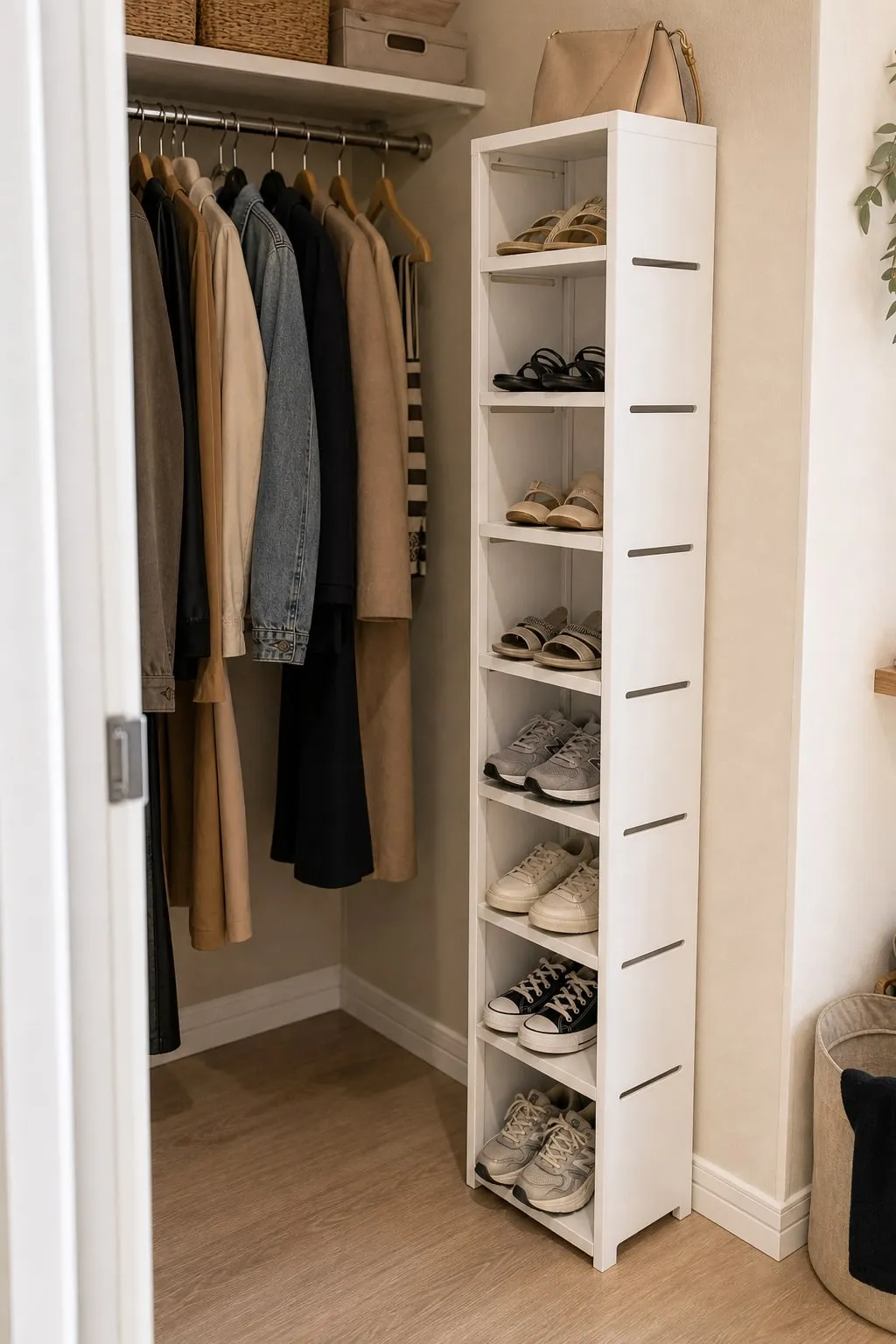
Keep denser pairs on the lower shelves and avoid filling only the top levels. If the floor is uneven or the rack gets bumped often, a shorter tier option may make more sense.
Check the parts before filling it
Before arranging shoes, lay out the shelves, side panels, and small connectors. Multi-tier rack kits can be annoying if a connector is missing or a shelf is installed in the wrong direction.
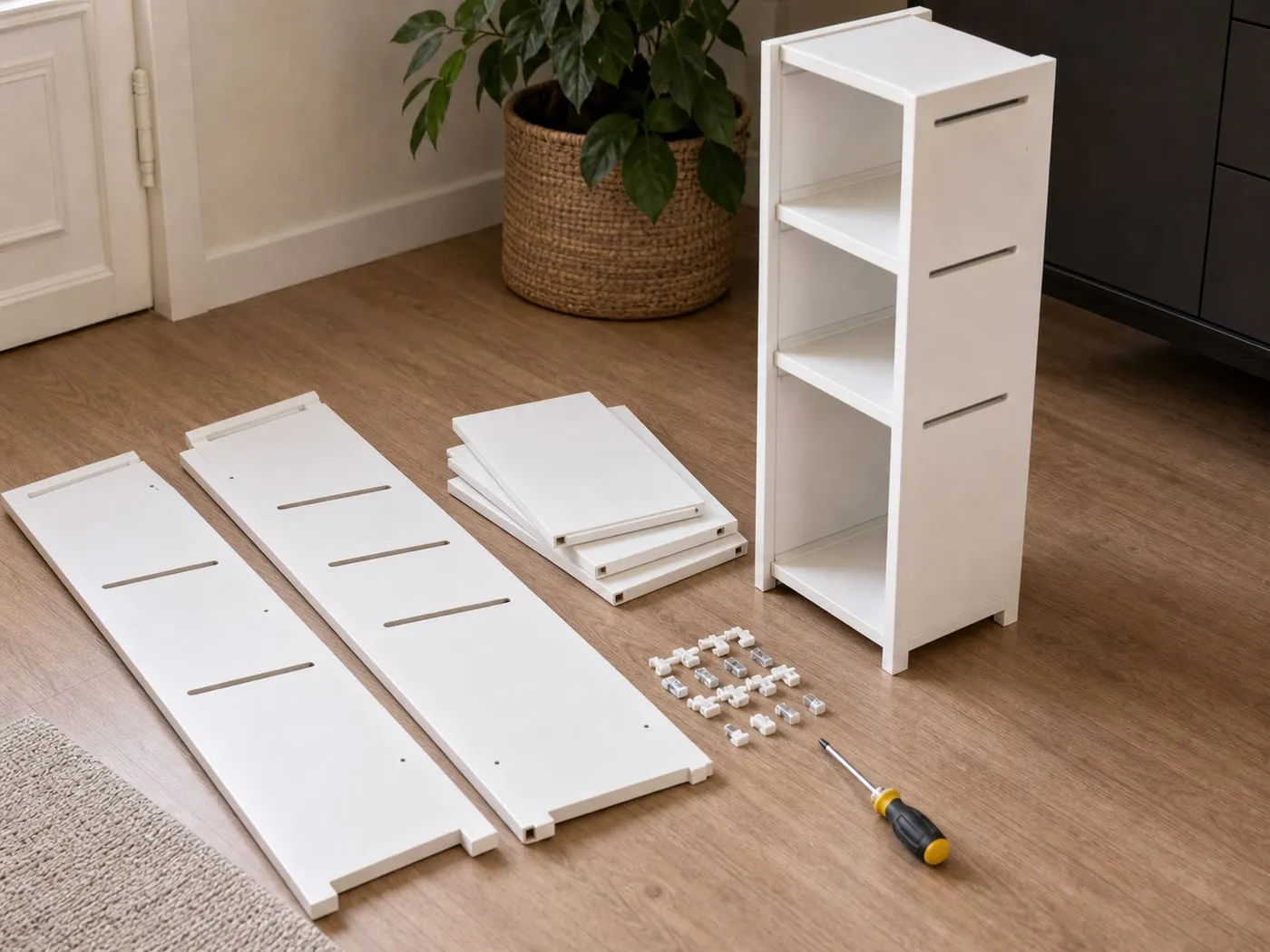
After assembly, press lightly from different sides and check whether the rack sits evenly. If it twists or rocks, fix the placement before adding shoes.
Verdict
The narrow upright shoe rack organizer is worth considering if a closet floor or entryway gap is too narrow for a wide rack but too useful to leave empty. It is strongest for daily low-top shoes that should stay visible and quick to grab.
Before buying, check width, depth, height, door clearance, shelf spacing, floor placement, and assembly parts. For boots, bulky shoes, or hidden storage, a different shape will likely fit the job better.