Ali review
A magnetic fridge spice rack starts with the fridge side
A practical AliExpress review of a magnetic refrigerator-side spice rack, covering magnet fit, clean surfaces, rack protrusion, door and walkway clearance, light sealed jars, and overload cautions.
Small spice jars can take over a kitchen counter quickly. You want the frequent ones nearby, but the counter starts looking crowded. If the side of the refrigerator is open, a magnetic rack is one possible way to move those small items off the work surface.
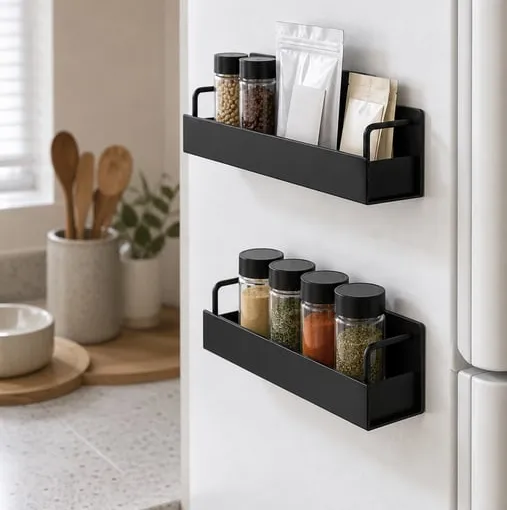
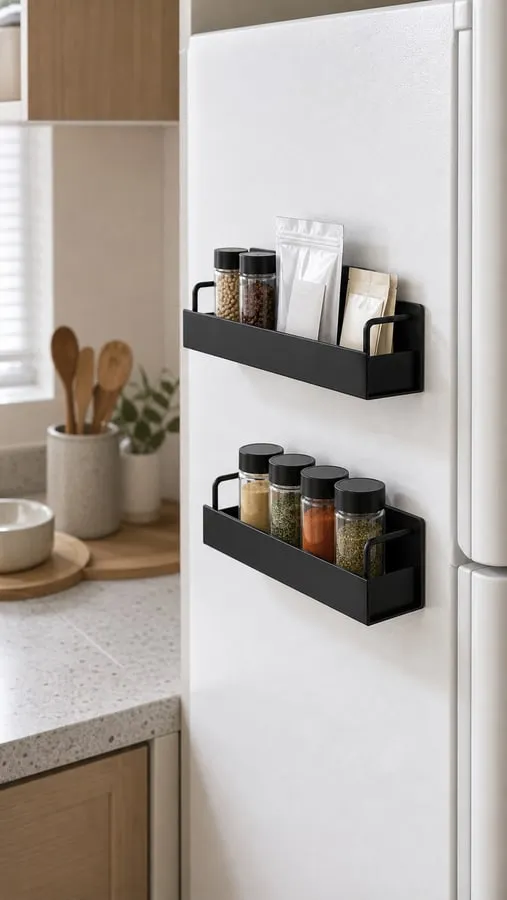
The product here is a magnetic refrigerator-side spice rack. Based on the product photos, it is a black shallow rack with side rails that attaches magnetically to a refrigerator side and holds small sealed spice jars or light packaged kitchen items.
Check the fridge side before the rack
This type of rack only makes sense on a flat magnetic metal surface. A stainless-look refrigerator can still be weakly magnetic or non-magnetic, so the product photo does not prove it will work at home.
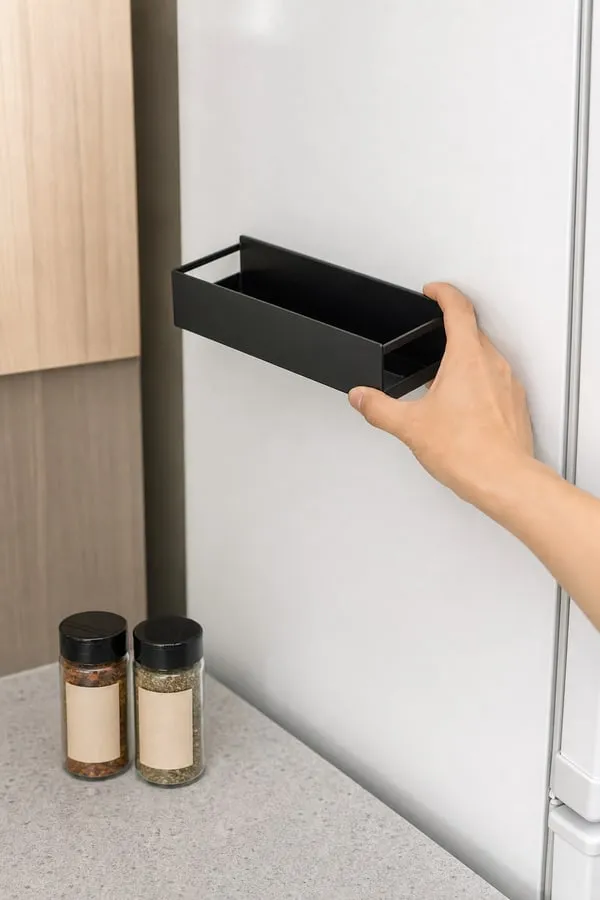
Before ordering, test the exact side panel where the rack would go with a small magnet. If the magnet barely grips, loaded storage is already a questionable idea.
Clean and dry matters
Magnetic mounting is not only about the magnet. Oil film, dust, condensation, and water can make a rack creep downward even if it seemed stable at first.
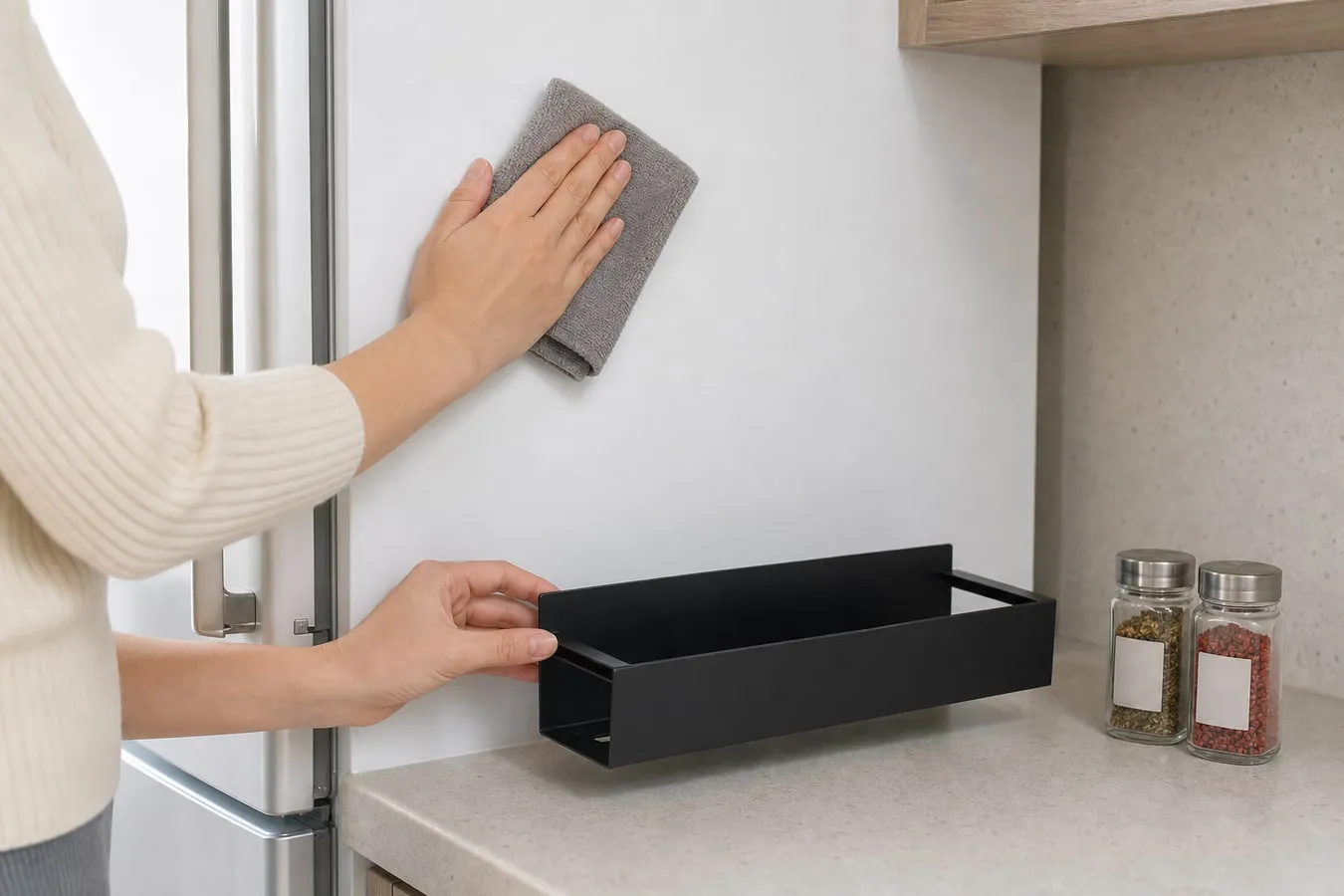
Curved or textured panels are also a poor match. The back of the rack needs even contact with the refrigerator side, or the load can tilt.
Protrusion and door swing decide the placement
The rack sticks out from the side of the appliance, so check more than width. Look at the counter edge, nearby wall or cabinet, walking path, and refrigerator door swing.
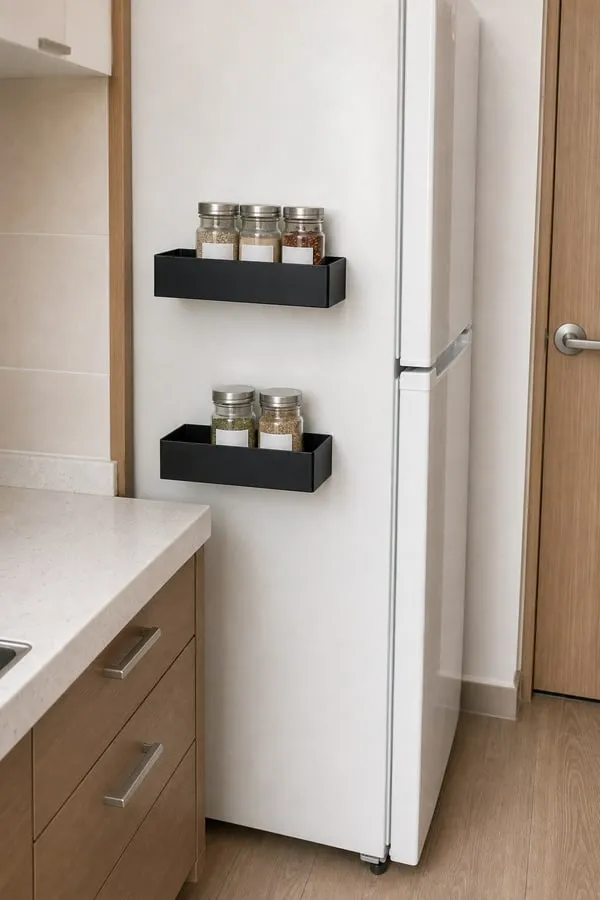
Avoid vents and warm areas around appliances. Heat and steam are not good places for small seasonings or packaged kitchen items, even if the rack itself sticks.
Keep the load light and sealed
This is best framed for light sealed spice jars, small seasoning containers, and small packets. It is a visible spot for frequently grabbed items, not a serious storage shelf.
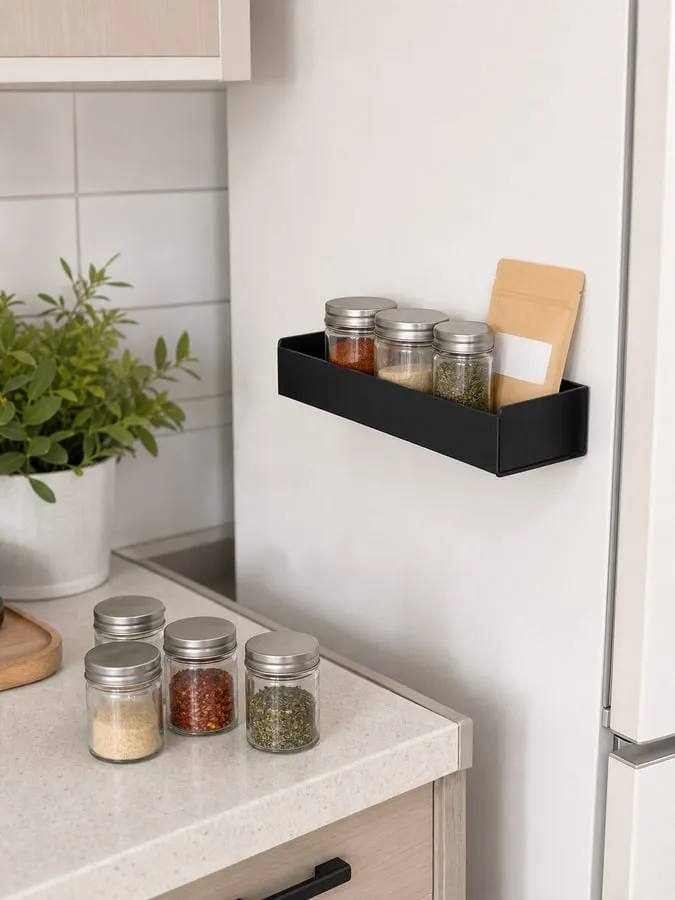
Avoid large bottles, oil bottles, cans, knives, detergents, fragile ceramics, and anything that would touch food directly. If a falling item would be a problem, it does not belong there.
Test one rack before filling more
Do not start by loading every rack. Place one rack, add a light item or two, and watch for sliding, tilt, or magnet shift when the refrigerator door moves.
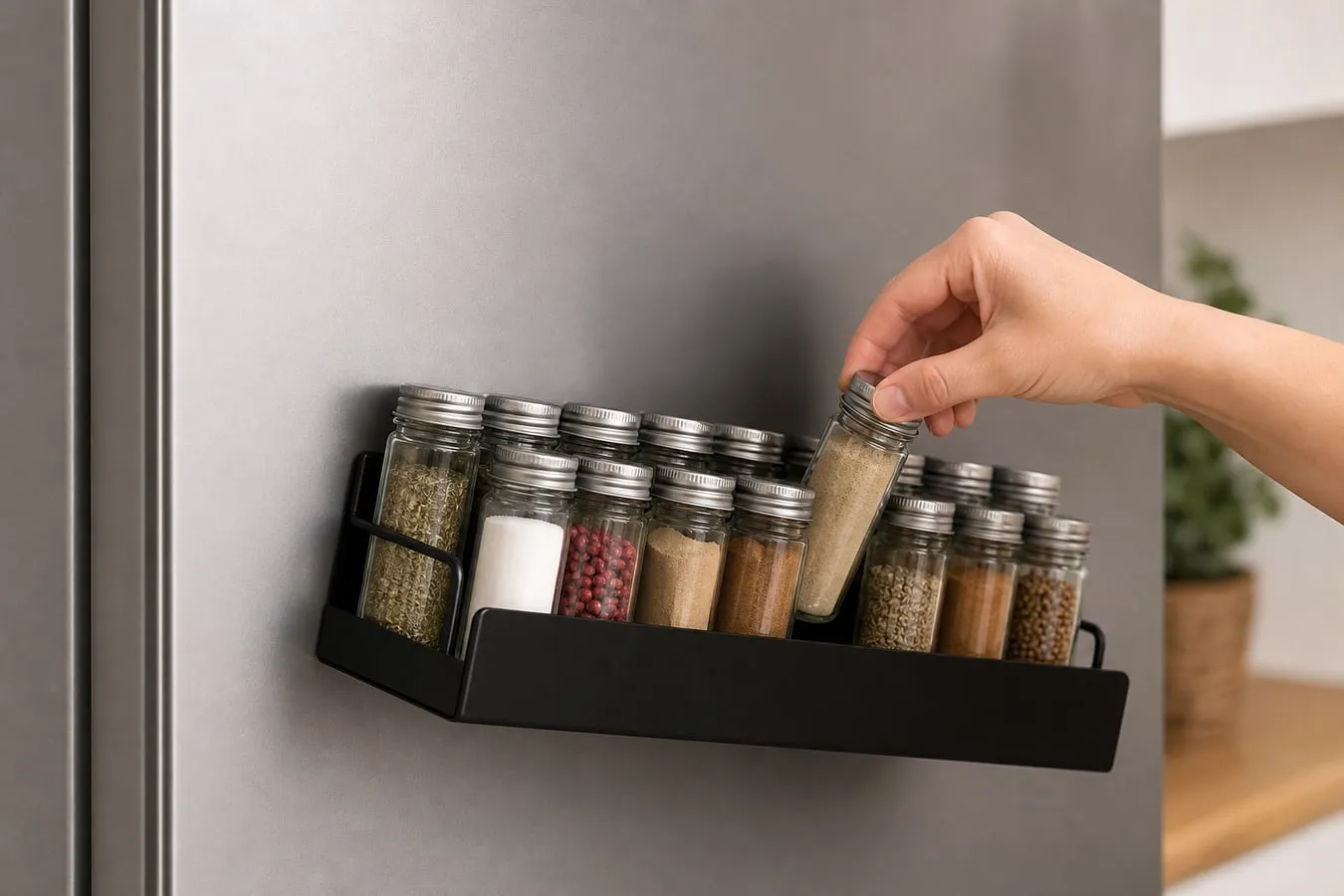
If the rack creeps downward or tilts with light items, reduce the load or choose another storage method. More racks can make overloading feel tempting, so the first test matters.
When another organizer is better
A magnetic rack is convenient because it avoids drilling and adhesive, and it can be moved around. That only helps when the refrigerator side is a good surface and the walkway has room.
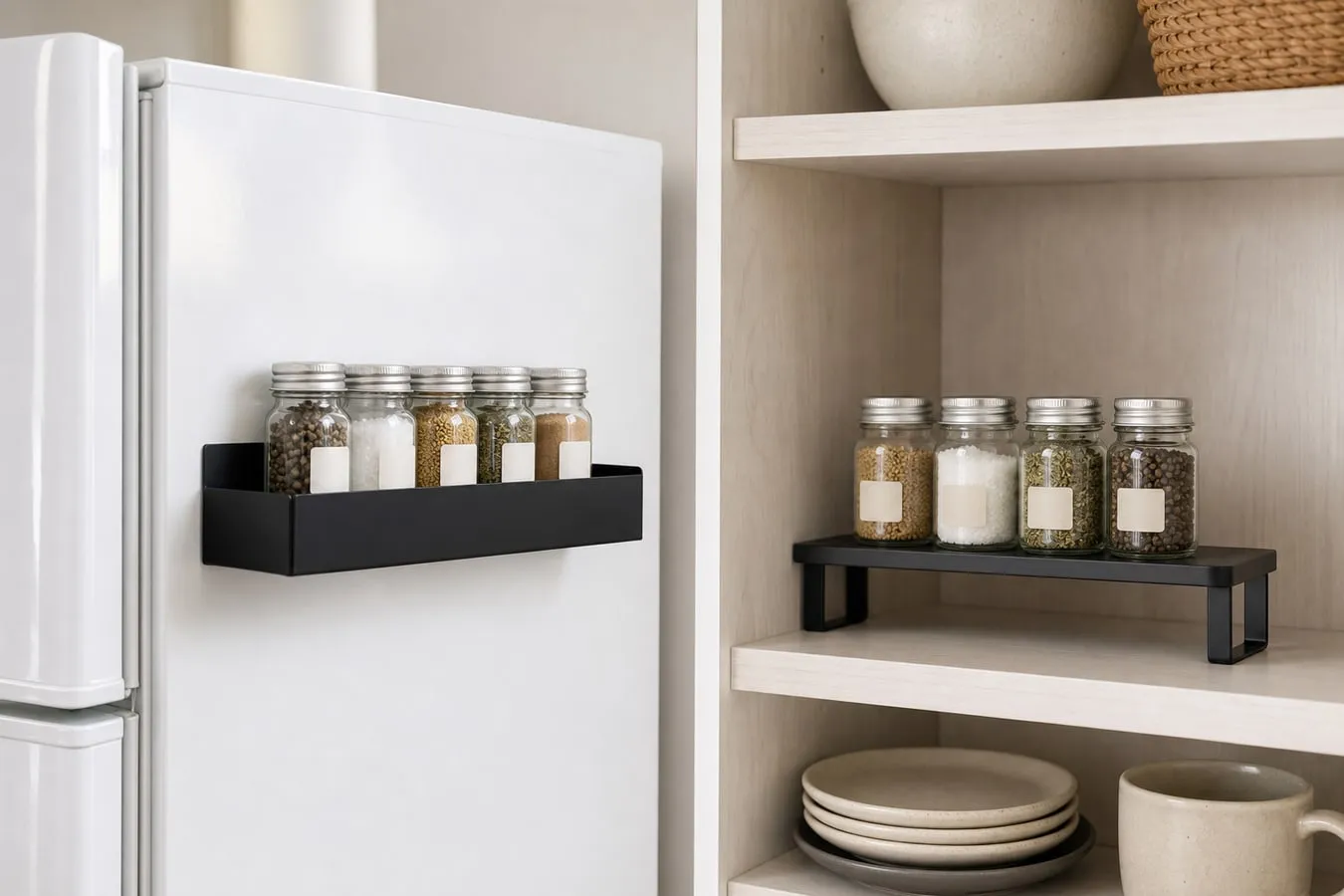
If the fridge side is weak for magnets, a small counter shelf, cabinet shelf riser, or pantry tray may make more sense. In a narrow kitchen, a protruding side rack can become the annoying part.
Verdict
The magnetic refrigerator-side spice rack is worth a look if your refrigerator side is flat, magnetic, and clear of traffic. The key checks are magnet grip, surface condition, rack depth, door swing, walkway clearance, and the weight of the items.
It is not the right answer for heavy bottles or universal appliance storage. As a light visible zone for sealed small kitchen items, the idea lines up better.