Ali review
A cabinet plate rack should split space, not invite heavy stacking
AliExpress kitchen cabinet plate rack review covering retractable shelf risers, cabinet depth and height, conservative dish loads, vertical plate rack comparisons, and moisture cleanup.
Kitchen cabinets often waste vertical space. When plates are stacked too high, pulling one from the bottom can make the whole pile shift. Cups, bowls, and small dishes mixed into the same space only make the cabinet more annoying to use.
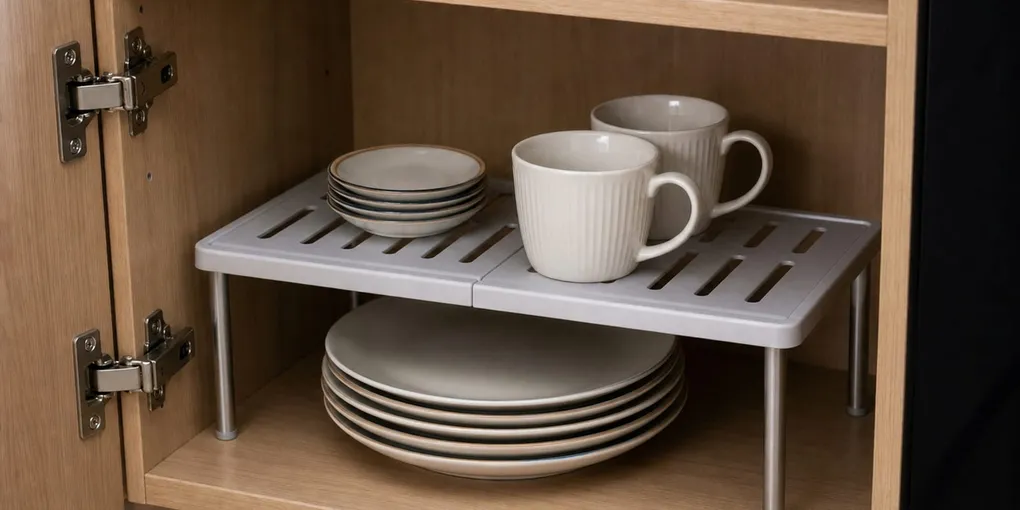
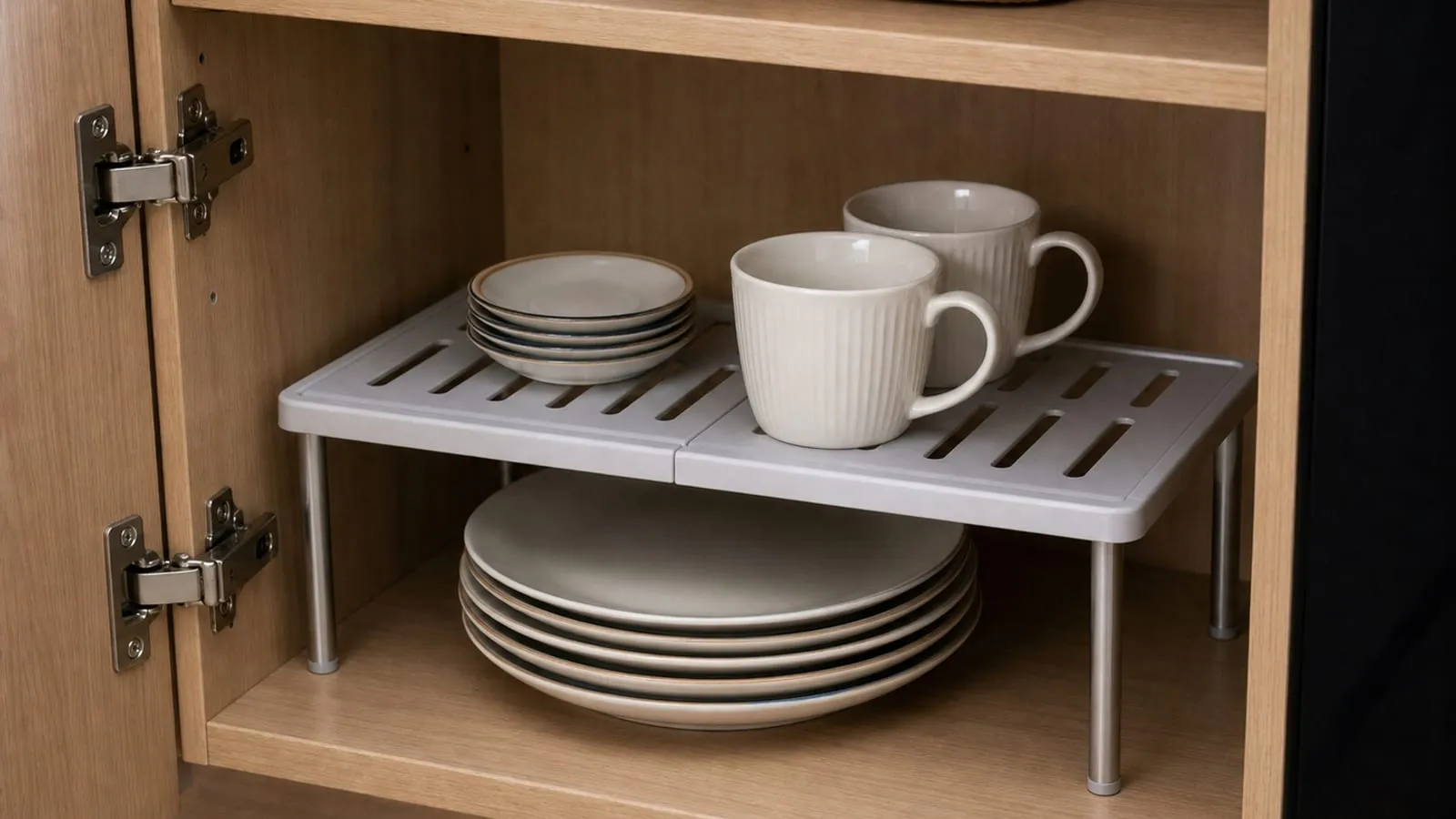
The main option here is this retractable cabinet shelf organizer. Based on the product photos, it is a low shelf riser with a gray or white slotted top and thin metal legs, meant to split cabinet height into two smaller levels.
Check Height And Depth Together
Width is only one part of the fit. Cabinet depth, usable height, hinges, and the front door lip all matter. A riser can fit inside the cabinet but still become useless if cups on top stop the door from closing.
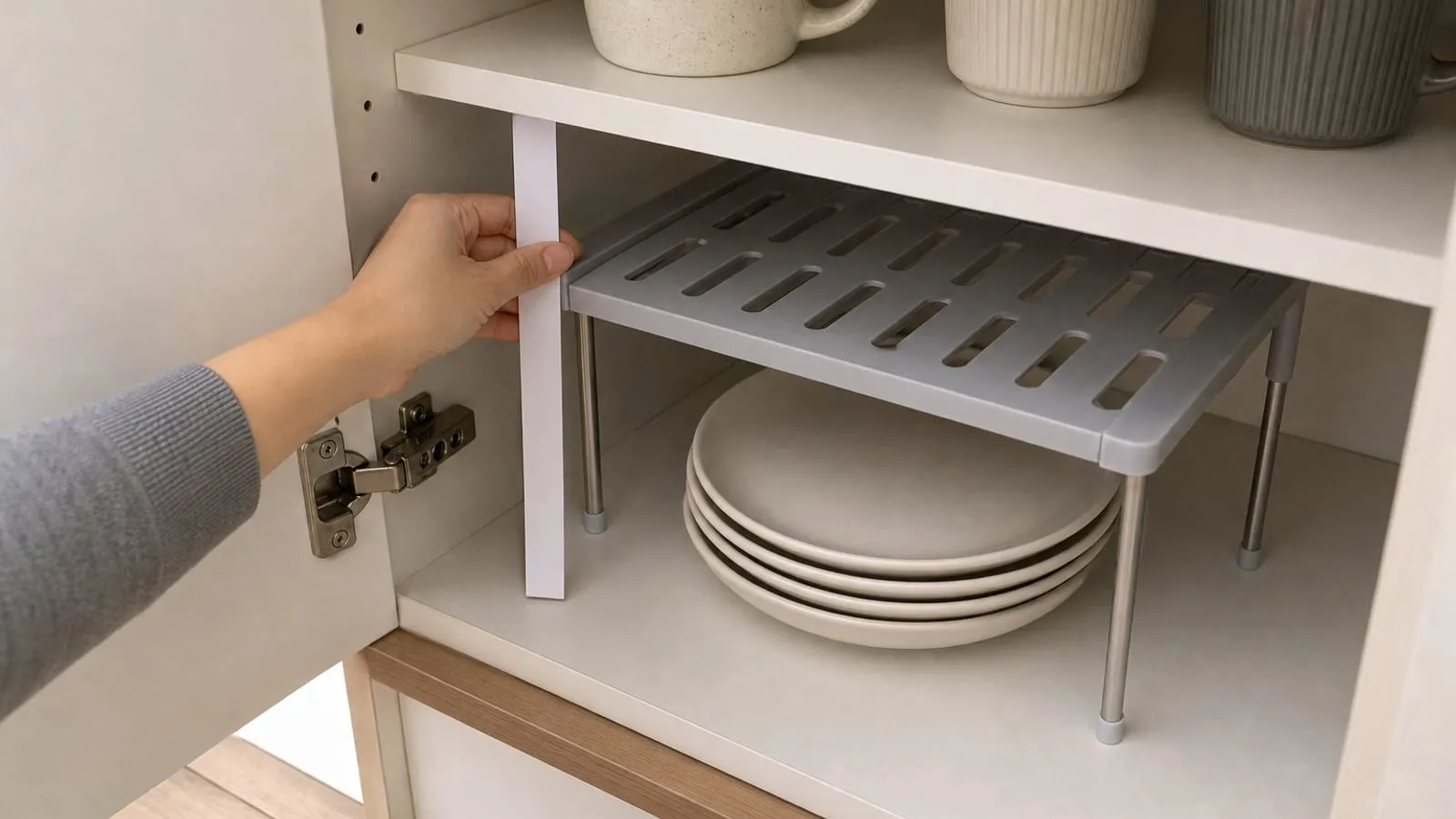
Think of the total stack: lower dishes, riser height, and upper items. If the riser extends wider, be more cautious about the center span. All legs should sit fully on a flat cabinet shelf, not over a gap or right on the edge.
Keep The Upper Level Light
This kind of riser is not a shortcut for stacking more heavy dishes. Thick ceramic plates, stoneware bowls, glass mixing bowls, and large serving dishes should stay directly on the cabinet shelf. The top level makes more sense for light saucers, cups, small bowls, or lightweight containers.
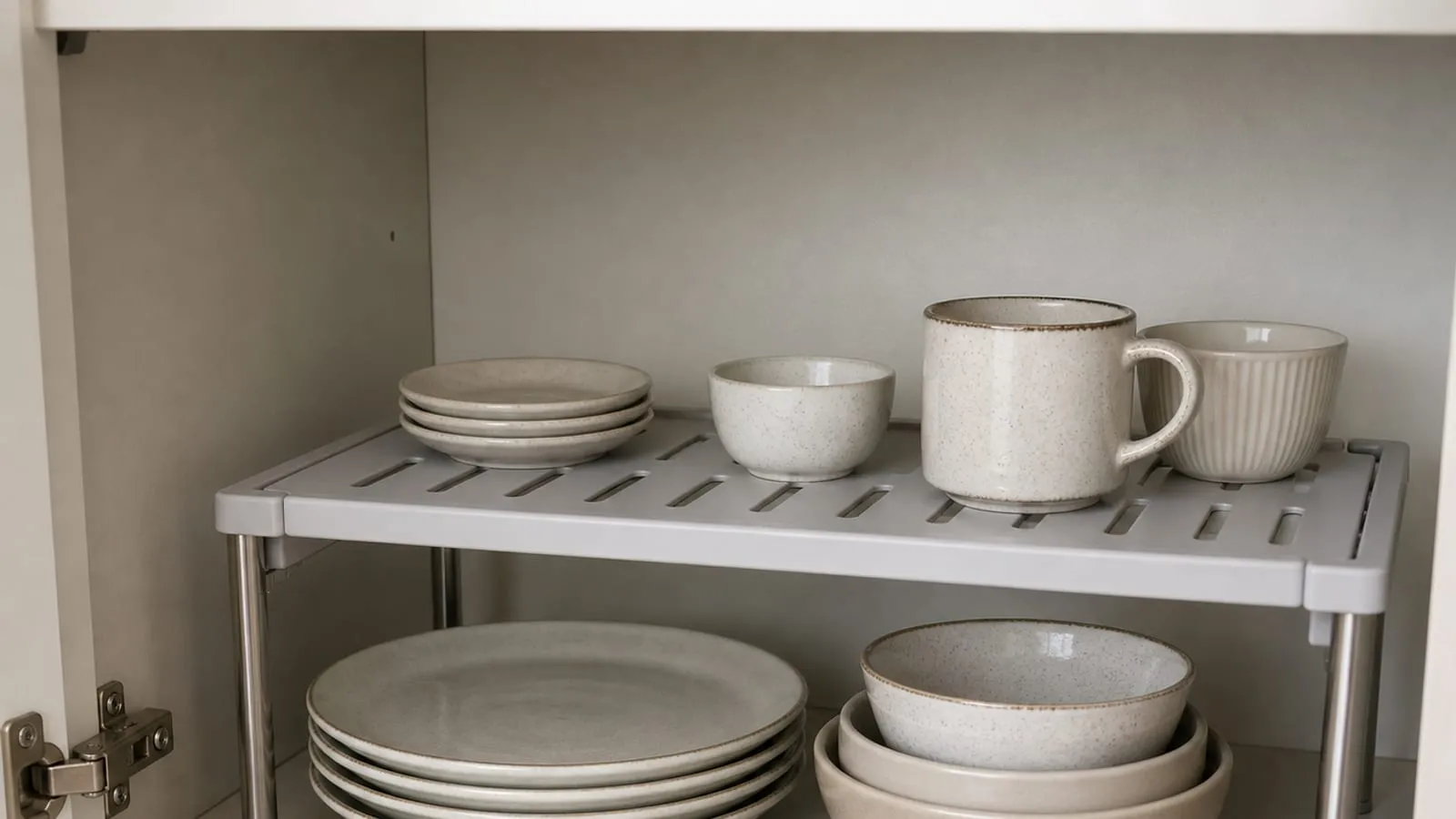
Fragile or expensive dishes are also not ideal for a raised tier. Even if the shelf seems to hold them, pulling a plate sideways can drag the riser, and a slightly uneven leg can make dishes clink together.
If It Wobbles, Reduce The Load
The important test is not just how it looks after installation. Watch what happens when you remove a dish. If the riser slides, bends, flexes, or one leg lifts, reduce the load and reposition it.
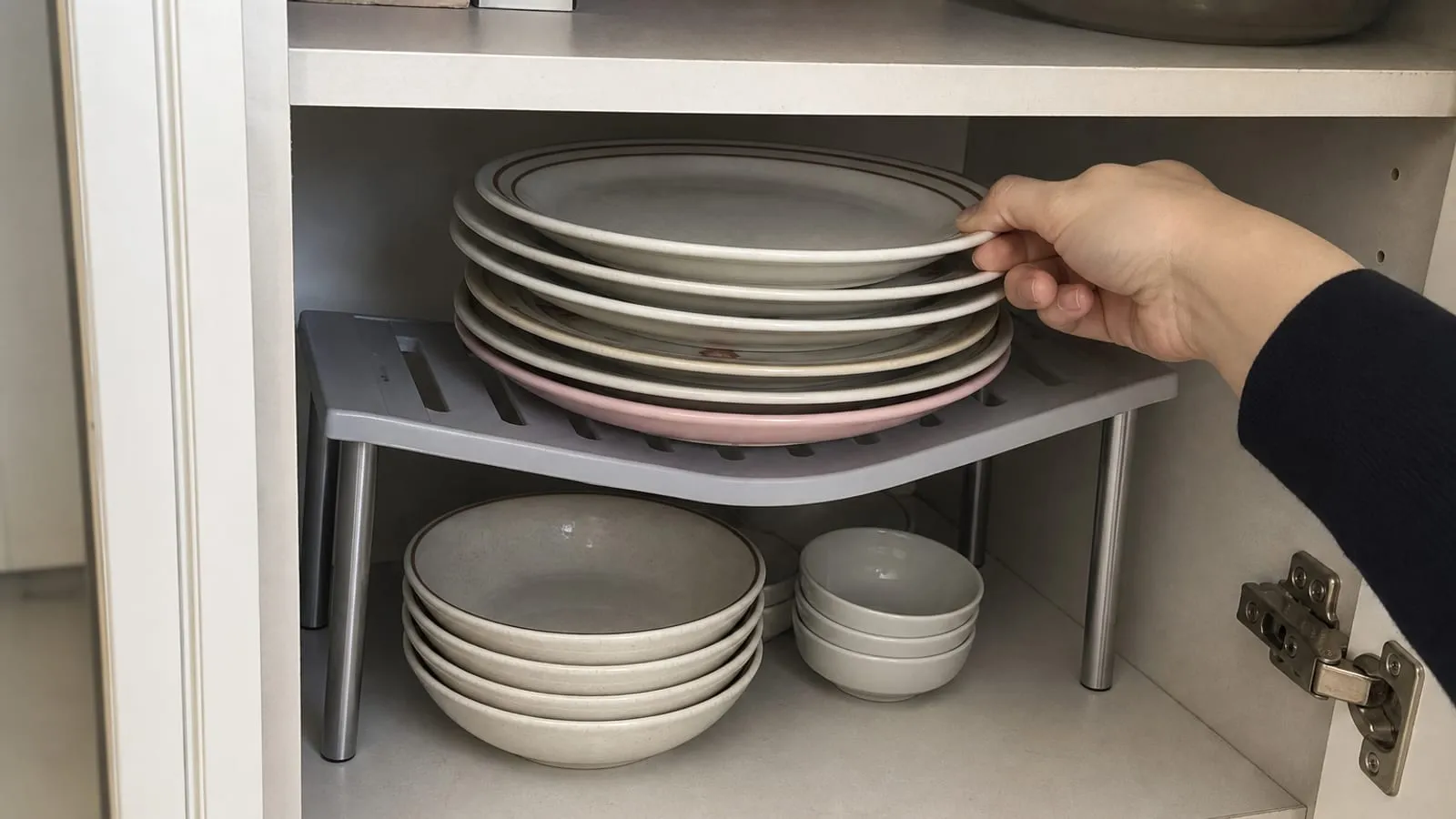
Thin non-slip pads can help in some cabinets, but they should not create uneven leg height. Avoid placing the legs across a shelf seam, on a shelf edge, or on a warped liner. A low, boring setup is better than a tall risky stack.
Upright Plate Racks Are A Different Choice
If you want plates stored upright, a vertical plate rack is the more relevant comparison. It does not create a second shelf. Instead, it separates plates into slots, so plate diameter, rim thickness, cabinet depth, and door clearance become the key checks.
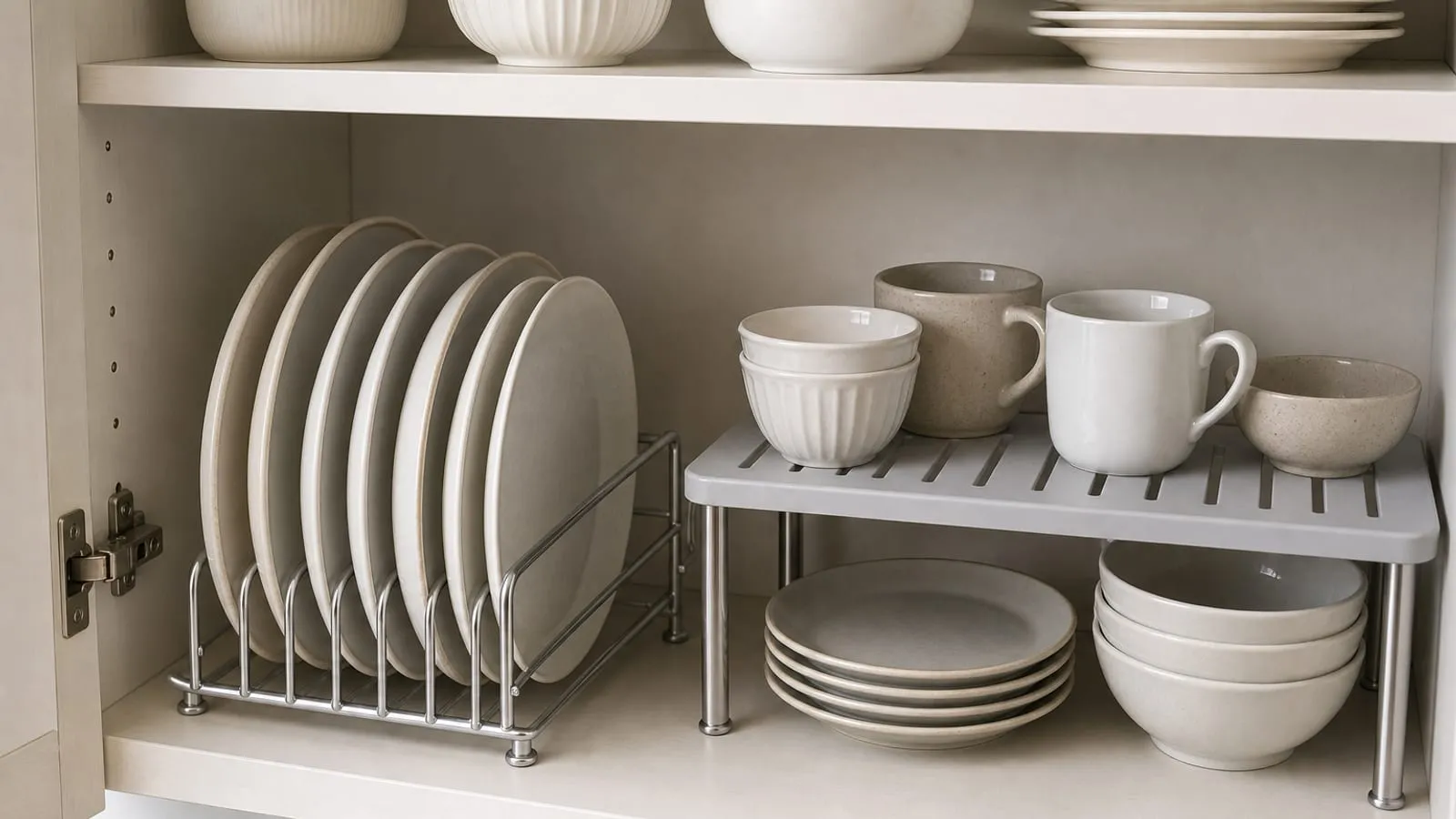
Upright storage can make everyday plates easier to grab, but tightly packed slots can press on plate rims. Large plates or thick-rimmed dishes need more spacing. Another retractable cabinet shelf option can also be compared if the size or option set fits your cabinet better.
Moisture And Feet Matter Too
Cabinets are not always perfectly dry or clean. If dishes go in damp, moisture can collect around the feet. Dust and kitchen film can build up under the contact points, especially near the sink.
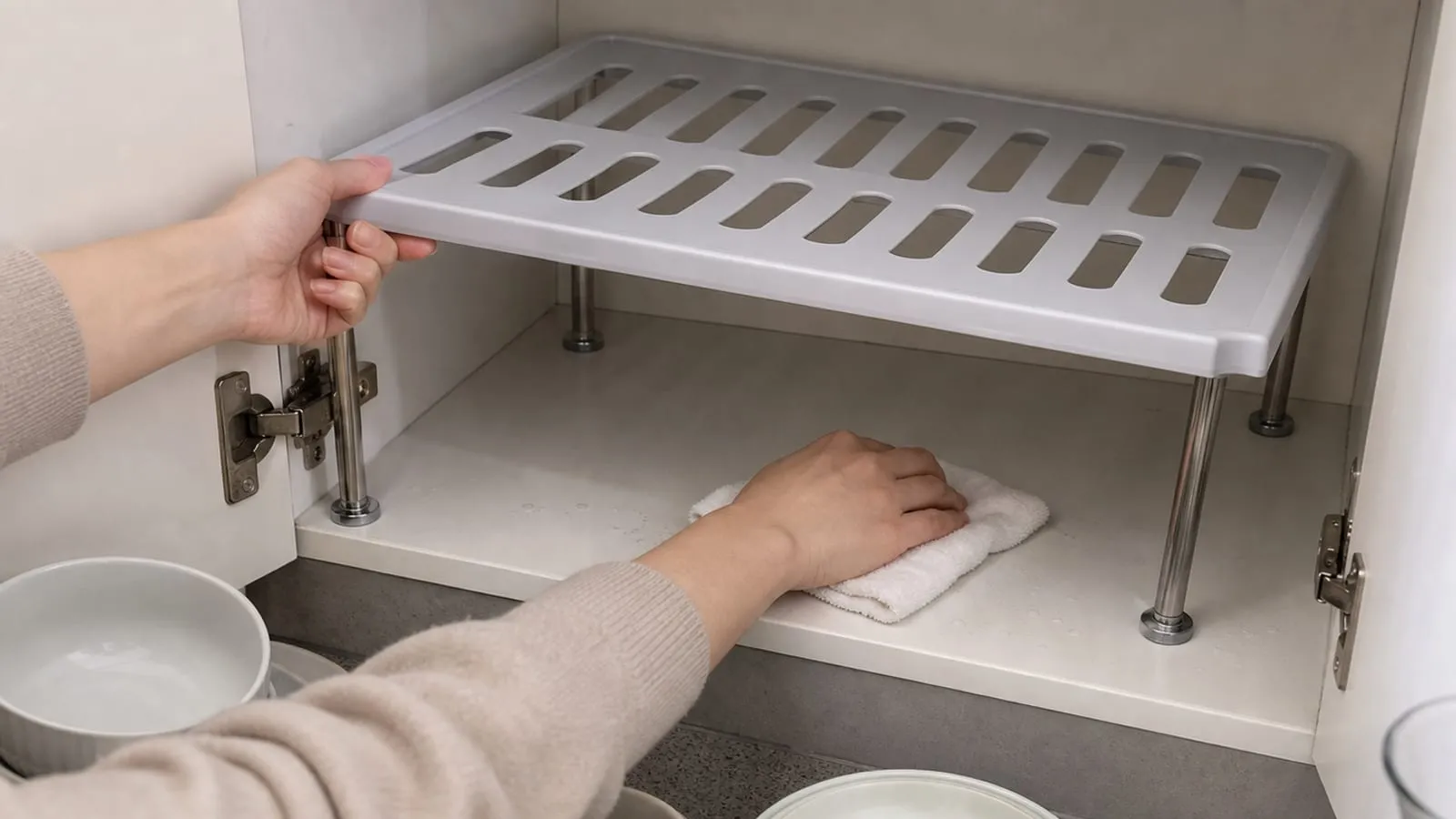
It is worth removing dishes occasionally and wiping under the riser. Check the legs, joints, slotted top, and caps for looseness, rough edges, or uneven contact. If the feet do not sit level, fix the position before loading dishes again.
Verdict
The retractable cabinet shelf organizer is worth a look if your cabinet has unused vertical space and you want dishes, cups, and small bowls separated into lower stacks. It is best treated as a light organizing riser, not a heavy-duty shelf.
Keep heavier dishes on the cabinet shelf itself and use the raised level for lighter items. Measure cabinet height, depth, door clearance, and leg contact first. That is what makes this kind of product useful instead of risky.