Ali review
A sock drawer needs visibility more than another big bin
AliExpress fabric sock and underwear drawer organizer review covering cell size, drawer measurements, foldable construction, overfilling, mesh dividers, and larger fabric basket comparisons.
A sock drawer can look sorted for a few days and then turn into one soft pile again. Thin socks, thick socks, folded underwear, ties, and small belts all get mixed together, so finding one item takes more digging than it should. In that situation, a divided fabric organizer can be more useful than one larger bin.
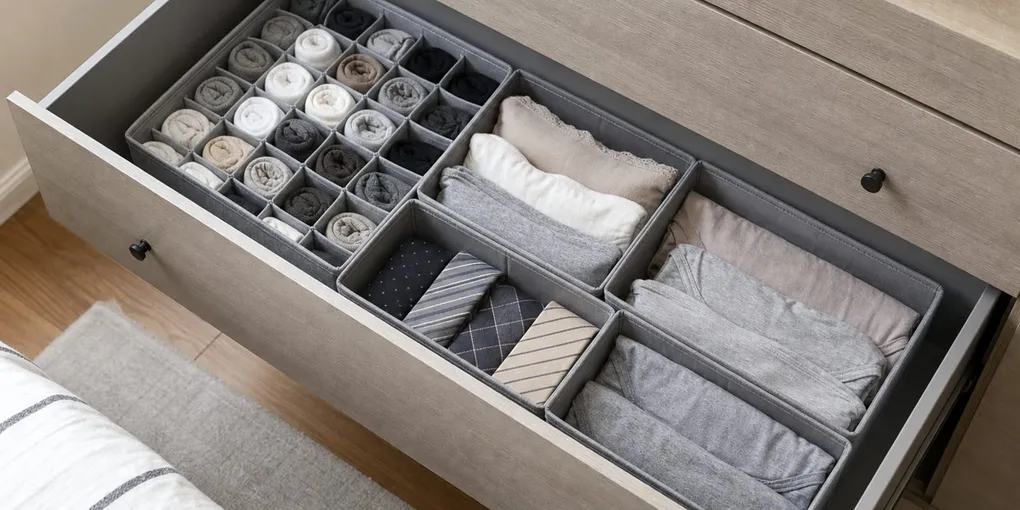
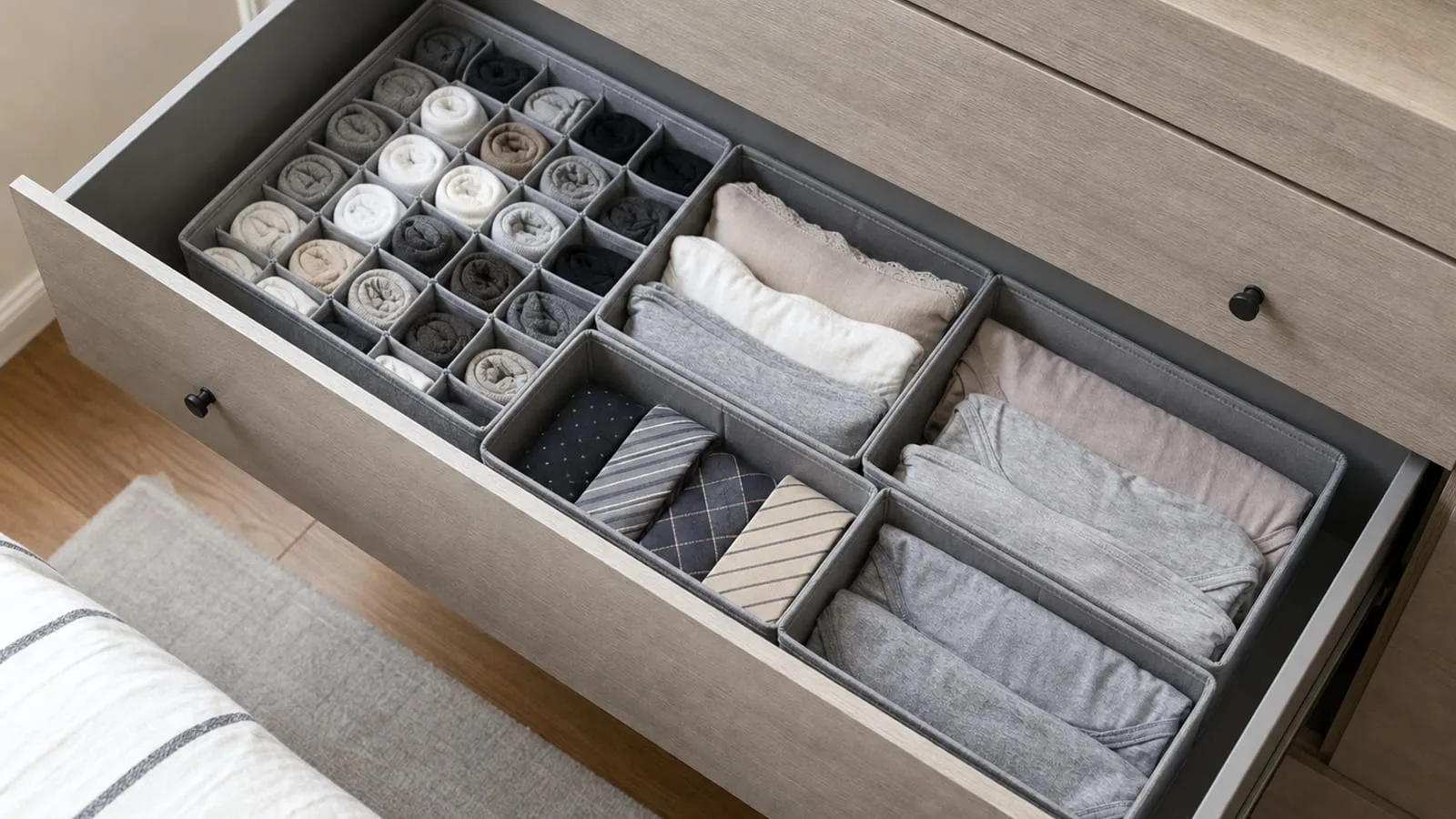
The main option here is this gray fabric drawer organizer set. Based on the product photos, it combines small grid cells and wider row compartments, so it makes sense for separating thin socks, folded underwear, ties, and similar small dry garments inside a dresser drawer.
Measure The Inside Of The Drawer First
The set can look generous on the listing page, but it only works if the pieces fit your drawer. Measure the inner width, depth, and usable closing height, not the outside size of the furniture. Rails, front lips, and drawer handles can make the usable space smaller than expected.
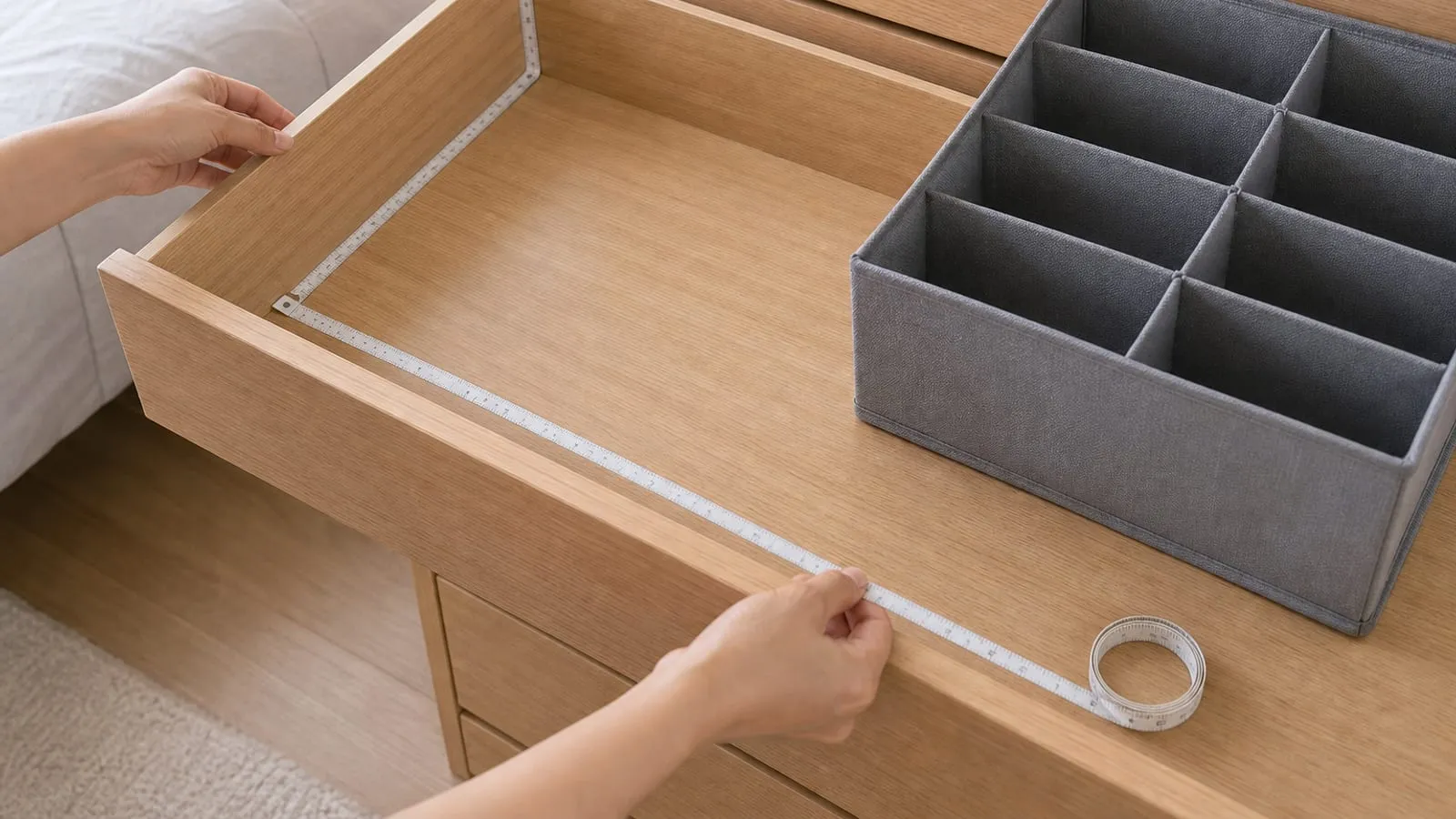
Height matters most in shallow drawers. A little fabric above the edge may be fine, but if the drawer presses down every time it closes, the soft dividers can lose shape quickly. Also check the exact option you select, because these listings often mix different set counts and cell layouts.
Small Cells Are Mostly For Thin Socks
Small square cells are not universal storage. They work best for thin socks and similarly compact items. Thick winter socks or folded underwear can stretch the dividers and make the drawer harder to use.
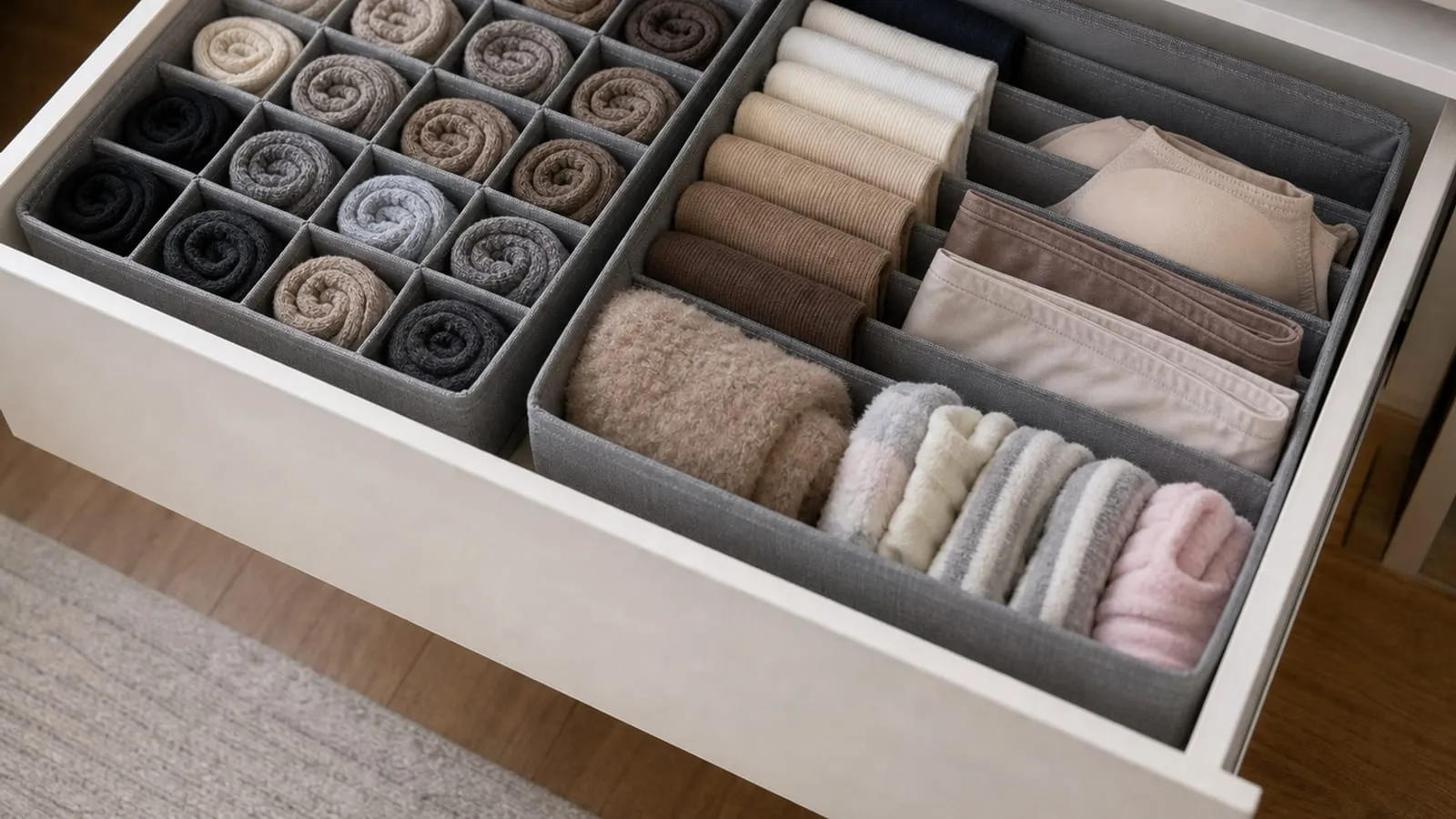
Bulkier pieces belong in the wider rows or larger box-style compartments. Ties, slim belts, and handkerchiefs also need the right cell size. More cells do not automatically mean more capacity; the real advantage is that each item has a visible place.
Foldable Construction Needs A Quick Check
The product photos suggest a flat-packed organizer that unfolds into shape. With this type, the first setup matters. The zipper, folding panels, and soft walls need to sit evenly before the organizer goes into a drawer.
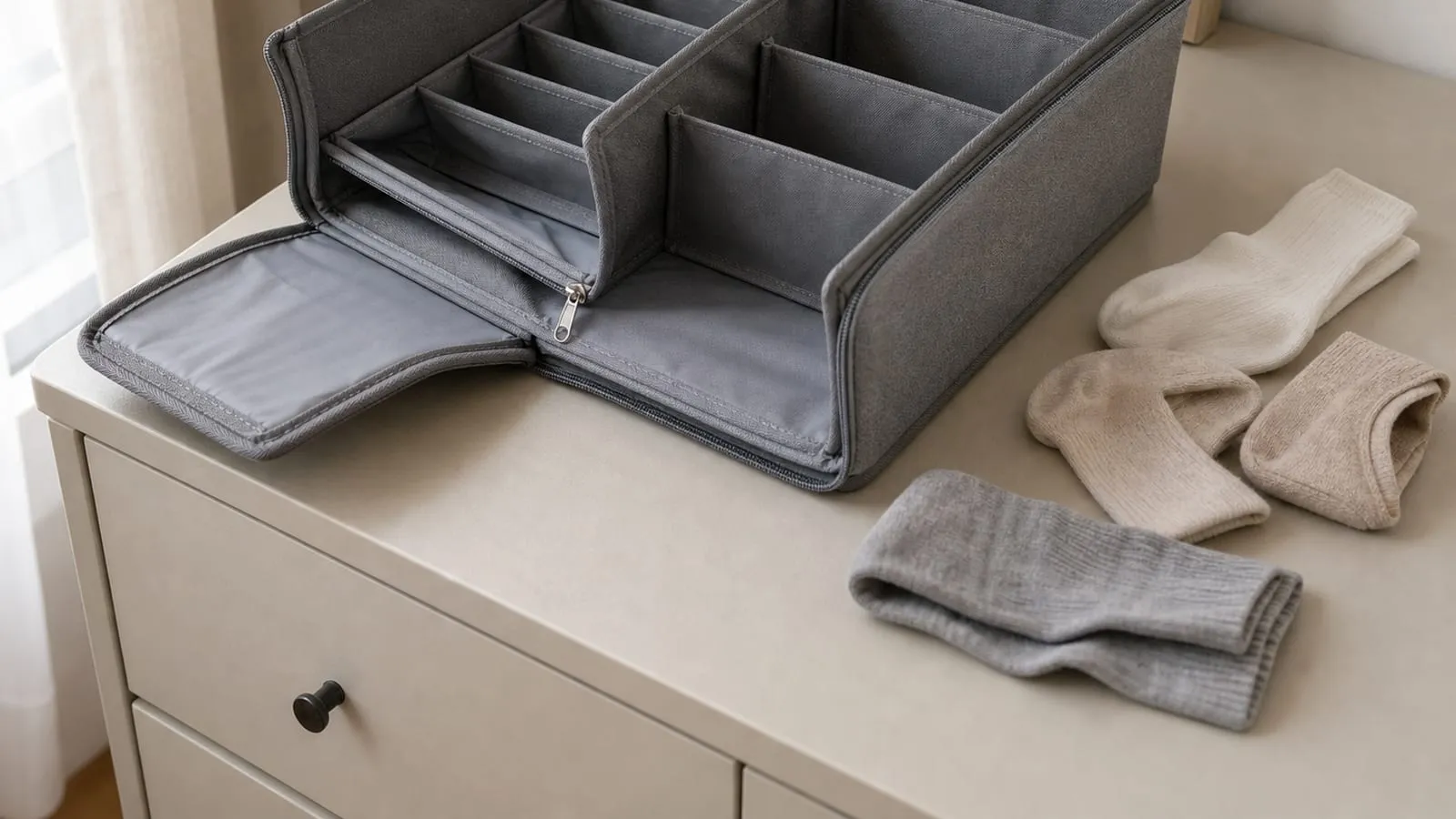
It is better to shape and air it out before filling it tightly. Fabric storage items can carry packaging smell at first, so putting them straight into a closed drawer is not ideal. Keep damp laundry and strongly scented items out of these bins as well.
Do Not Pack Every Cell Tight
This organizer does not create new drawer space. It divides the space you already have. If every cell is stuffed to the top, the drawer may look neat at first, but pulling one item out can disturb the neighboring cells.
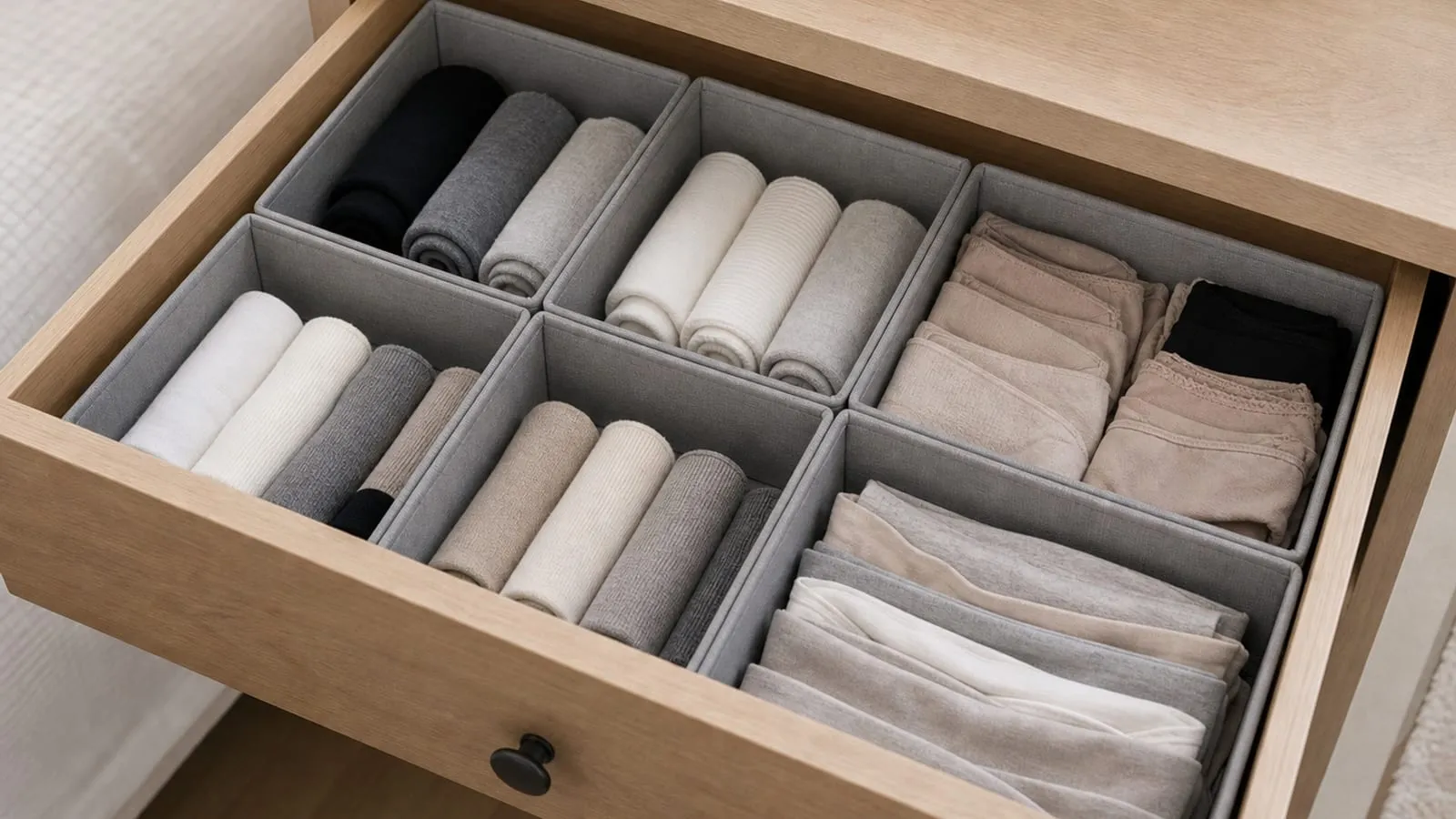
The more practical setup is slightly loose. Everyday socks can stay near the front, while seasonal or less-used pieces can move to a wider rear compartment or another bin. If the drawer feels compressed when closing, reduce the load first.
Mesh Dividers And Big Baskets Solve Different Problems
A similar option is this mesh-style underwear and sock organizer. It may suit shallow drawers because it looks lighter and thinner, but flexible walls can fold when packed too tightly. That matters if the drawer is opened often or the contents change frequently.
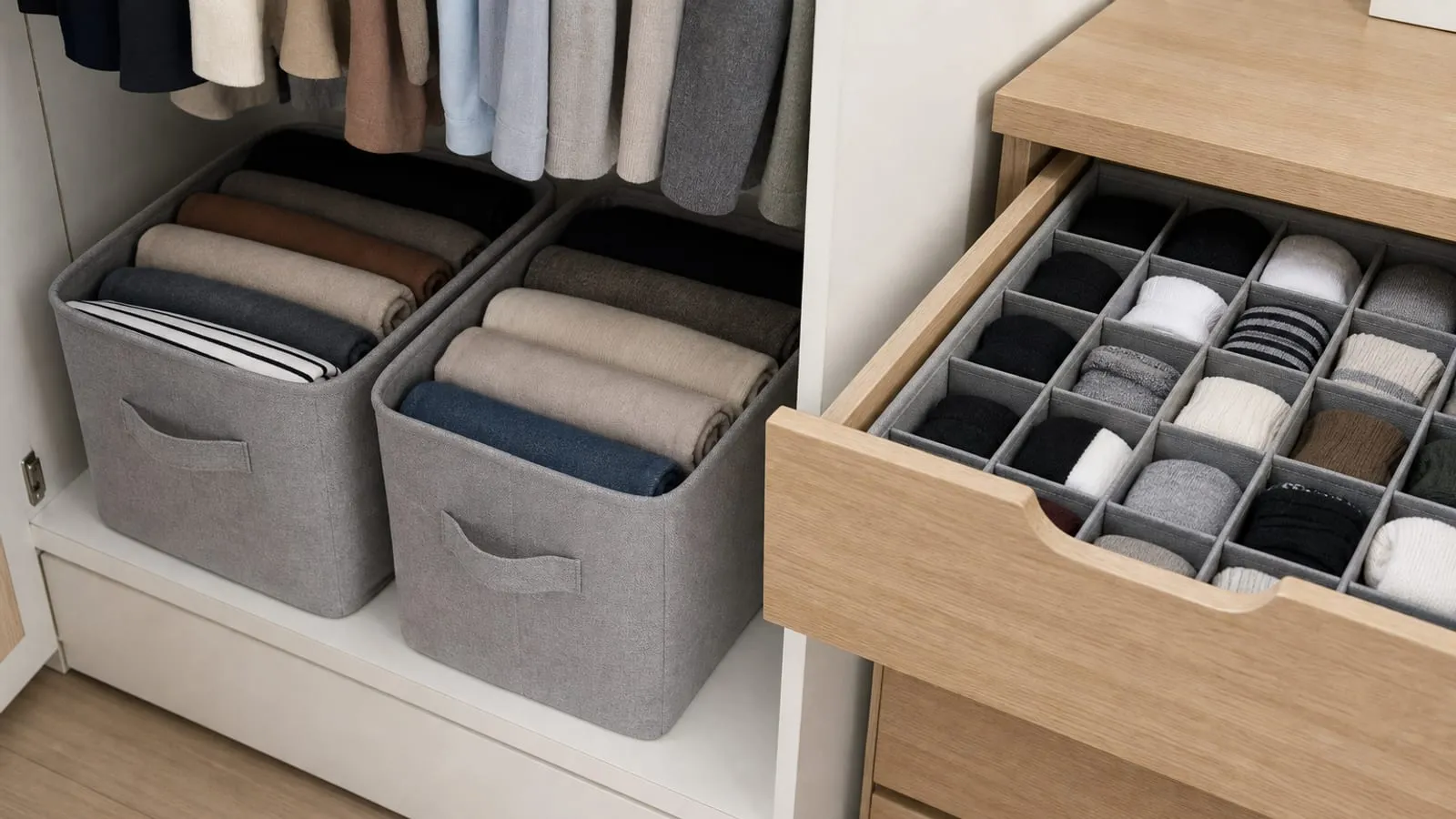
A larger foldable fabric basket is a different tool. It is better for closet shelves, deep drawers, or grouped seasonal items than for separating each pair of socks. Choose grid organizers for visibility and bigger baskets for broad grouping.
Verdict
The gray fabric drawer organizer set is worth a look if small garments keep mixing together in your drawer. Treat it as a visibility tool, not a way to magically increase storage volume.
Measure the inside of the drawer, check the selected option and cell layout, and think about height before ordering. Thin socks go in small cells, bulkier pieces go in wider compartments, and the whole setup works better when it is not overfilled.