Ali review
When ties and belts disappear behind shirts, a vertical closet rack makes sense
AliExpress tie and belt closet rack review covering rod clearance, hook finish, belt balance, door clearance, 12-hook accessory hangers, and multi-hole scarf hanger comparisons.
Ties and belts are easy to lose inside a closet. Hang them behind shirts and you forget what is there. Put them in a drawer and buckles, fabric, and narrow pieces tangle together. For that problem, a rod-hung vertical rack is often easier to compare than another wall-mounted hook.
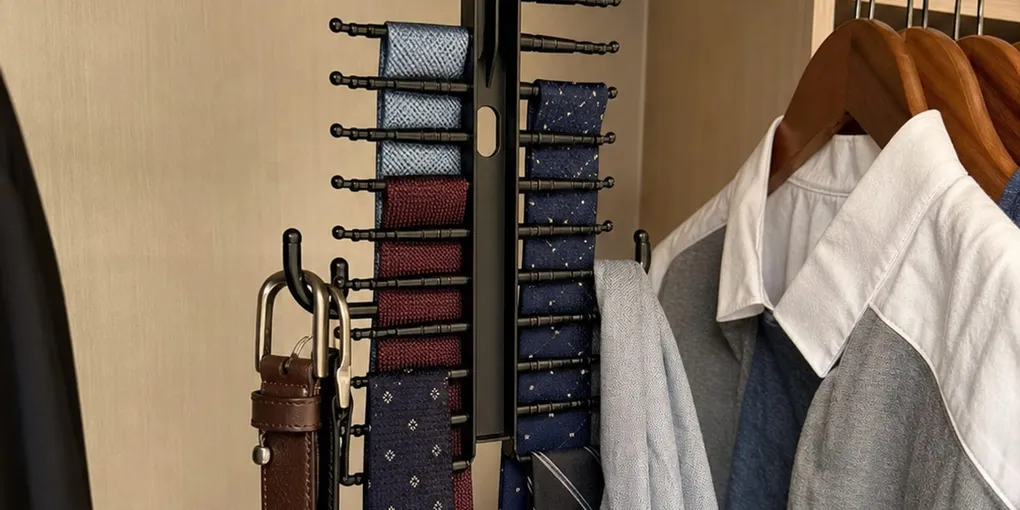
The main option here is this black multi-row tie and belt rack. Based on the product photos, it has a top closet-rod hook, a vertical body, and many narrow horizontal rows, so it is meant to keep ties and slim belts visible in one section of the closet.
Check Rod Clearance First
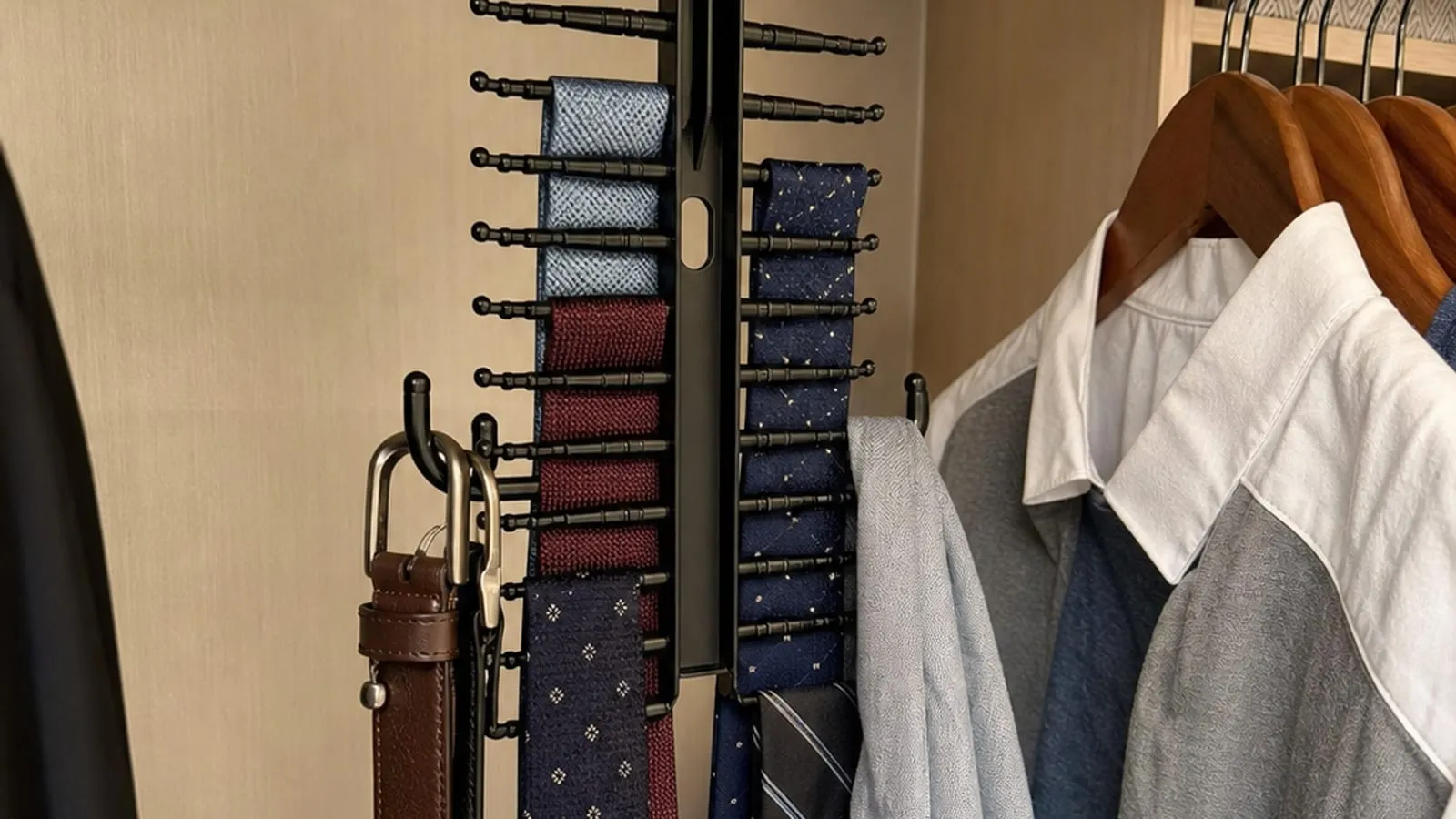
This kind of rack looks simple, but the top hook still needs room. If the shelf above the closet rod sits too low, the hook can feel cramped and rotation may be awkward. Rod diameter, shelf clearance, and shoulder space between shirts all matter.
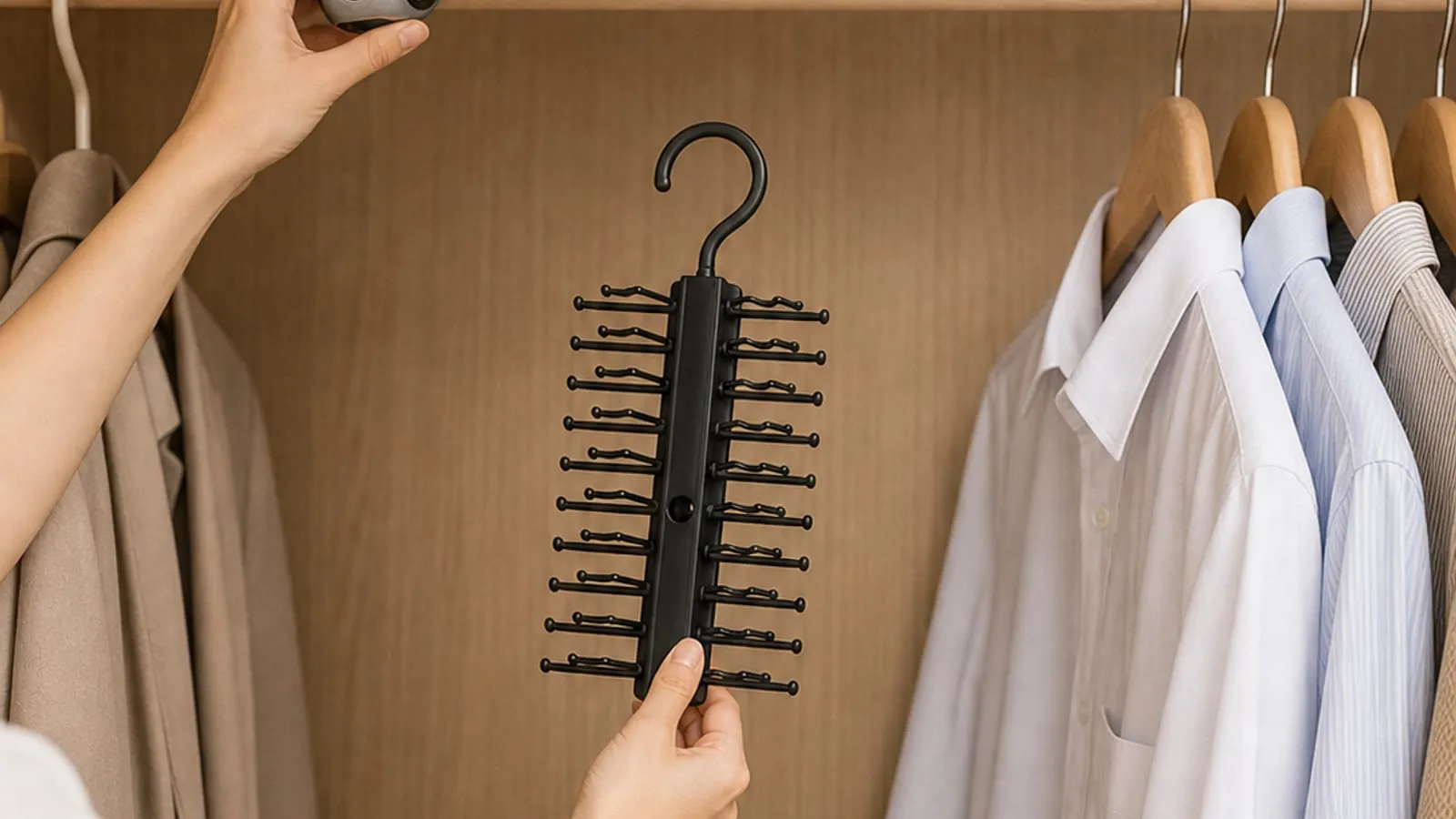
In a packed closet, the rack may fit physically but still be annoying to use. Decide whether you want ties in the front for quick access or hidden between shirts. If it goes near the closet door, front clearance becomes part of the fit check too.
Thin Fabric Needs A Finish Check
Ties and scarves can react badly to small rough spots. Mold seams, sharp edges, or metal burrs can catch thin fabric or leave marks. With delicate fabric, loose folds are safer than pulling the material tightly over narrow rows.
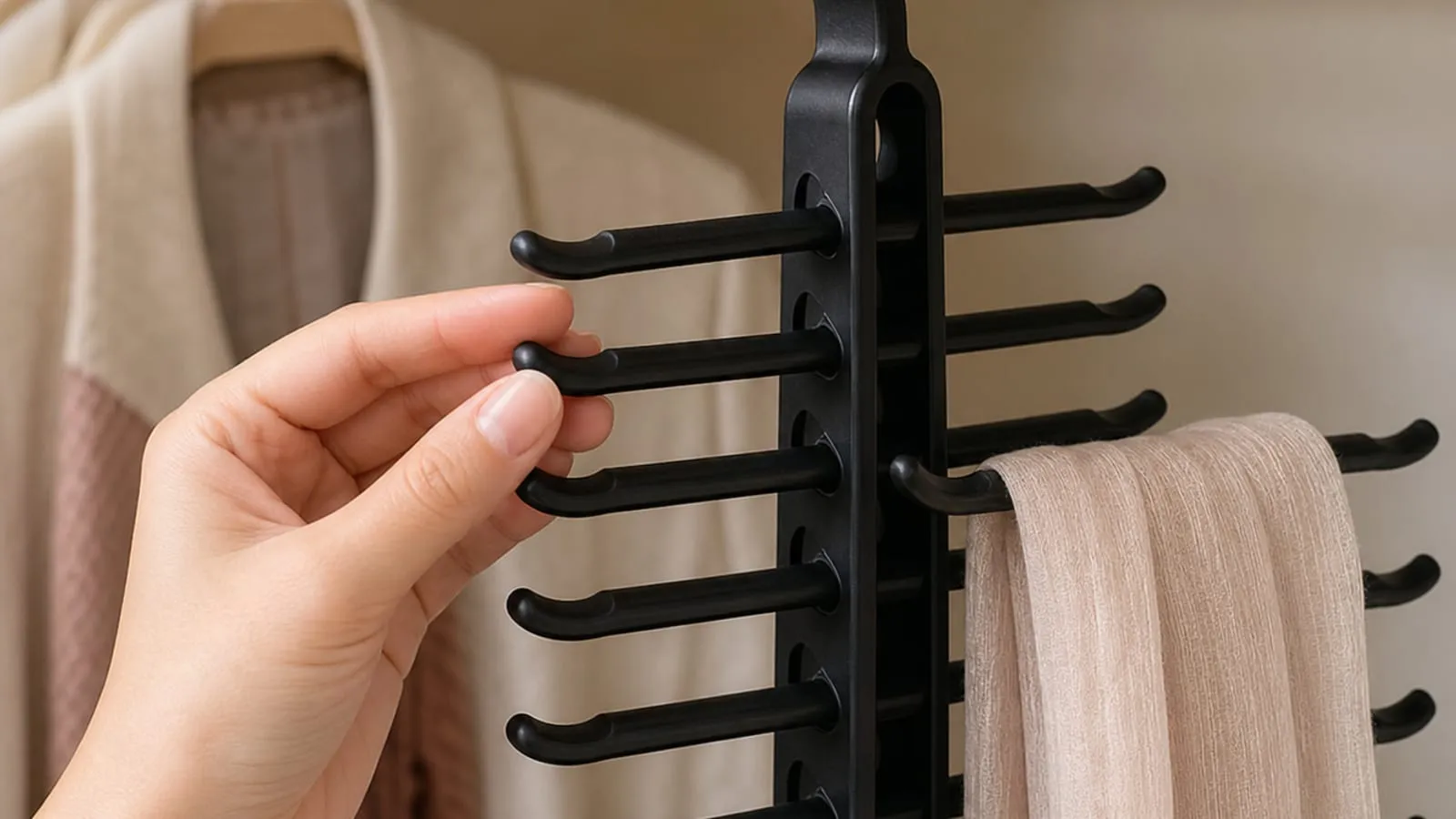
I would not treat this as a dedicated delicate-scarf hanger. A light scarf can be stored loosely, but silk-like pieces may be better on smooth scarf rings, padded hangers, or rolled in a drawer. The rack is more convincing for ties and slim belts.
Do Not Load Belts On One Side
Belts are heavier than ties, and buckles are hard. If several belts hang from one side, the rack can twist toward the shirts. Buckles can also press into nearby ties or scarves.
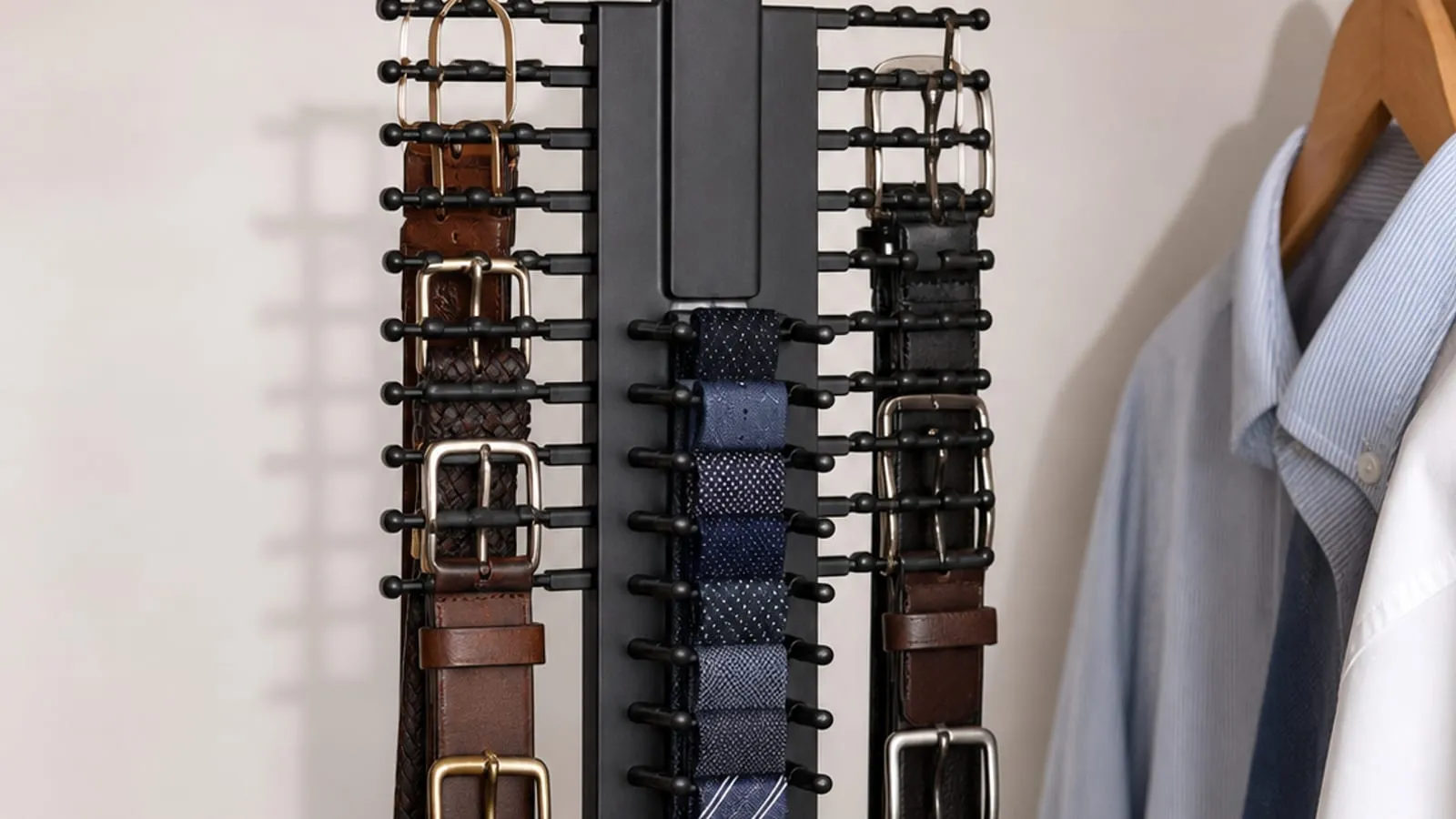
Heavier leather belts should be split across both sides, with enough spacing between buckles. This is an accessory organizer, not a coat or bag hanger. If the closet rod or the rack starts to wobble, reduce the load instead of forcing more onto it.
A 12-Hook Hanger Solves A Different Problem
A 12-hook rotating accessory hanger looks related, but it solves a different problem. It uses many small hooks rather than tie rows, so it is more relevant for light scarves, camisoles, or small hanging accessories.
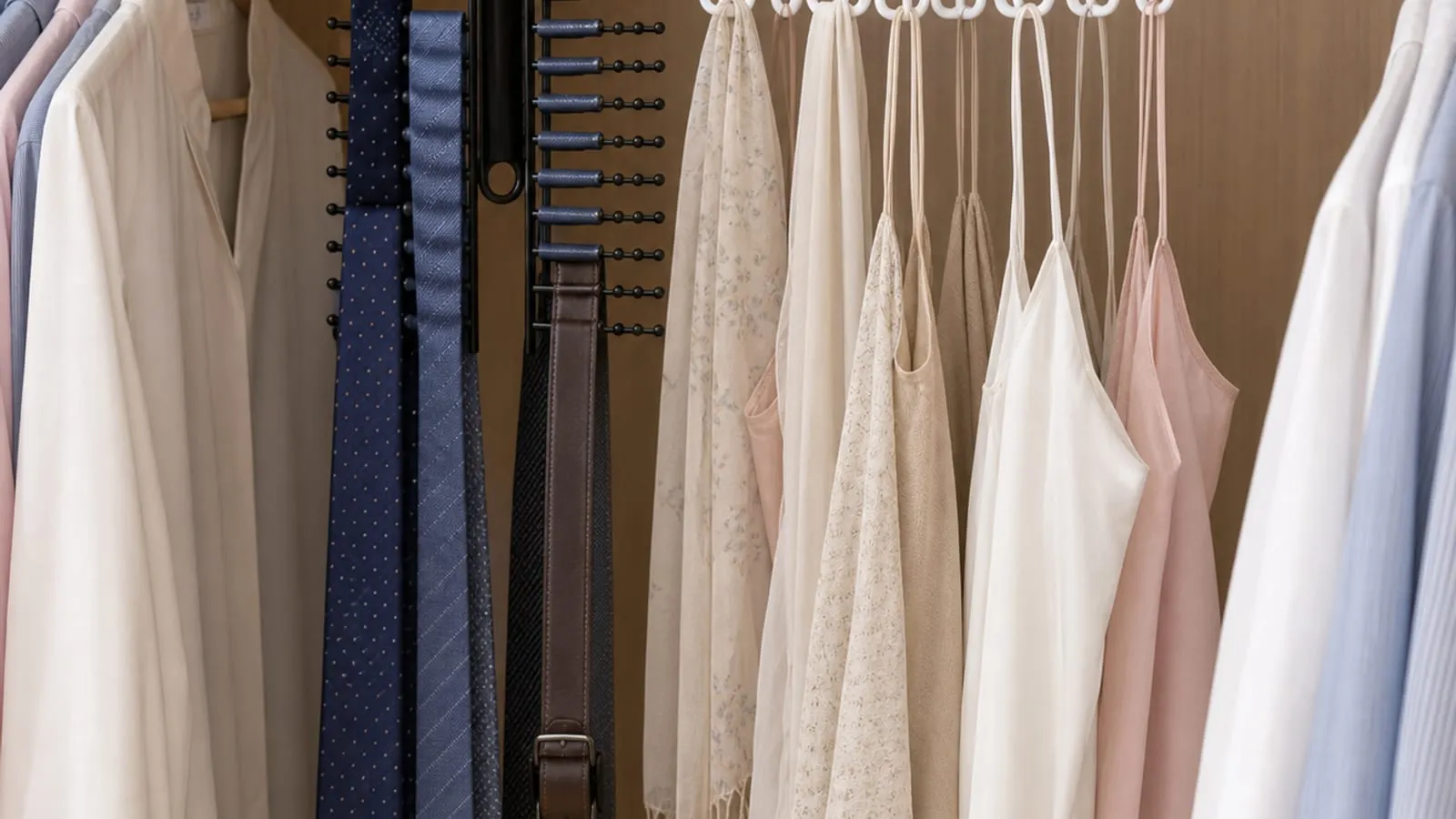
For scarf-heavy storage, a multi-hole scarf hanger is another comparison. The tradeoff is that fabric pulled through holes can crease, especially if it is thin or slippery. Choose the multi-row rack for ties and belts, and the hook or multi-hole style for lighter fabric pieces.
Door Clearance Can Be The Hidden Issue
The rack body may look slim, but loaded belts and scarf ends can project forward. In a shallow wardrobe, buckles can brush the door or mirror panel.
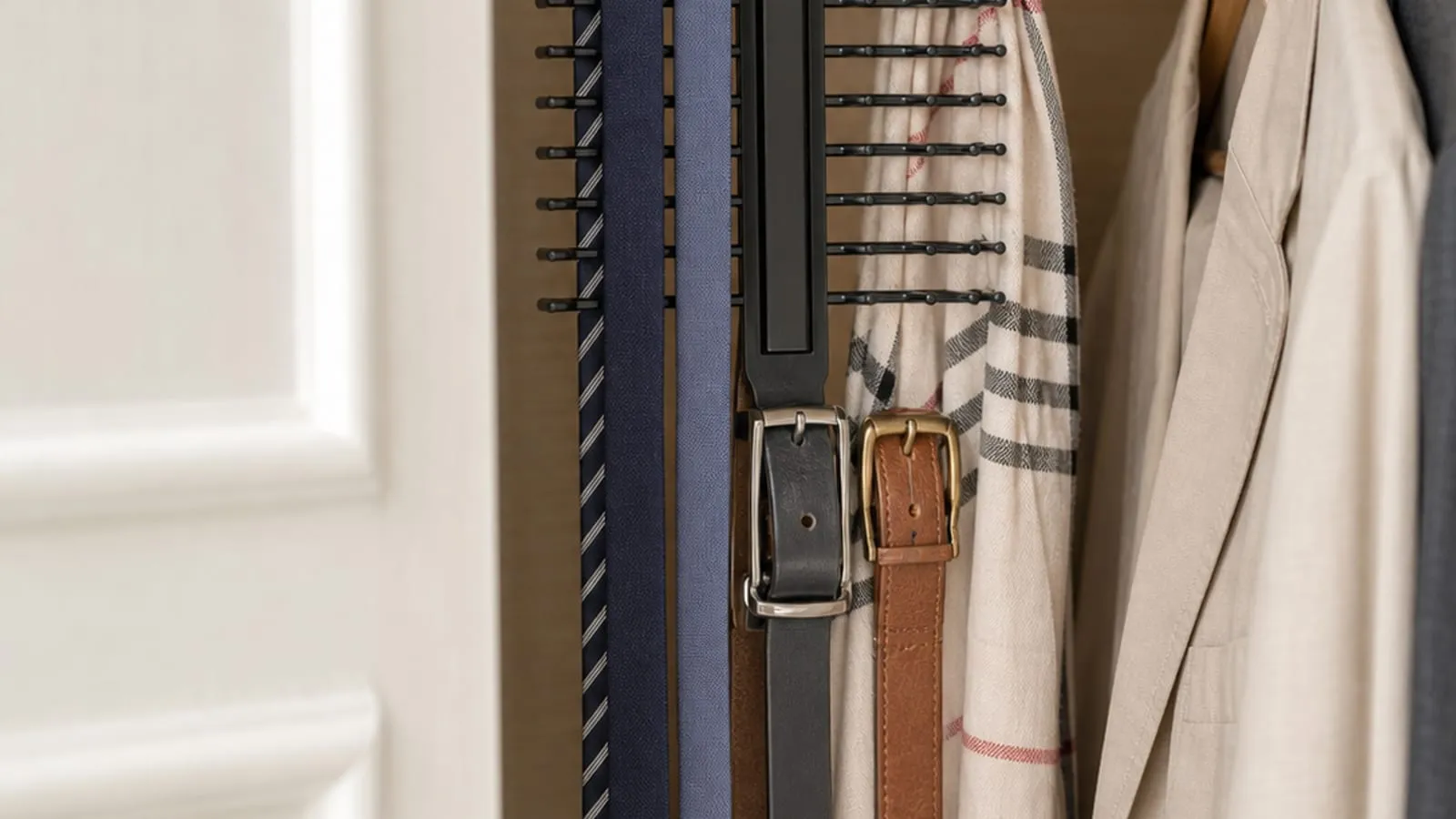
Sliding-door closets and wardrobes with door mirrors deserve an extra check. If the buckle taps the door every time it closes, the setup will get old quickly. Keep frequently used ties toward the front and move larger buckles to the side or rear.
Verdict
The black multi-row tie and belt rack is worth a look if ties and belts keep disappearing behind shirts. It hangs from the closet rod and turns small accessories into one visible vertical zone.
Treat it as a light accessory organizer, not a heavy storage rack. Check rod clearance, front door clearance, hook finish, and belt balance first. Delicate scarves need extra caution and looser folds.