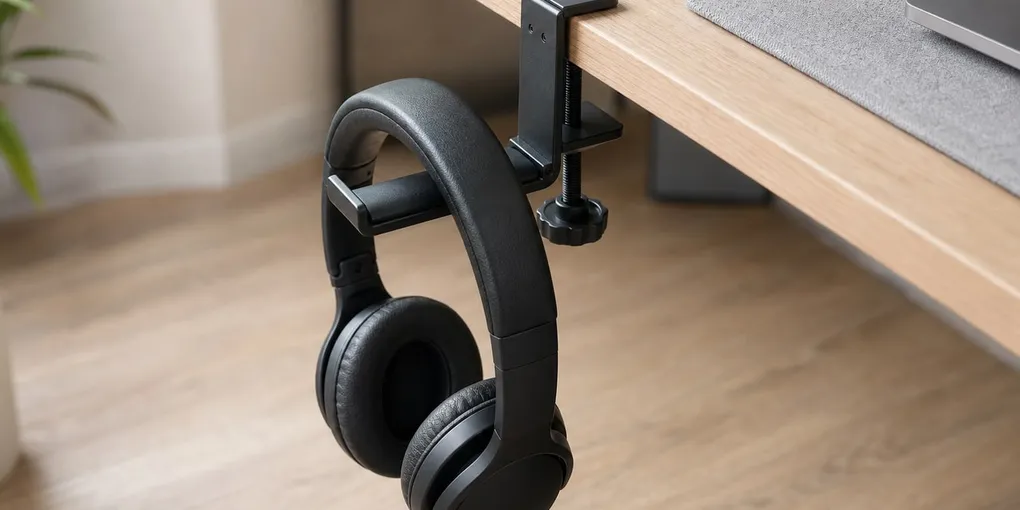
Ali review
A Clamp Desk Headphone Hanger Starts With the Desk Edge
A practical AliExpress look at a clamp-style desk headphone hanger: desktop thickness, edge shape, clamp pads, hook width, knee and chair clearance, and the difference from a U-shaped hanger.
Headphones and gaming headsets take up more desk space than they seem to. A full stand uses surface area, while leaving the headset beside the monitor can send the cable toward the keyboard or mouse.
The product here is a foldable clamp-style headphone hanger. It is a small desk-edge storage part: a screw clamp grips the desk edge, and a folding horizontal hook holds one headphone band.
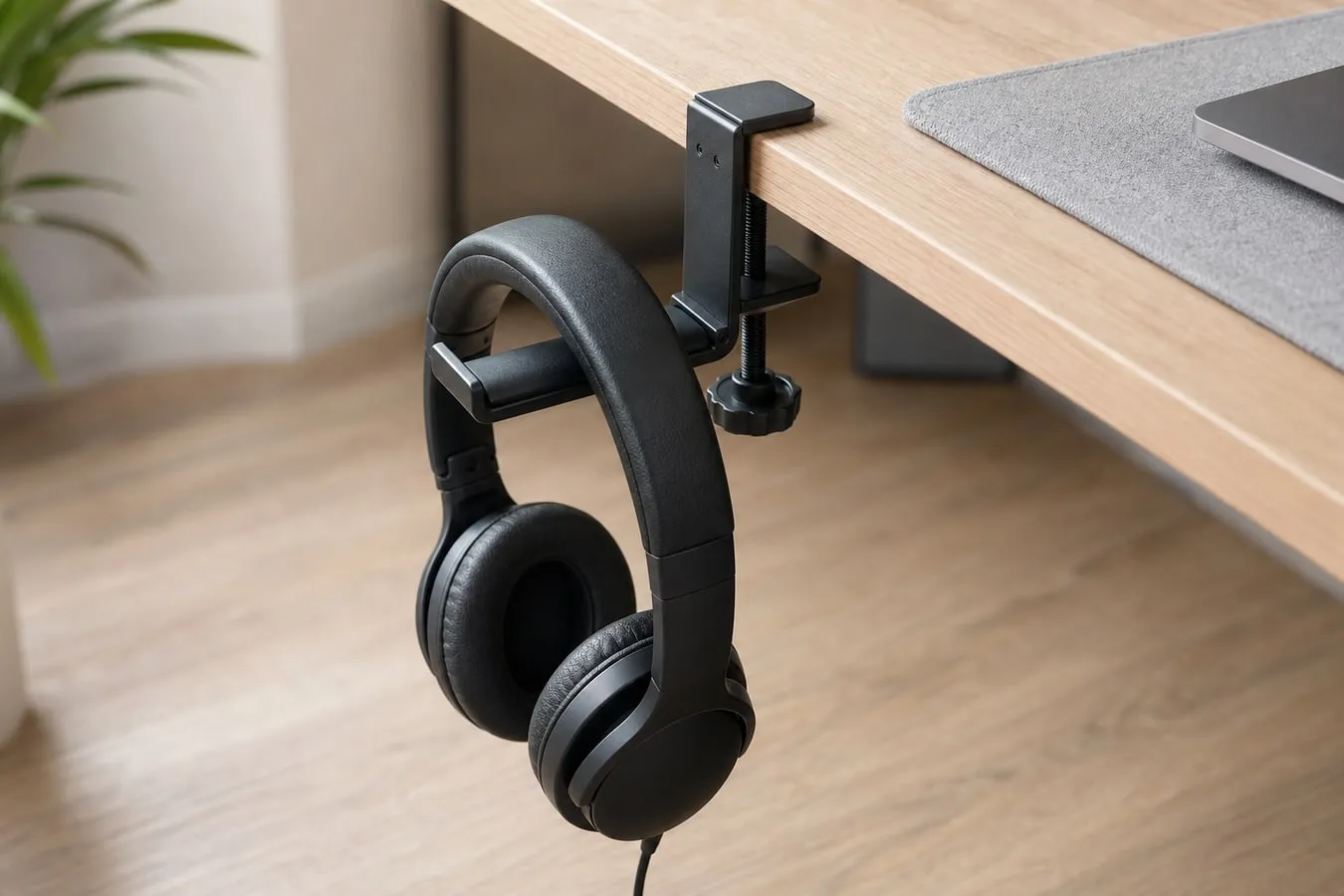
The desk edge matters first
This is not a product where the hanger shape alone decides the fit. A clamp needs a flat edge it can grip from above and below, plus enough underside room for the screw knob.
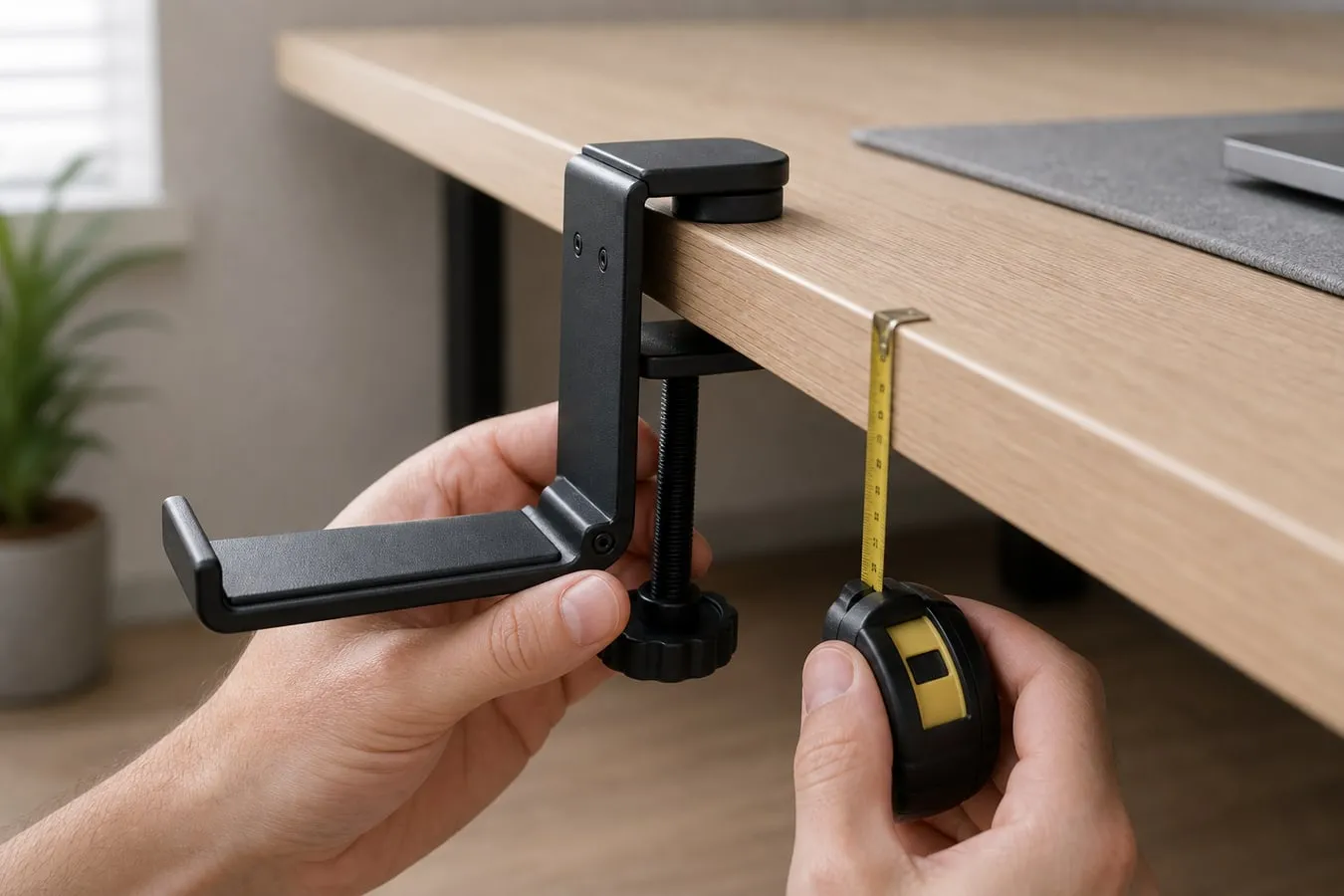
Rounded edges, beveled edges, and desks with a frame directly under the top can be awkward. Drawers, cable trays, monitor-arm plates, and keyboard trays also need checking before you choose the mounting spot.
Clamp pads do not remove every mark risk
The product photos show a contact pad, but that does not mean every desk finish will stay untouched. Soft laminate, film finish, painted edges, and surfaces that show pressure marks need extra care.
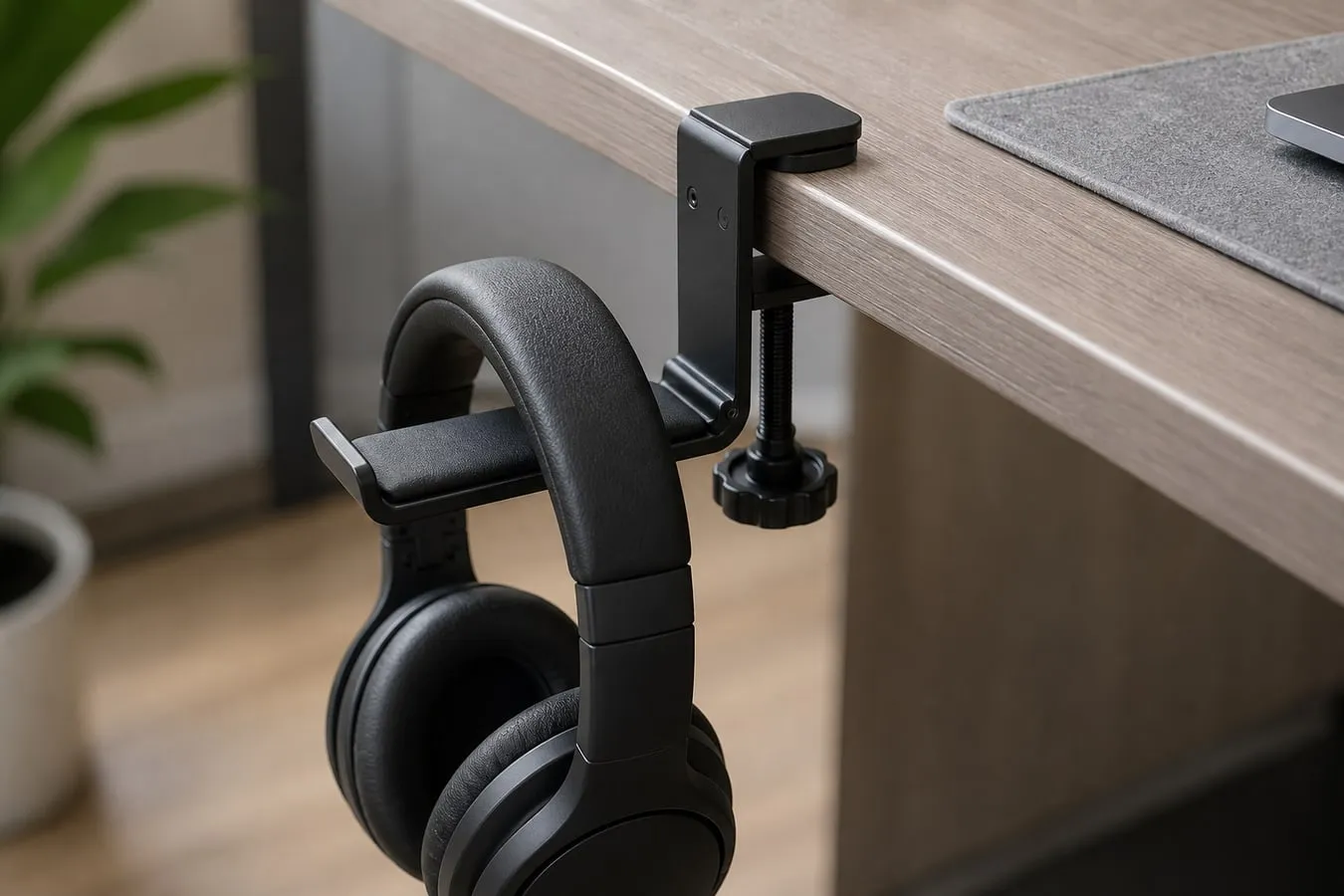
If the clamp is too loose, it can wobble. If it is overtightened, it can leave a mark. On delicate wood or glass tops, a different storage style may be the calmer choice.
Check the headband and cable path
Hook width and the raised front lip matter more than they first appear to. A narrow or sharp hook can focus pressure on one point of the headband, and a tight cable can pull at the plug or earcup connector.
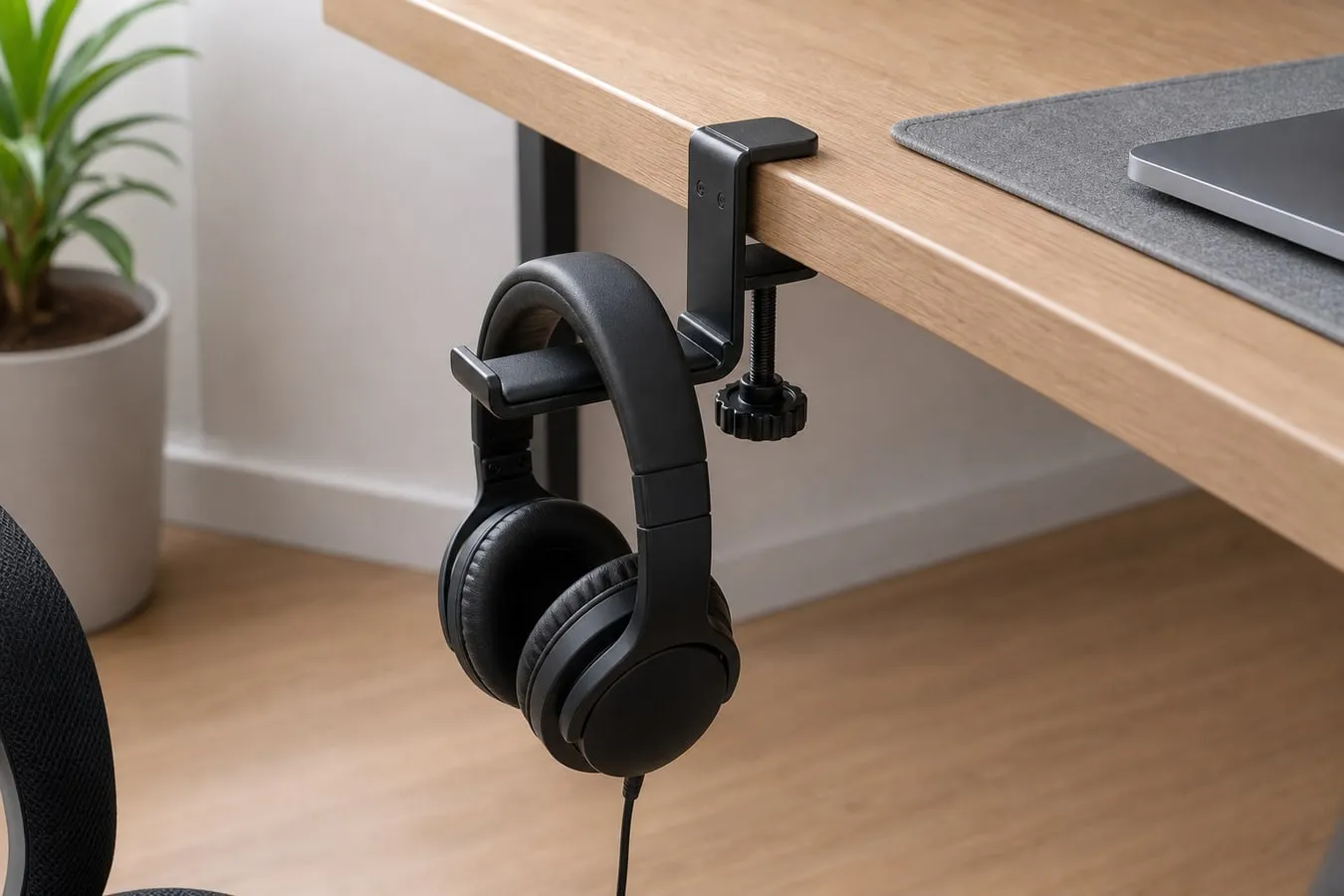
This category makes the most sense for one ordinary headset. Once you start thinking about bags, controllers, or several devices on the same hook, the buying decision gets much less simple.
Knee and chair clearance can decide the spot
Mounting it near the front edge makes the headset easy to reach, but it can also put the hook where knees or chair arms pass through. Even with a folding hook, the headset still occupies space when it is hanging.
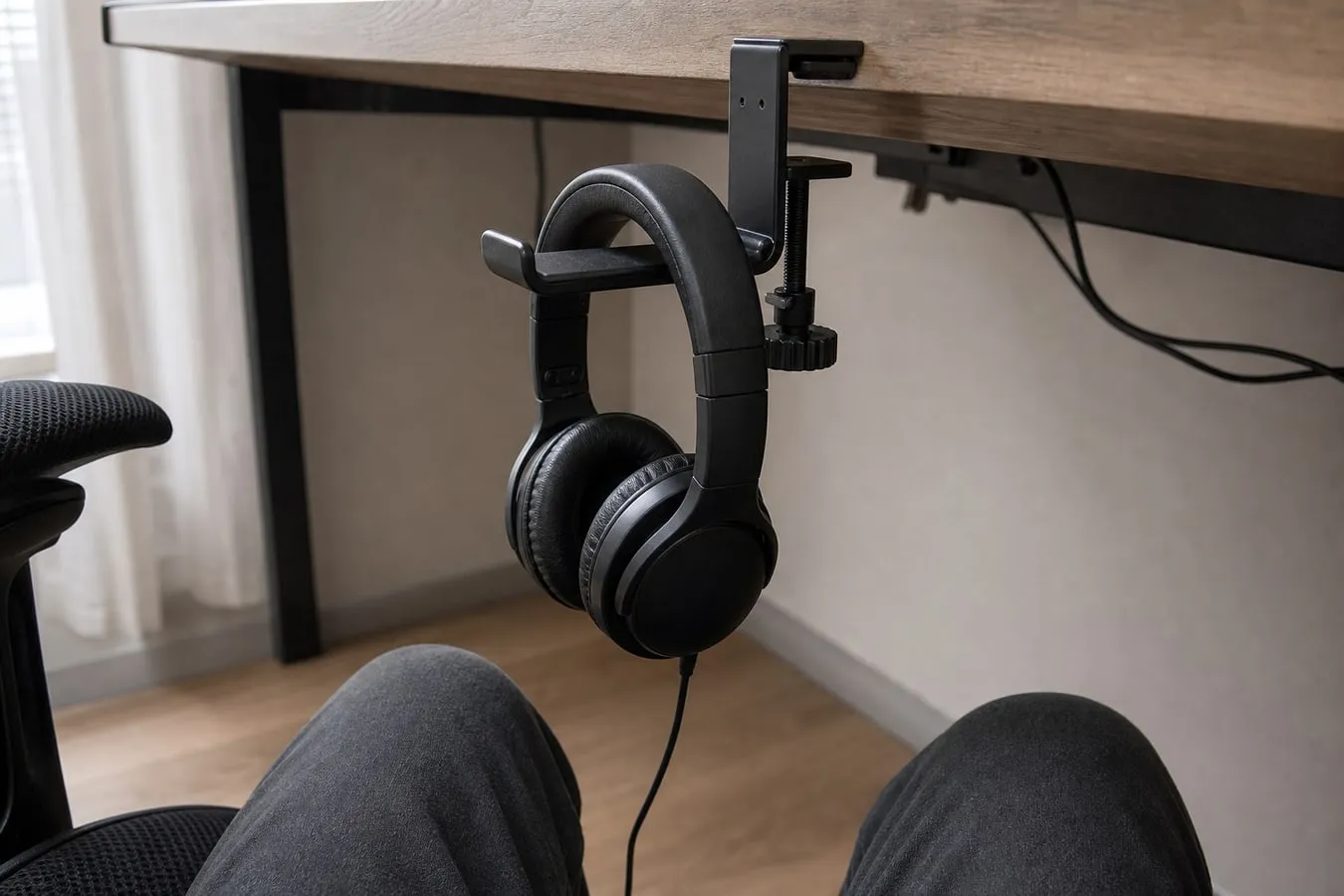
For a desk where you move often, the side or rear edge may work better than the front. Just make sure the headset cable still has slack and does not tug across the desk.
A U-shaped hanger is a different structure
The main comparison is the POYATU U-shaped desk headphone hanger. That design is closer to a bracket that slips over a desk or shelf edge, rather than a screw-tightened clamp.
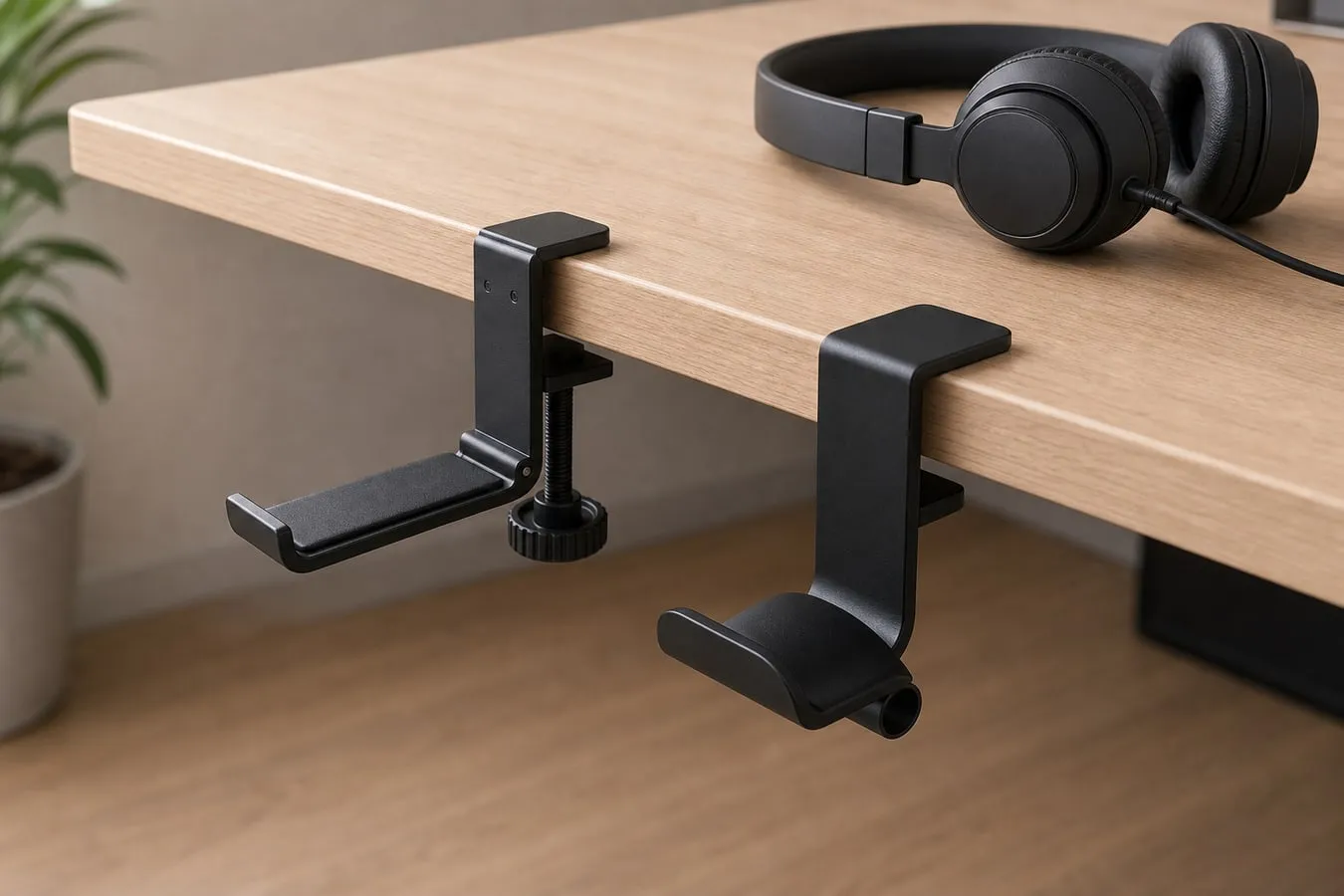
The U-shaped version looks simpler, but the desk thickness and edge shape need to match it closely. Think of the main pick as the adjustable screw-clamp route, and the comparison as the slip-over edge route.
When it is a weak fit
This type is questionable for glass desks, rounded edges, desks with a blocked underside, or finishes where pressure marks would bother you. The hanger looks small, but the clamp body and screw knob still need space.
It is also worth pausing if your headset is unusually large or has a delicate headband finish. Saving desktop space does not help much if the cable keeps pulling or the hanger sits where your chair keeps hitting it.
Verdict
The foldable clamp-style headphone hanger is worth checking when you want one headset off the desktop. The real decision, though, starts with the desk edge.
Before buying, check top thickness, edge shape, underside room, clamp pad contact, hook width, and knee or chair clearance. If those details line up, the desk can feel lighter; if they do not, a small hanger can become one more thing in the way.