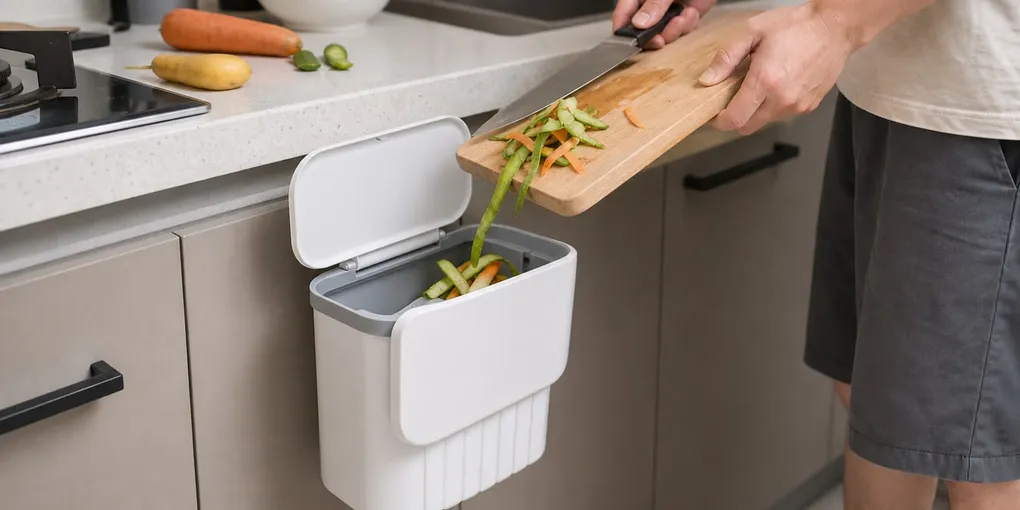
Ali review
A Cabinet-Door Hanging Bin Is Mostly About Door Fit
A practical AliExpress look at a cabinet-door hanging trash bin: door thickness, top gap, counter overhang, bin depth, liner fit, cleaning routine, and the wire bag-holder comparison.
Small scraps pile up quickly when you are trimming vegetables or opening packaging near the sink. Walking to a floor bin every time is annoying, but an open plastic bag on the counter can collapse or slide around.
The product here is a cabinet-door hanging trash bin. It hangs over a lower cabinet door and works more like a small lidded bin than a bare bag frame, so I would judge it as a short-use prep-side helper.
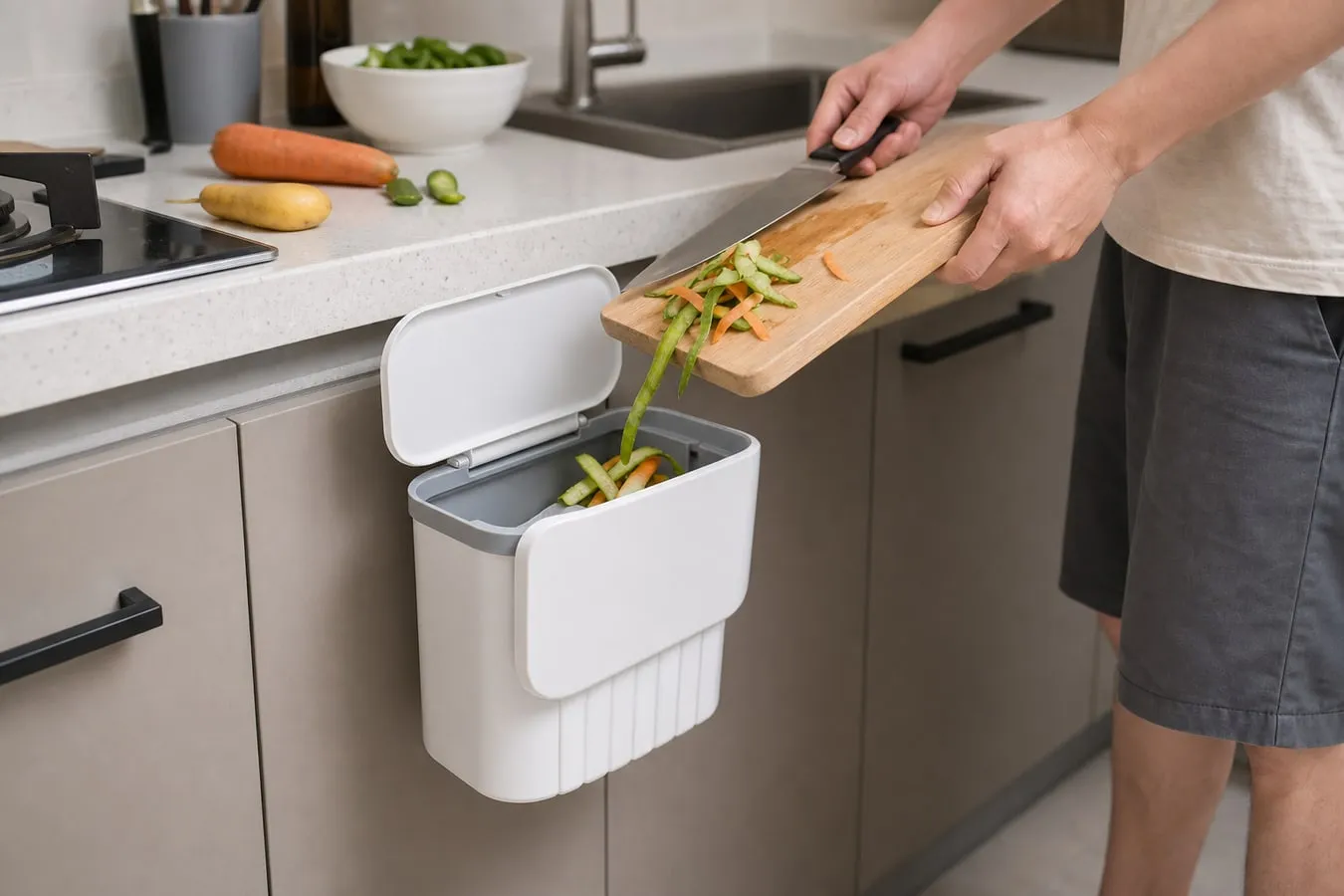
It is closer to a small bin than a bag ring
This is not just a frame that holds plastic bag handles apart. It has a body and lid, so a liner can sit inside a more defined container shape.
That does not make it a replacement for a main trash can. Because it hangs from the cabinet door, it makes more sense for light, short-use scraps that get emptied often. Bulky trash and long storage are the wrong expectations.
Door thickness and top gap come first
An over-door product only works if the hook can sit over the top of the cabinet door. Check the door thickness and the gap between the door top and the underside of the counter or drawer frame.
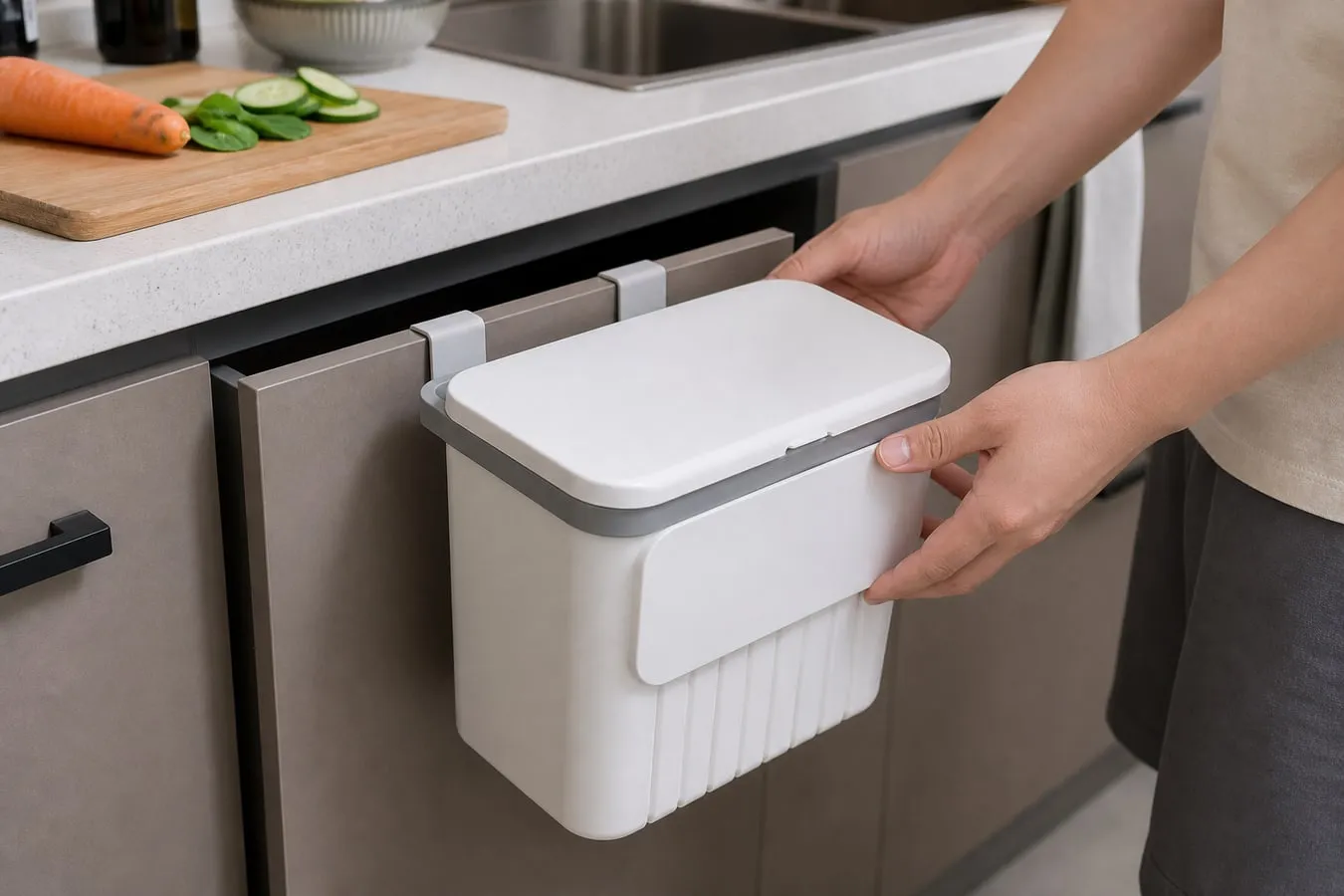
Drawer fronts, counter lips, and handle placement can keep the door from closing cleanly. The product photo may look simple, but the real fit depends on the cabinet around it.
Depth can matter more than capacity
The bin sits in front of the cabinet door. That makes it easy to reach, but it can also bump your legs or block a neighboring cabinet in a narrow kitchen.
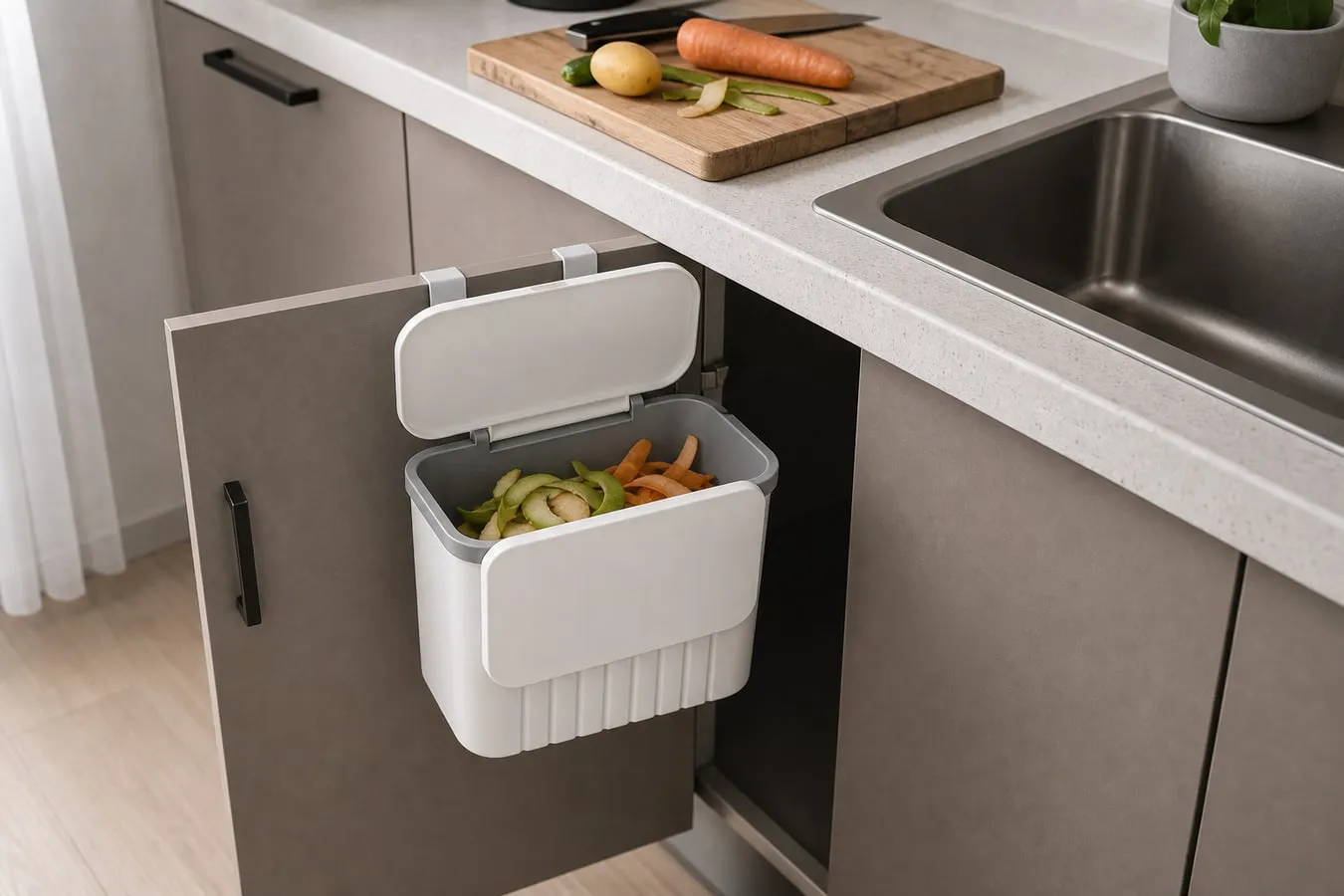
Check where you stand at the sink, whether a mat or chair is nearby, and how nearby drawers or appliance doors open. If the bin keeps getting hit, the convenient placement stops feeling convenient.
Liner fit is part of the product
Many small hanging bins still rely on a thin liner bag. If the bag is too small, it can slip inside. If it is too large, the extra plastic can bunch around the rim and make the lid awkward.
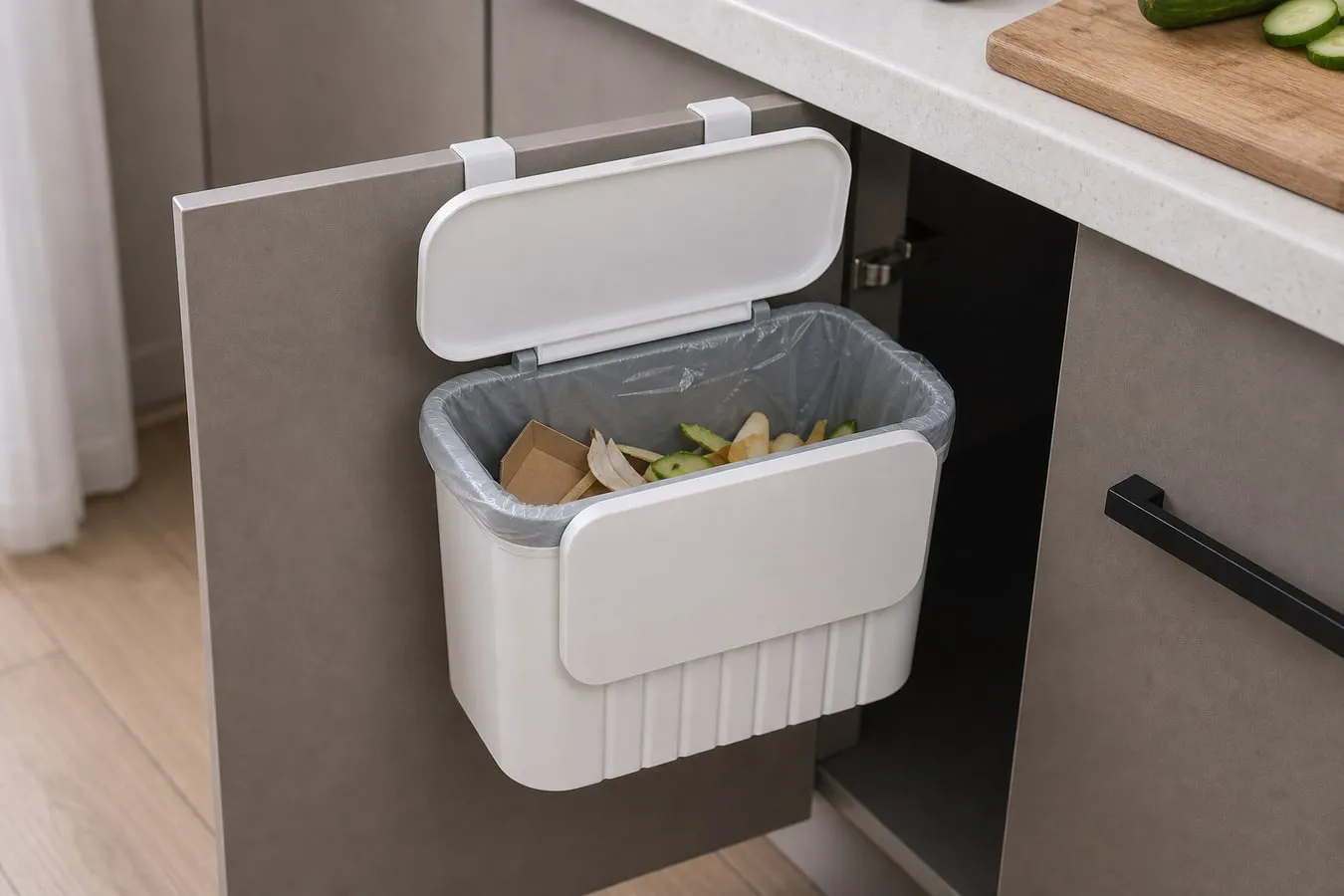
Once damp scraps build up, the liner and the door both have more to deal with. This product is easiest to understand as a temporary helper during prep, not as a place to collect a full day of kitchen trash.
Emptying and rinsing still matter
A small kitchen bin is only pleasant if it is easy to empty and rinse. Check whether the body is easy to lift off, whether the lid gets in the way, and whether the ribbed front has grooves that are annoying to wipe.
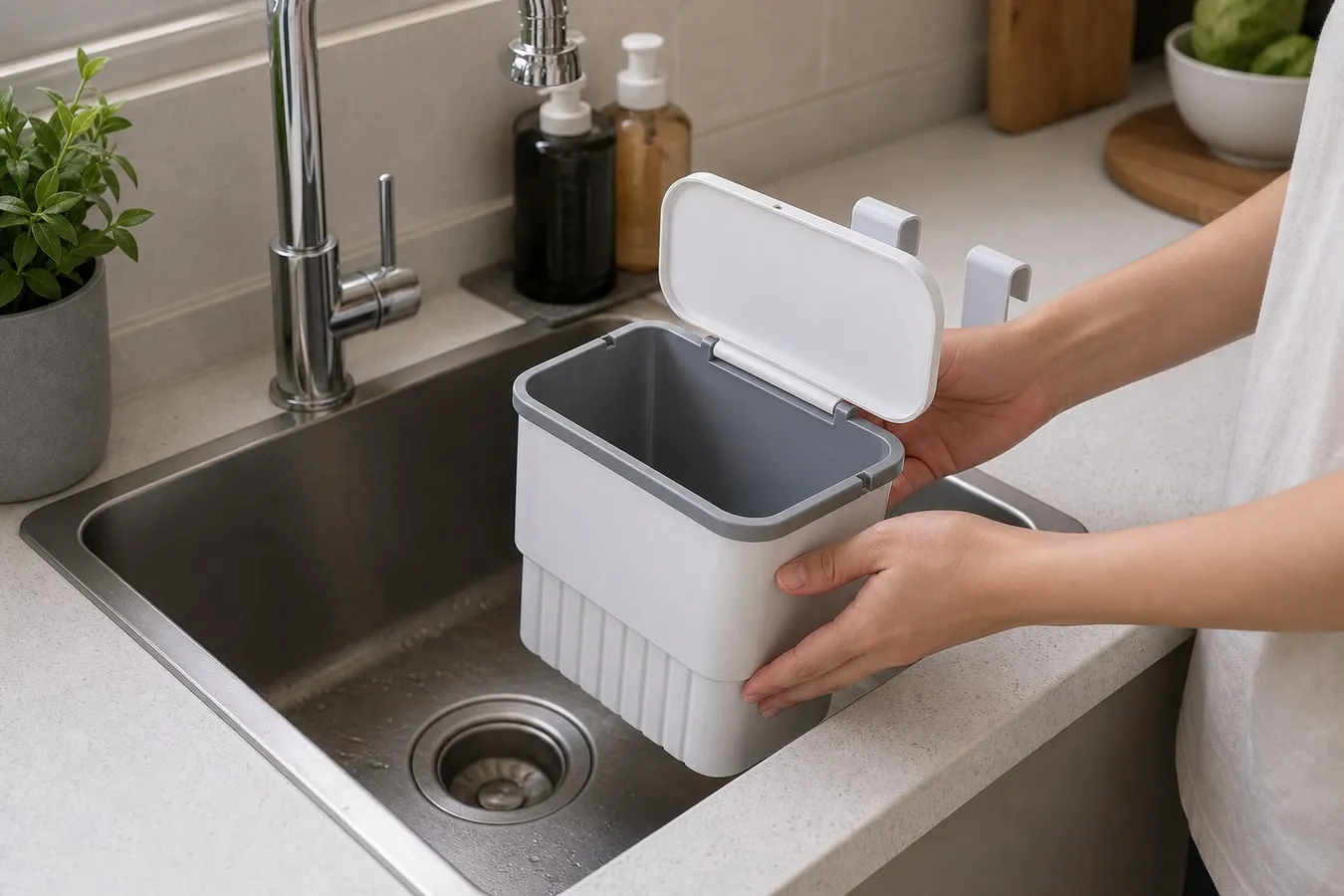
The lid can make the view calmer, but it does not remove the need to empty the bin promptly. The routine matters more than the lid itself.
How the wire bag holder differs
The cleaner comparison is a wire cabinet-door trash bag holder. That style is just a slim frame that holds a plastic bag open.
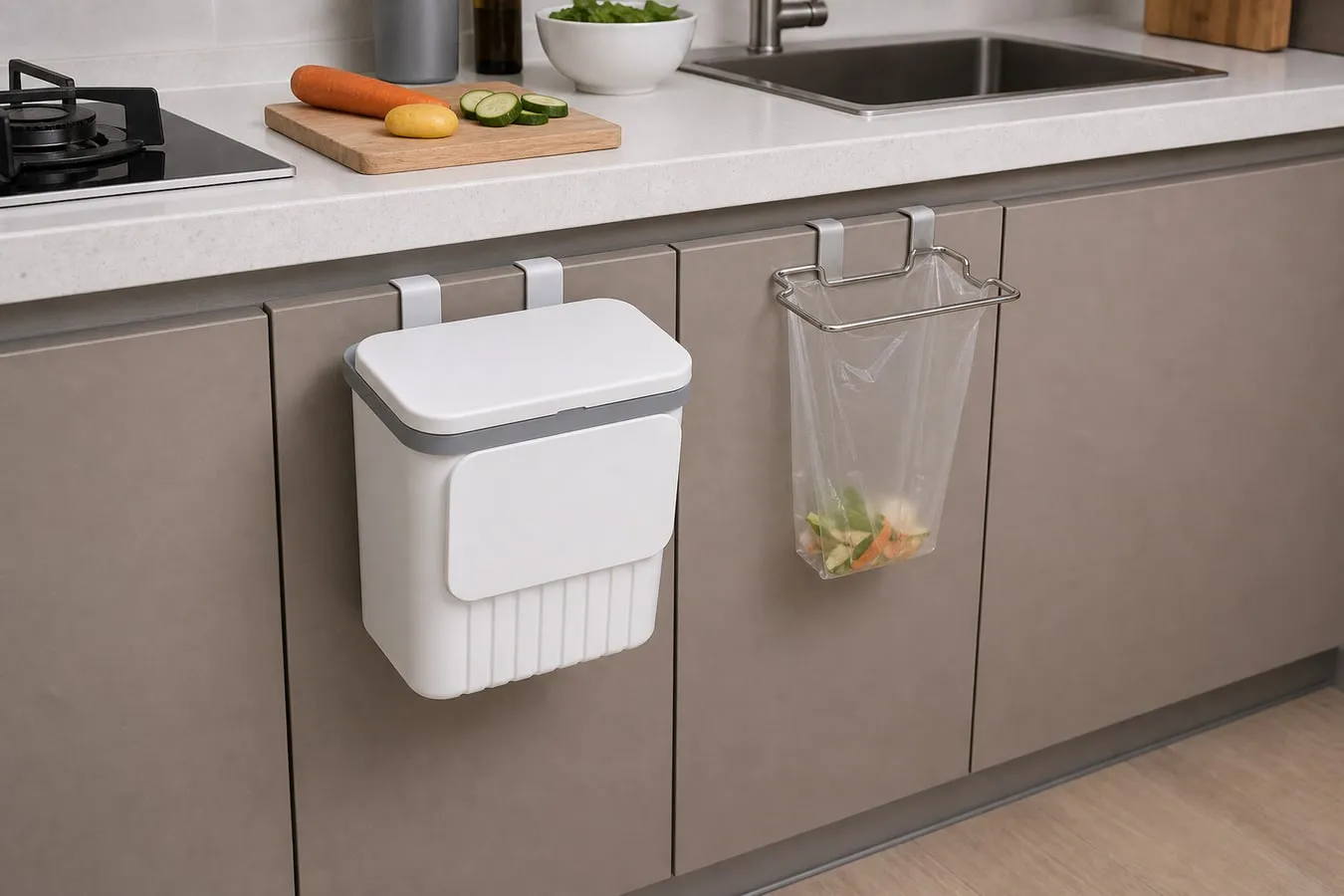
The wire holder takes less space and stores more easily, but the bag does the real supporting. The lidded bin is bulkier, while the wire frame depends more on the bag staying in place.
When to skip it
Skip this style if the cabinet door has almost no top gap, if the counter blocks the hook, or if the handle and bin would share the same space. Delicate cabinet finishes also deserve a closer look at the hook contact point.
It is also a poor match if you want to collect a lot of damp scraps or use it like a full trash can. This is a small sink-side helper, and it only stays useful when the emptying routine fits your kitchen.
Verdict
The cabinet-door hanging trash bin is worth checking if small prep scraps keep taking over the counter. It looks more contained than a bare bag frame, but it also takes more room in front of the cabinet.
Before buying, check door thickness, top gap, counter overhang, handle position, bin depth, liner fit, and how easily you can empty and rinse it. Choose the wire holder if you want the smallest possible bag frame; choose the lidded bin if you want a more defined temporary container.