Ali review
An adjustable wardrobe shelf riser is mostly about measuring first
A practical AliExpress review of an adjustable wardrobe shelf riser, covering expandable width, grid top, leg contact, inner cabinet depth, door clearance, and light folded-item use.
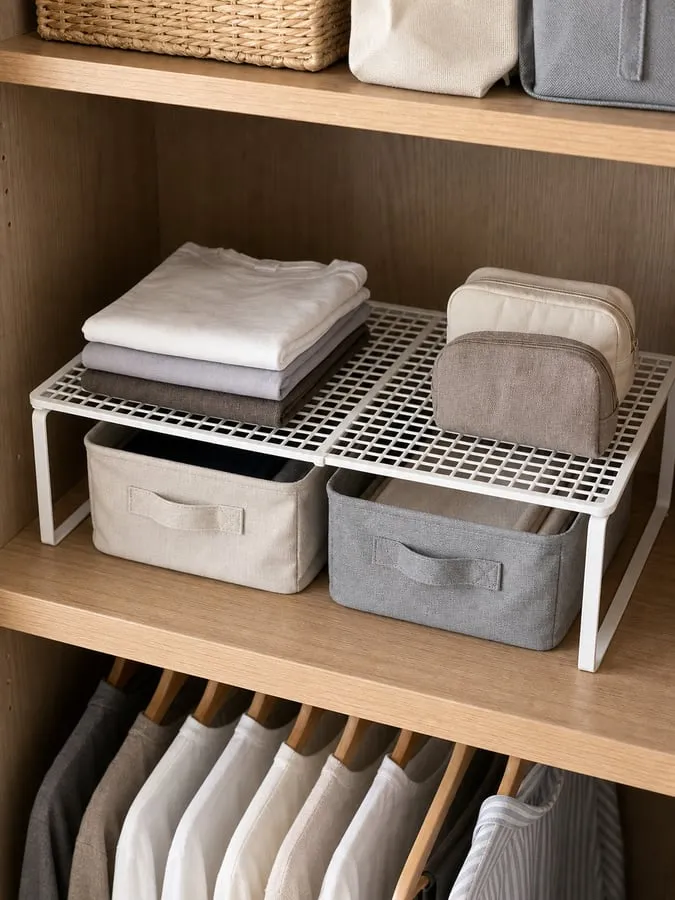
Wardrobe shelves often leave awkward vertical space. One stack of folded shirts feels too low, but a taller stack collapses when you pull from the bottom. Small pouches and fabric cases also disappear toward the back.
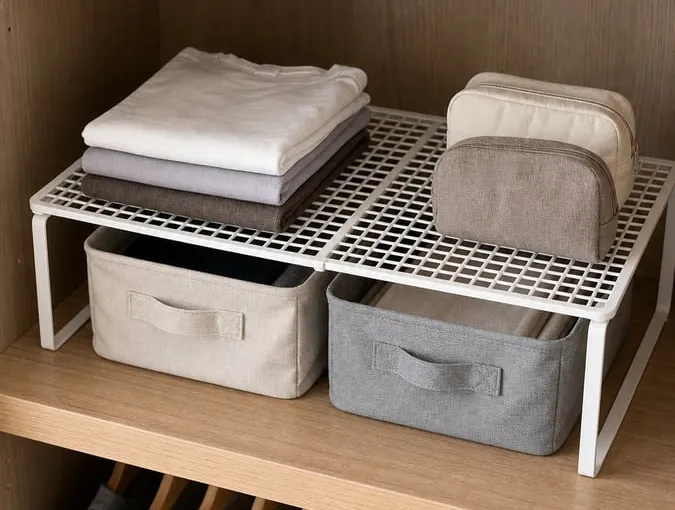
The product here is an adjustable wardrobe shelf riser. Based on the product photos, it is a white riser with a grid top, side legs, and an overlapping center section for width adjustment.
It divides height, not creates new capacity
This is not a magic closet expander. It is better understood as a helper shelf that splits unused vertical space inside an existing shelf bay.
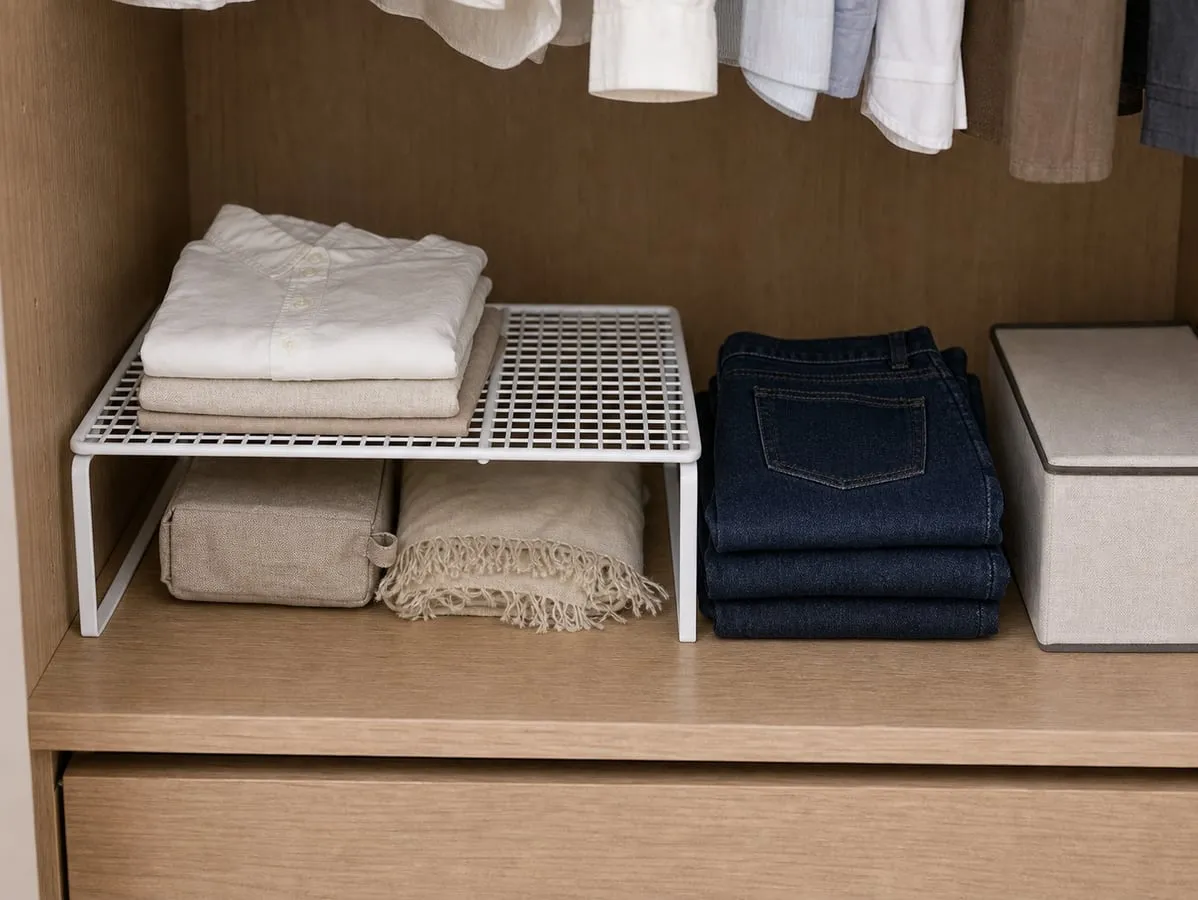
The natural use is light: folded T-shirts, scarves, soft pouches, small fabric bins, and small cases. Heavy boxes, dense clothing stacks, appliances, cookware, and book piles are a different problem.
Adjustable width still needs real measurements
Expandable width helps only if the actual inside space works. Measure the usable inside width, depth, and height, not just the outside furniture size.
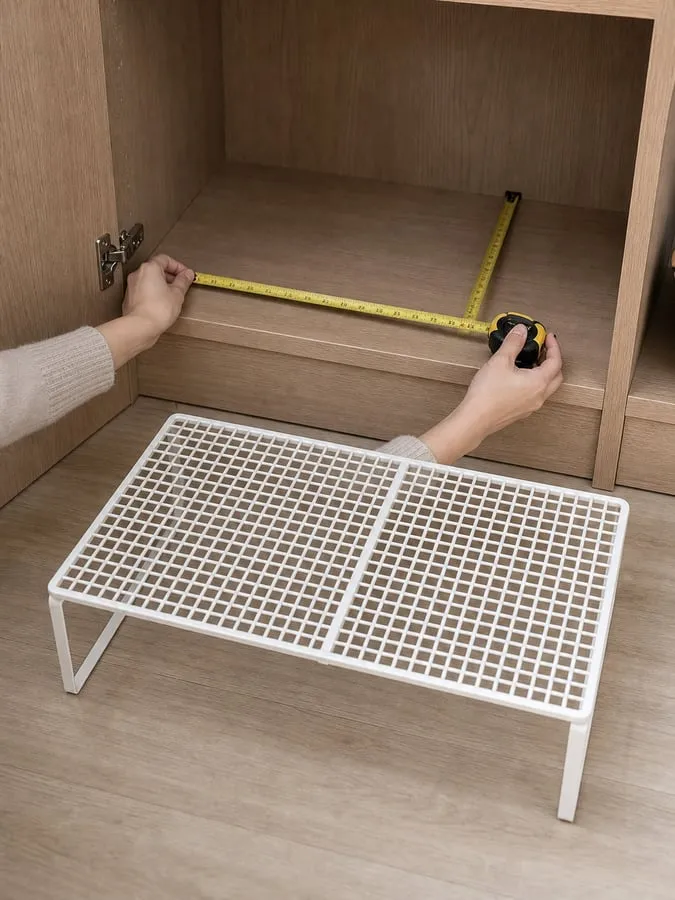
Hinges, shelf lips, back panels, side rails, and door swing can all reduce the usable space. A riser can fit left to right and still sit too far forward for the door to close comfortably.
All legs need flat contact
With this kind of riser, leg contact matters. If one leg floats over an edge or lands on a raised lip, the shelf can feel unstable even with light items.
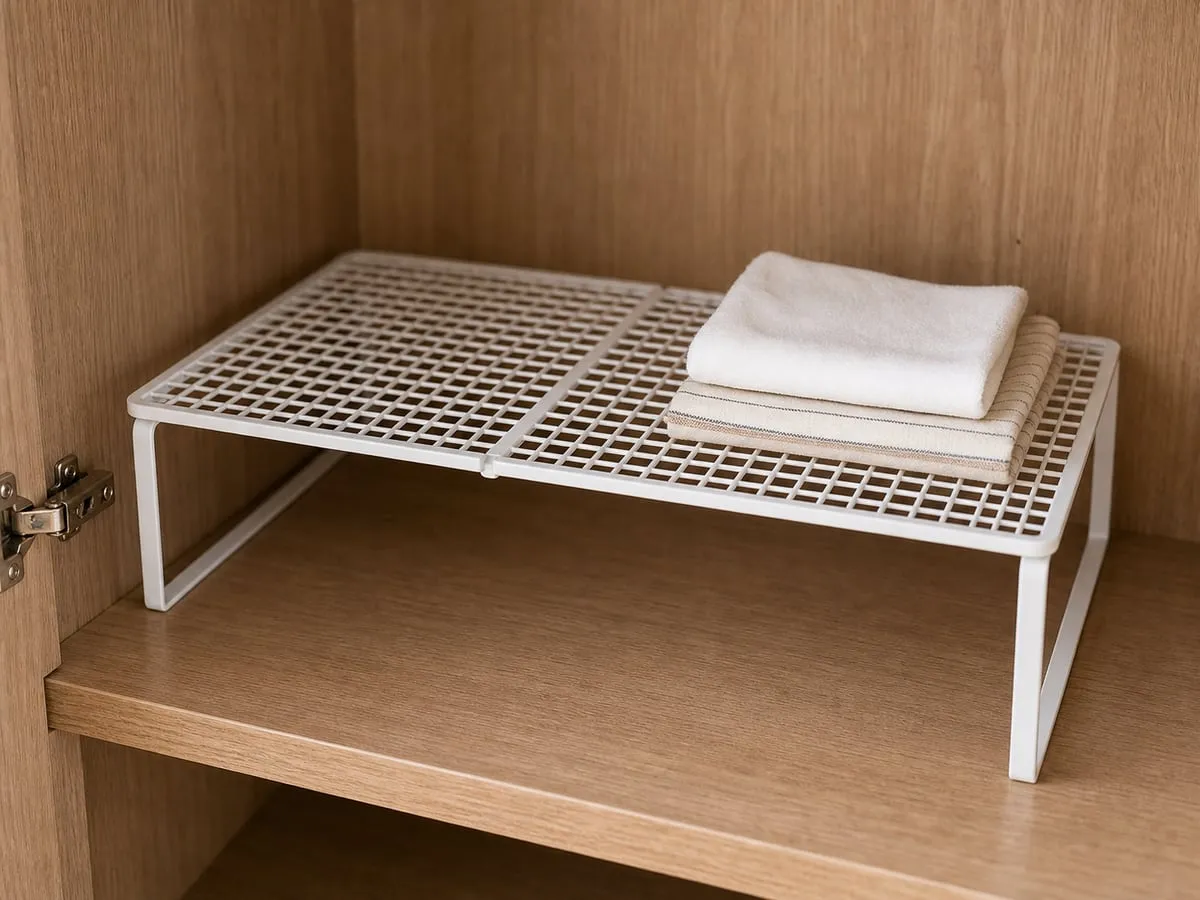
The grid top is another detail to think about. Tiny accessories or thin straps can catch in the grid, so small items are better kept in a pouch or small bin.
Shoe cabinets and bookcases need a conservative setup
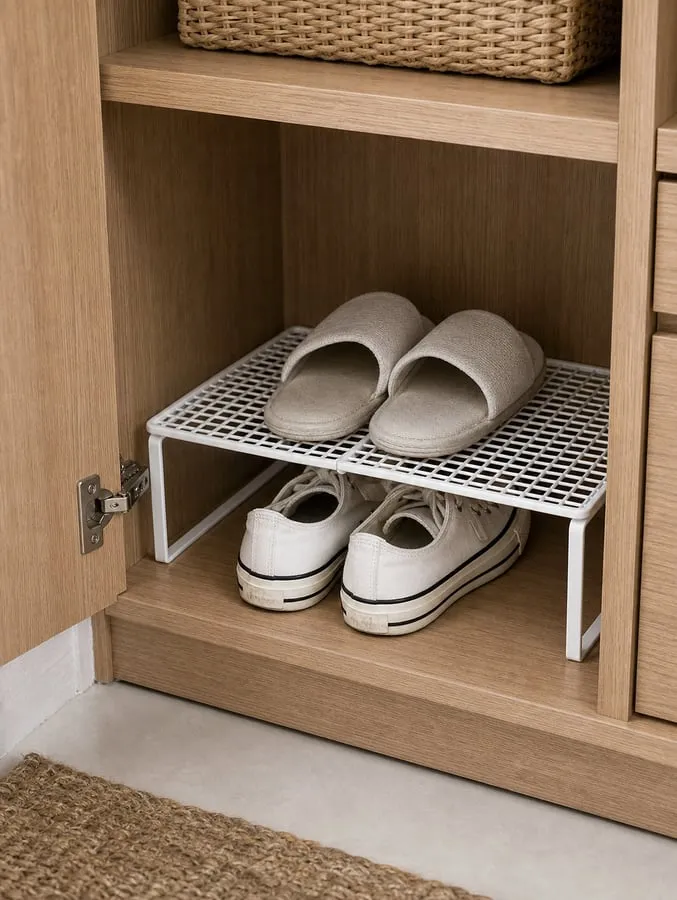
In a shoe cabinet, this can make sense for low-top shoes or slippers if the door clearance works. Boots, tall shoes, damp footwear, and heavy pairs are less natural matches.
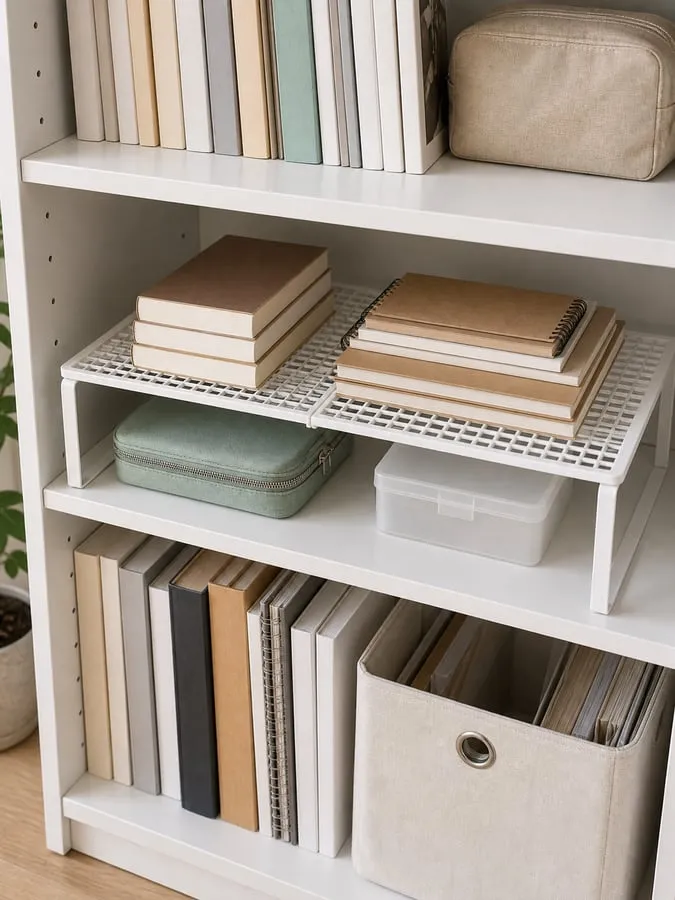
On a dry bookcase or utility shelf, keep it to thin notebooks, light paperbacks, and small cases. Dense hardback stacks are better handled by the fixed shelf itself.
Door clearance and hand space matter
Once the riser is inside, the shelf becomes two shorter spaces. That can be useful, but it also changes how your hand reaches in.
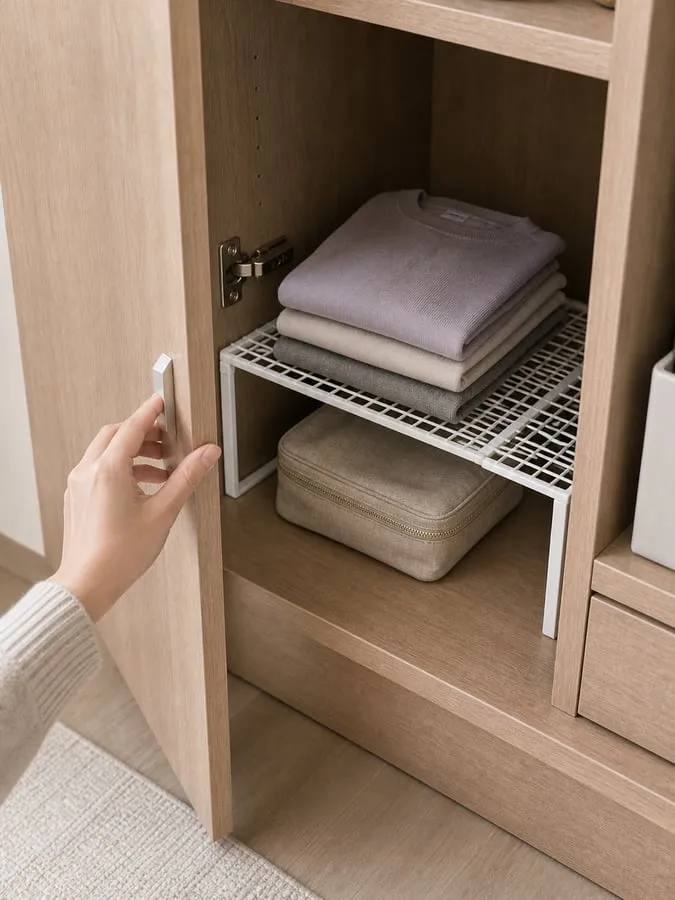
For a shelf you use every day, leave enough space to pull the lower items out without scraping the grid above. Sliding doors, hinged doors, and raised shelf fronts are worth checking before committing.
Verdict
The adjustable wardrobe shelf riser is worth checking when a wardrobe or cabinet shelf has awkward empty height. It works best as a light divider for folded clothes, pouches, small cases, light shoes, or thin notebooks.
The important checks are inner width, depth, vertical clearance, leg contact, door movement, and the grid top. If the cabinet is damp, already overloaded, or meant for heavy objects, choose another storage method.