Ali review
An adjustable metal book stand is mostly about fit
A cautious AliExpress review of a silver adjustable book stand with page clips, side angle knobs, fold-out feet, lower ledge depth, tablet fit checks, and kitchen recipe placement.
An open book, printed document, or recipe page can take over a desk quickly. Lay it flat and the pages lift. Put it beside a notebook or keyboard and the surface starts to feel crowded.
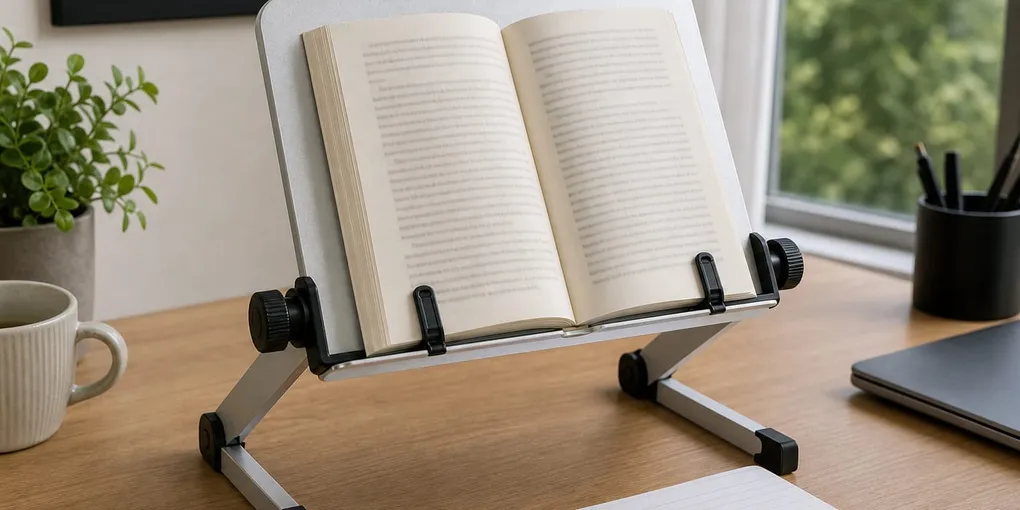
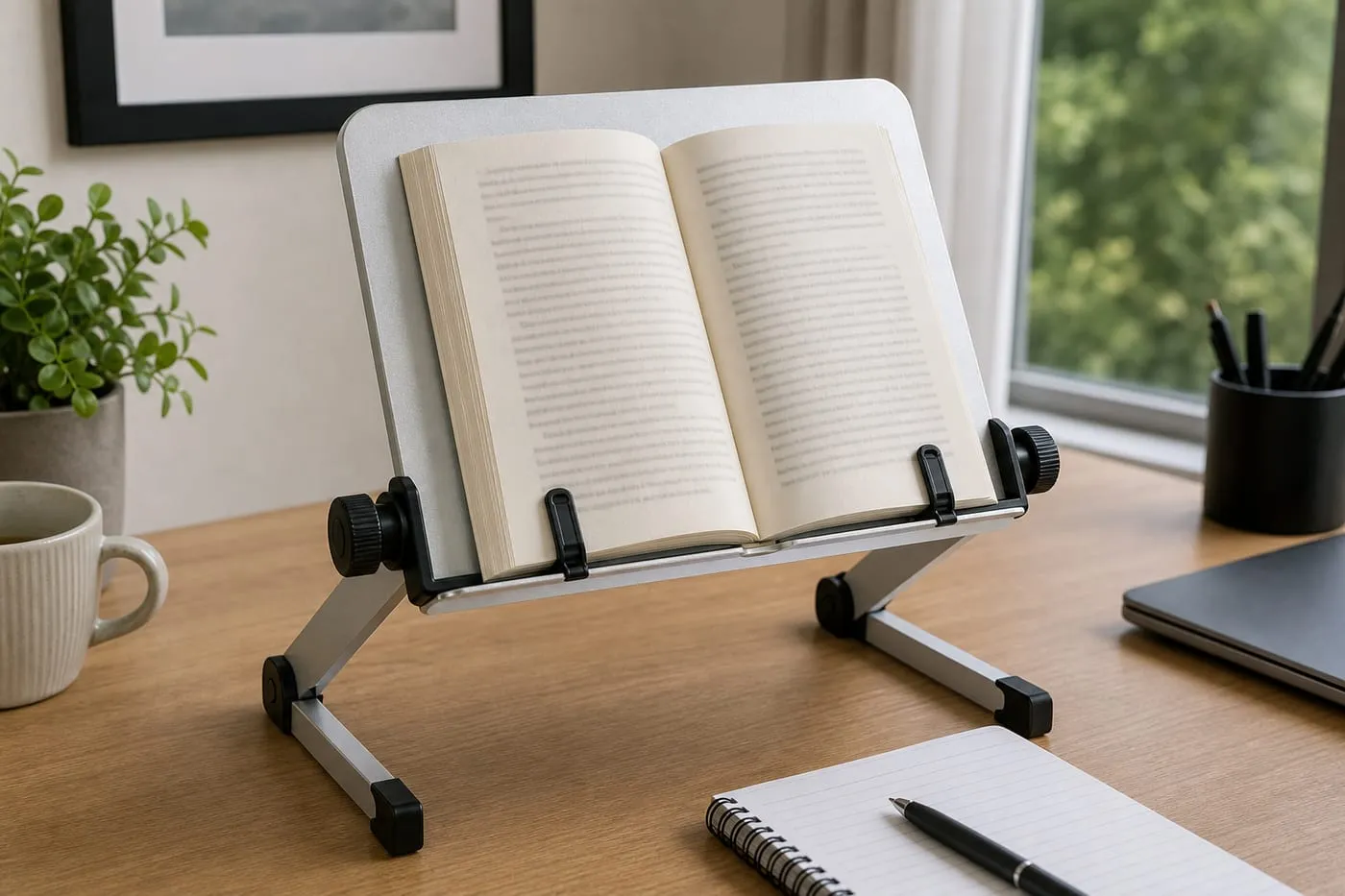
The product here is an adjustable book stand. Based on the product photos, it has a broad silver metal-looking panel, two black front page clips, side angle knobs, and fold-out legs.
Start with the lower ledge
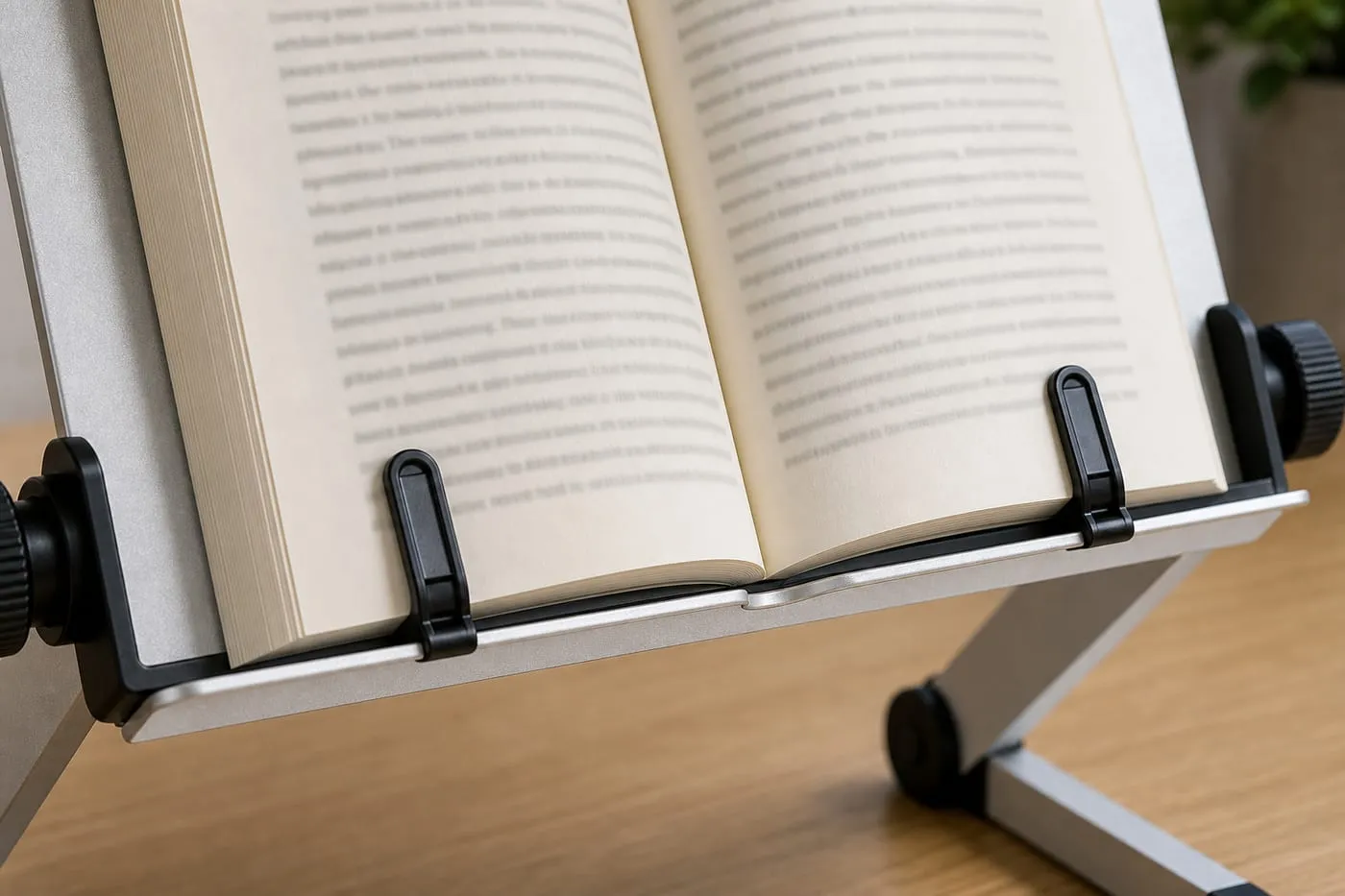
The broad back panel is easy to notice, but the lower ledge decides what actually sits on the stand. If a book cover or tablet case is too thick, it may not rest cleanly.
Before ordering, compare the stand with the width, thickness, and open span of the book or document you plan to use. A small paperback, printed pages, and a large hardcover are very different cases.
Page clips are useful but not harmless
The two front clips can help keep pages from closing. That is useful for recipes, manuals, sheet music, printed notes, or any page you want to keep open for a while.
The tradeoff is pressure. Thin paper, coated pages, old books, and collectible copies can mark or crease if clipped too firmly. I would treat the clips as a practical feature for ordinary books and documents, not for delicate pages.
Check the side knobs and footprint
This stand uses side knobs to hold the panel angle. If those joints loosen or sit unevenly, the stand may feel less settled.
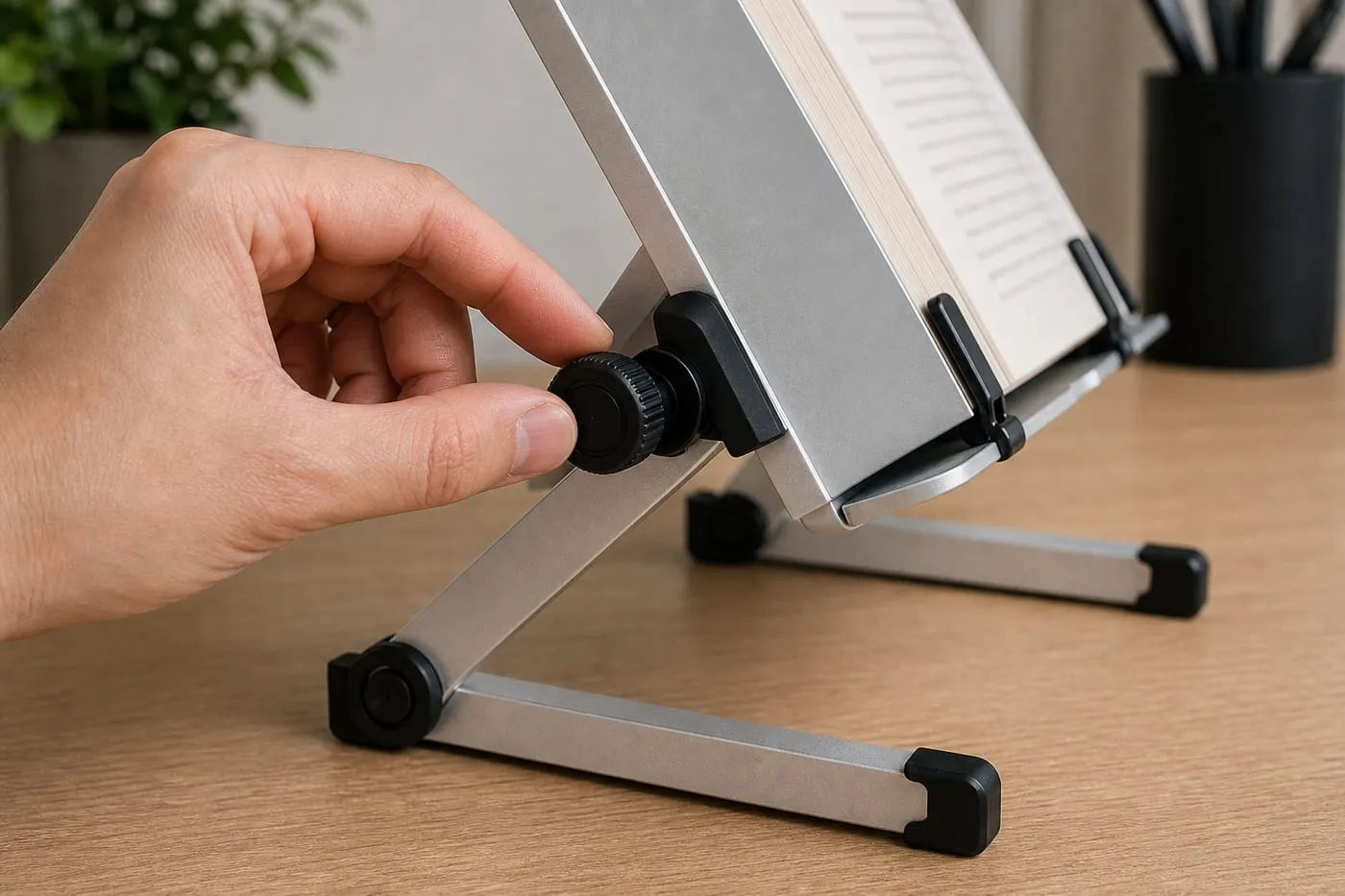
The fold-out legs also take desk depth. The stand may store flatter than a fixed stand, but once opened it still needs room in front and behind. On a small desk or narrow counter, measure the surface before assuming it will fit.
Tablet use should stay conditional
The shape can work with some slim tablets, but it is not a universal tablet stand. Case thickness, device thickness, buttons, speakers, and charging port location all matter.
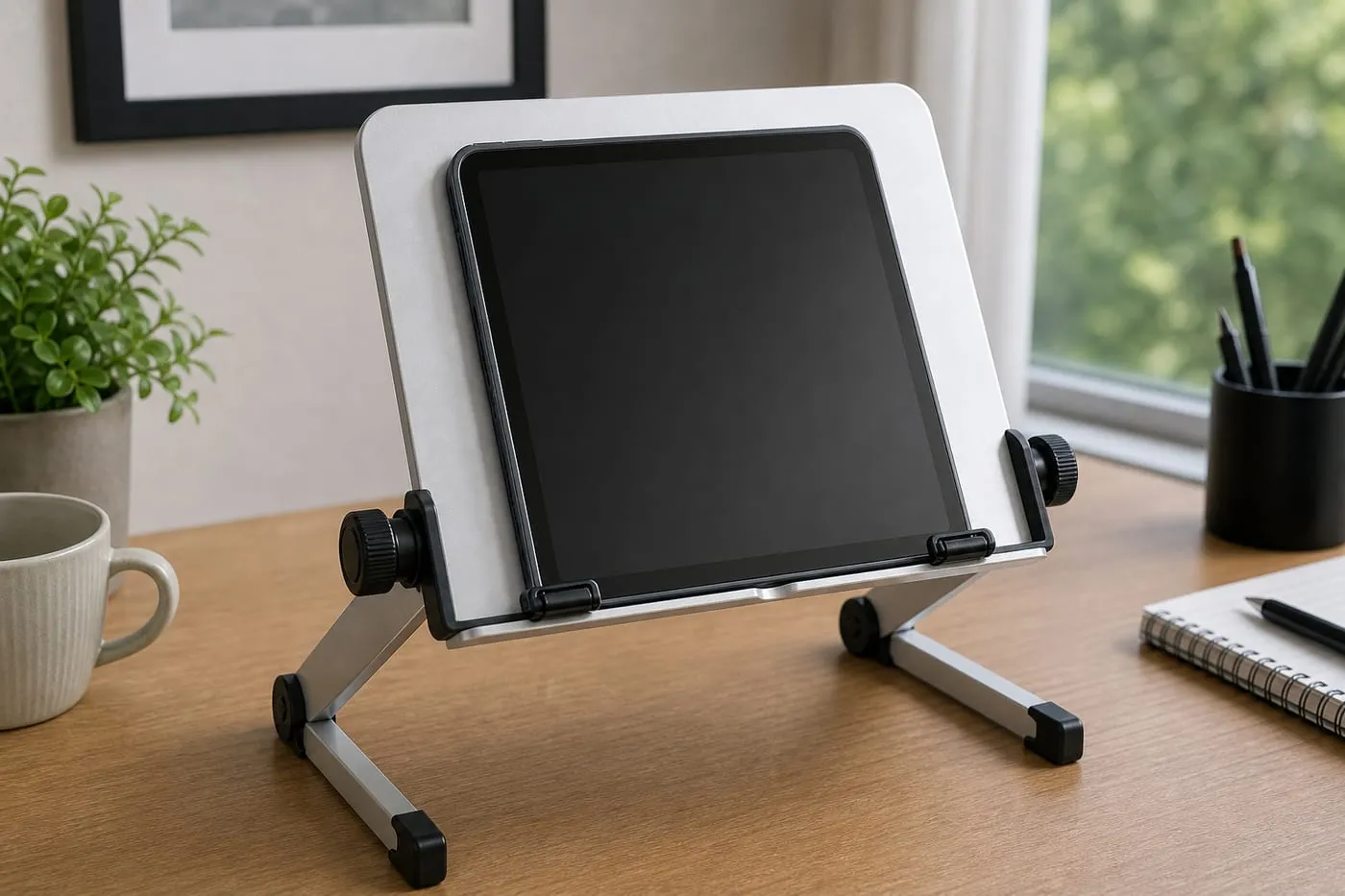
If you want to place a tablet on it, check the lower ledge first. If a cable will be attached, check whether the port sits above the ledge or gets blocked.
Kitchen use needs distance from mess
For recipe pages or a cookbook, this kind of stand can be useful on a kitchen counter. Placement matters more than the photo.
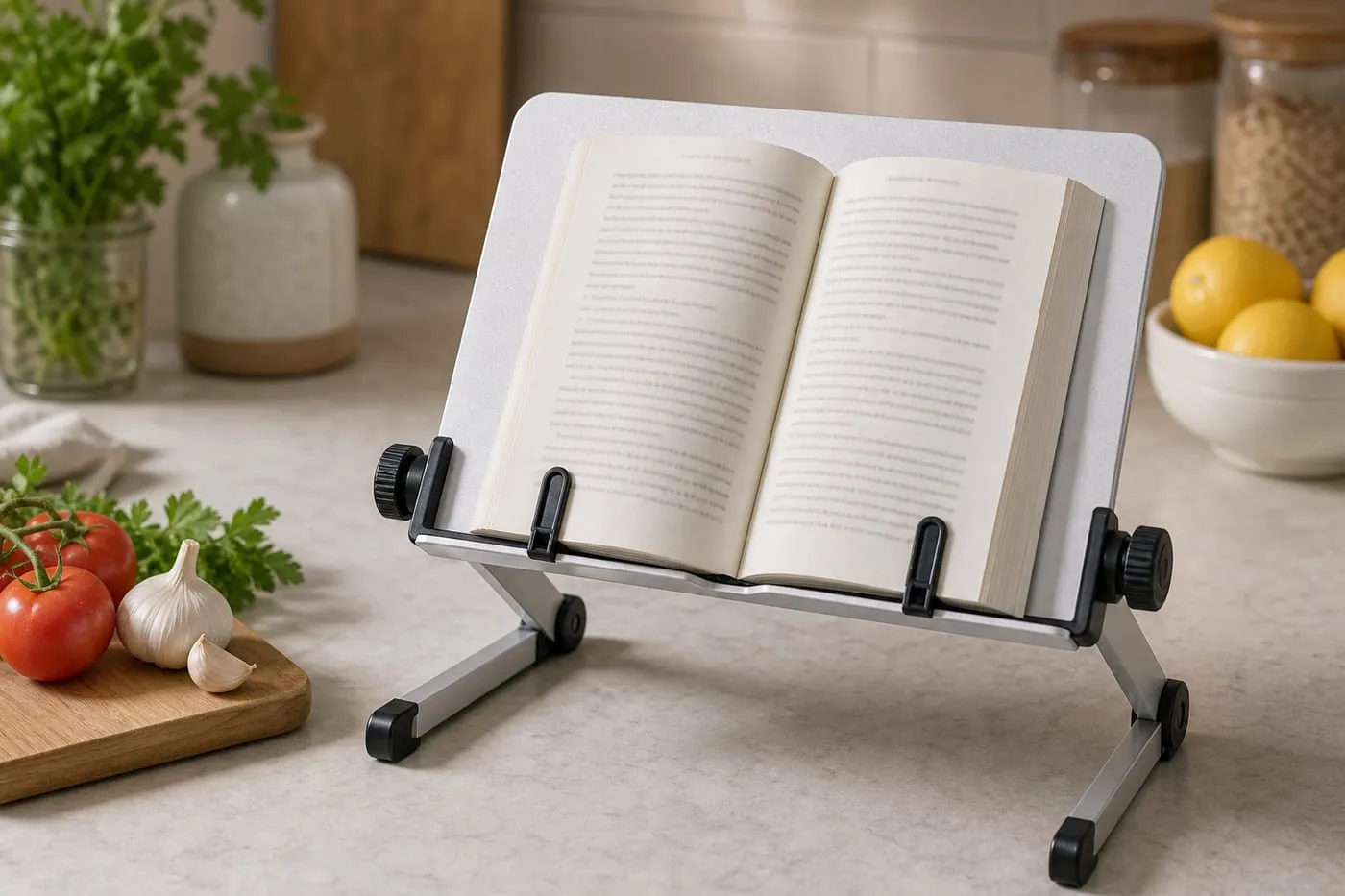
Keep it away from water, oil splatter, heat, burners, and steam. It is a book and document stand, not a kitchen tool. Leave room to turn pages and keep it out of the path of bowls, handles, and cutting boards.
Storage is better, but not flat
The folding structure is useful if the stand will not stay on the desk all day. It can tuck beside notebooks or files more easily than a fixed stand.
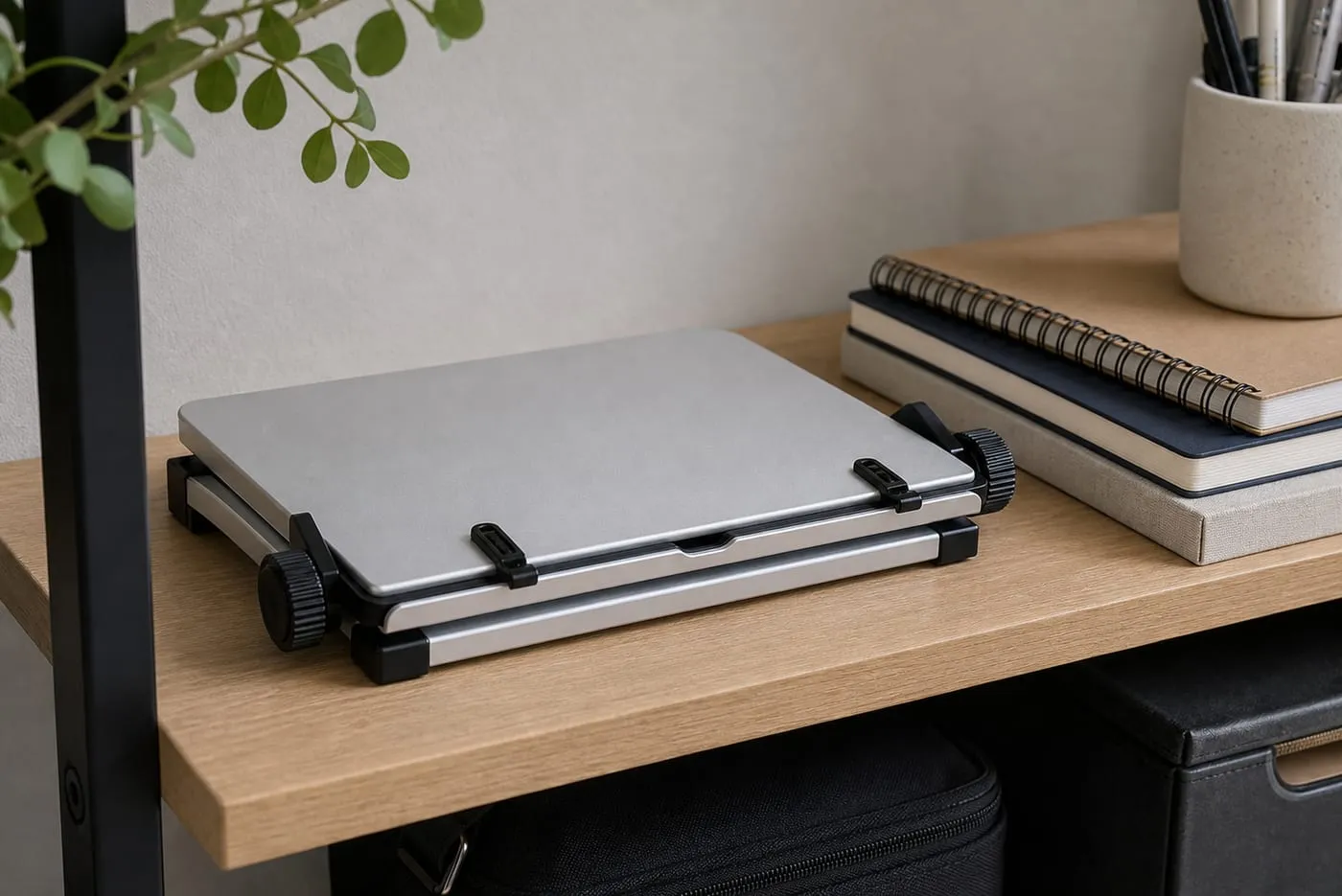
Still, the knobs, ledge, clips, and feet remain. If you plan to store it in a drawer, check the folded thickness rather than assuming it disappears.
Verdict
The adjustable book stand is worth checking when you want a fixed place for a book, document, or recipe page on a desk or counter. The broad panel, page clips, angle knobs, and fold-out feet make it more adjustable than a simple document rest.
The fit details matter most: lower ledge depth, book size, clip pressure, desk footprint, angle joints, and kitchen placement. It makes sense for ordinary books and printed pages, but oversized hardcovers, delicate paper, and thick tablet cases need more caution.