Ali review
Stick-on drawer pulls work only when the surface does
A practical AliExpress review of self-adhesive drawer pull handles, covering smooth surface fit, adhesive pads, residue, weak films and veneers, light-use limits, and why heavy drawers are the wrong match.
Some drawers and cabinet doors are annoying simply because there is nowhere comfortable to grab. For a light door or sliding panel, a small stick-on pull can make the motion less awkward. The important part is keeping the promise small.
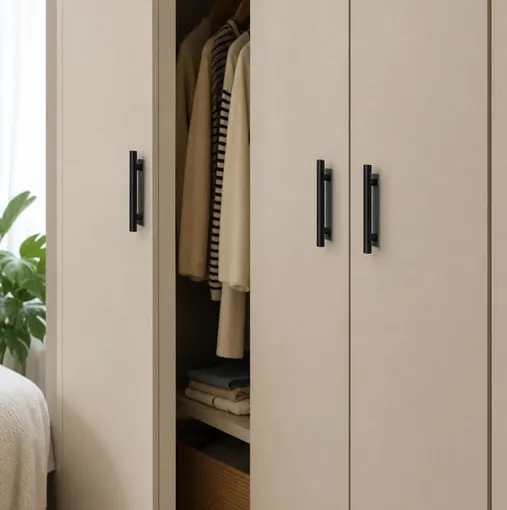
The product here is a self-adhesive auxiliary drawer pull handle. Based on the product photos, it is a slim bar-style pull with adhesive backing, meant to stick onto a flat drawer, cabinet, wardrobe, or sliding-panel front.
It is an auxiliary grip, not hardware repair
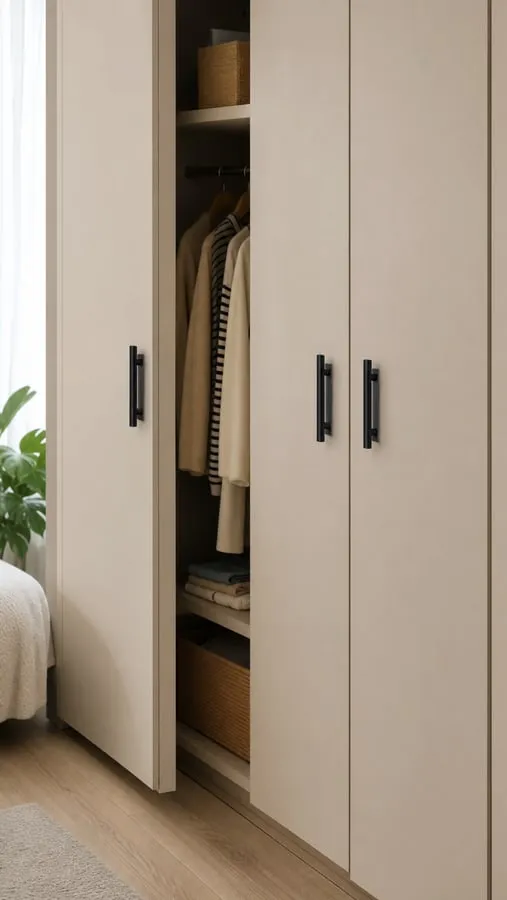
This type of handle makes sense as a small grip point for something that already opens easily. Light vanity drawers, small cabinet doors, wardrobe doors, and smooth sliding panels are the better match.
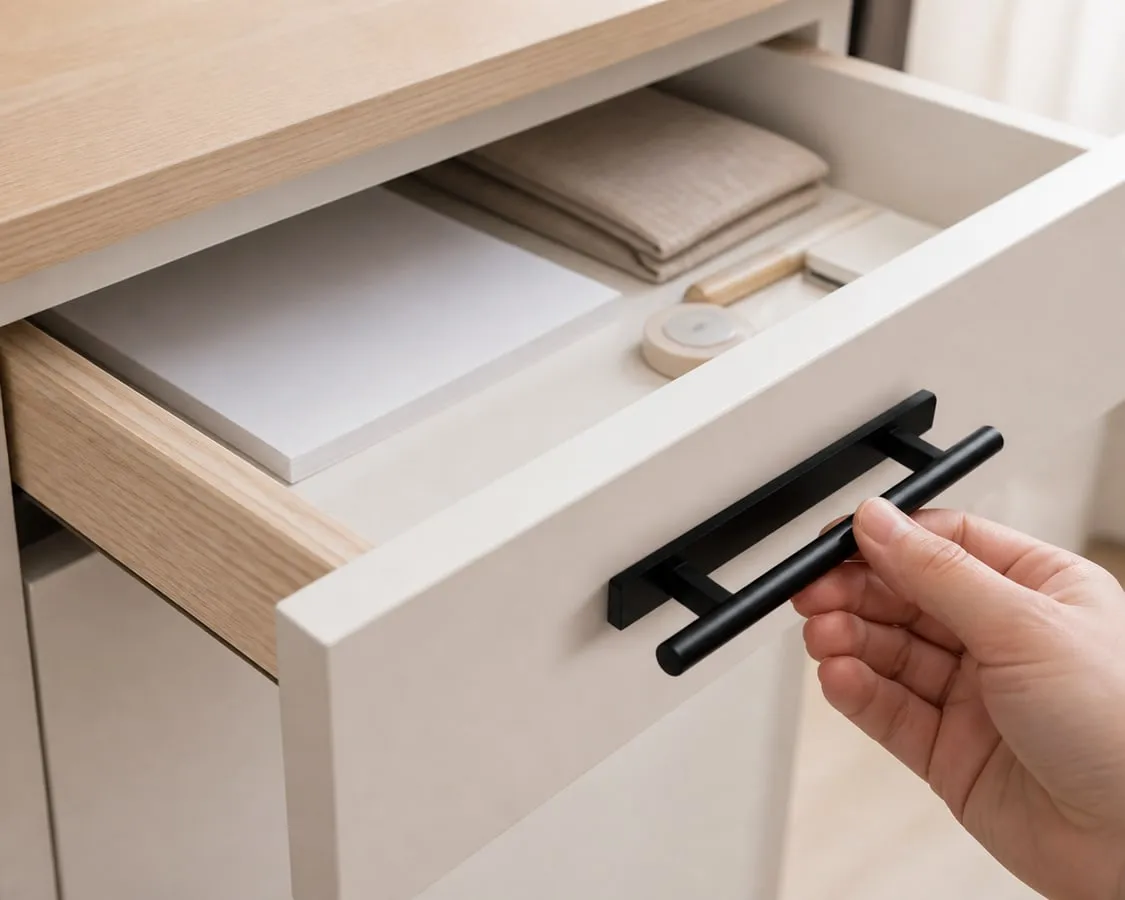
Heavy or stuck drawers are a different problem. If a drawer is packed with tools, cookware, books, or dense storage, the adhesive may take the force before the drawer moves smoothly.
The surface matters most
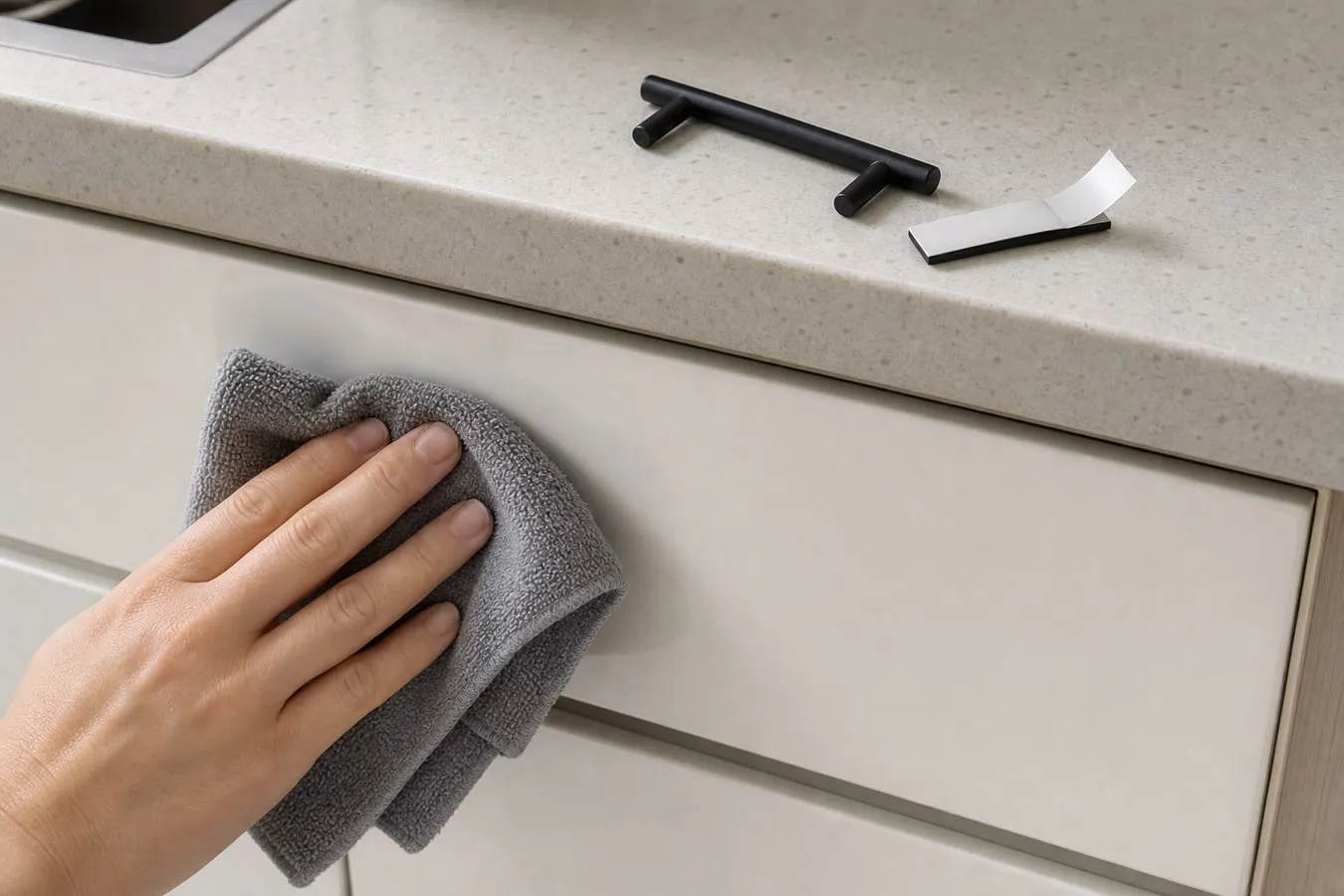
With a stick-on pull, the surface matters more than the handle shape. The safest match is smooth, clean, dry, and flat. Dust, oil, moisture, and old cleaner residue can make the handle feel fine at first and then lift when pulled.
Placement is worth checking before sticking. Make sure your hand reaches the handle naturally, the door does not hit another door, and the pull direction is straight enough.
The whole adhesive pad needs contact
The bar may look long, but the adhesive pad does the work. If part of the pad floats over a groove, curve, or uneven panel, the pull force will not spread evenly.
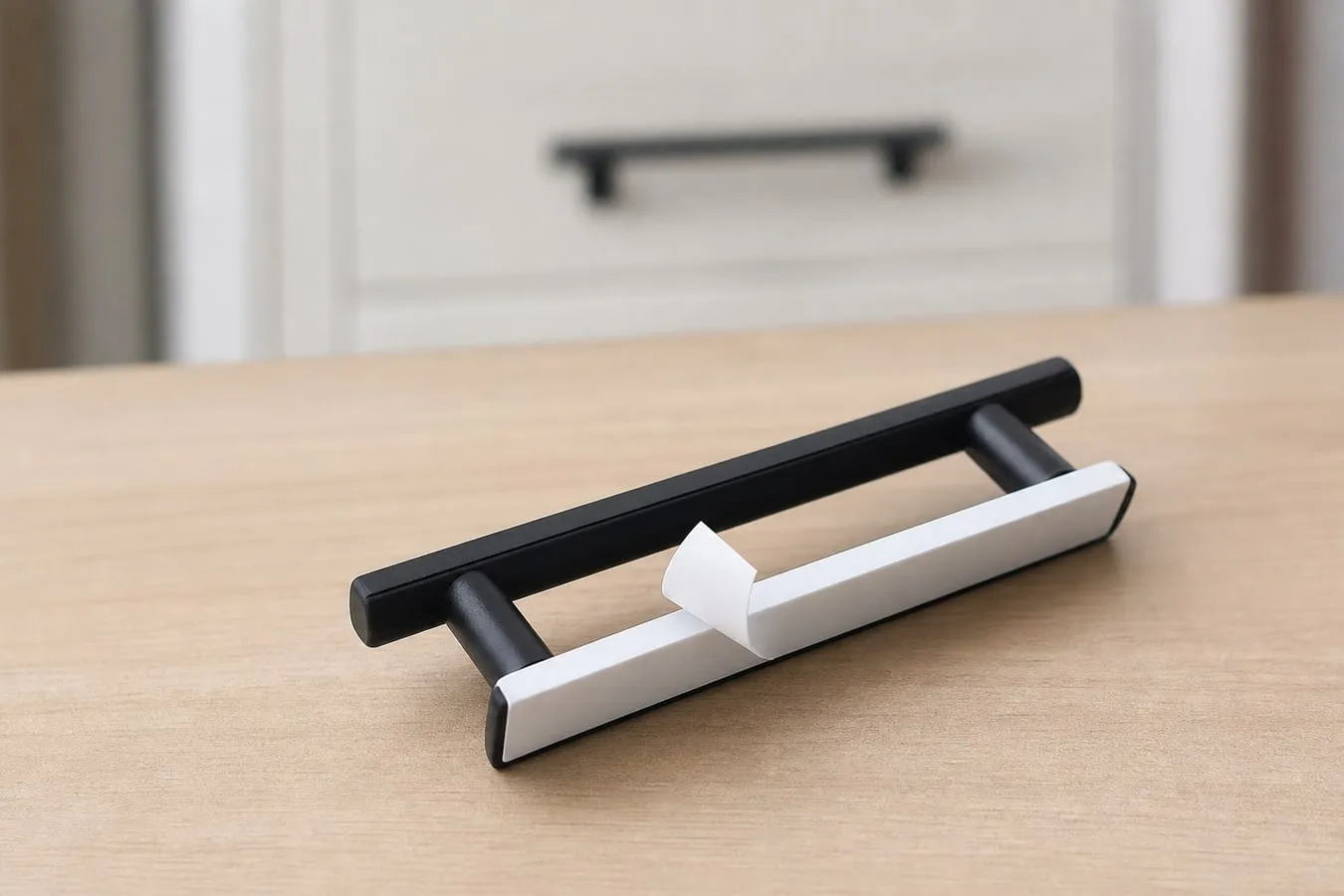
Press the handle evenly onto the surface and avoid hard pulling right away. The first uses should be gentle, especially if the door or panel has any resistance.
Removal can leave marks
The tradeoff with adhesive hardware is removal. It can leave residue, and weak paint, old decorative film, veneer, or soft laminate may lift when the handle comes off.
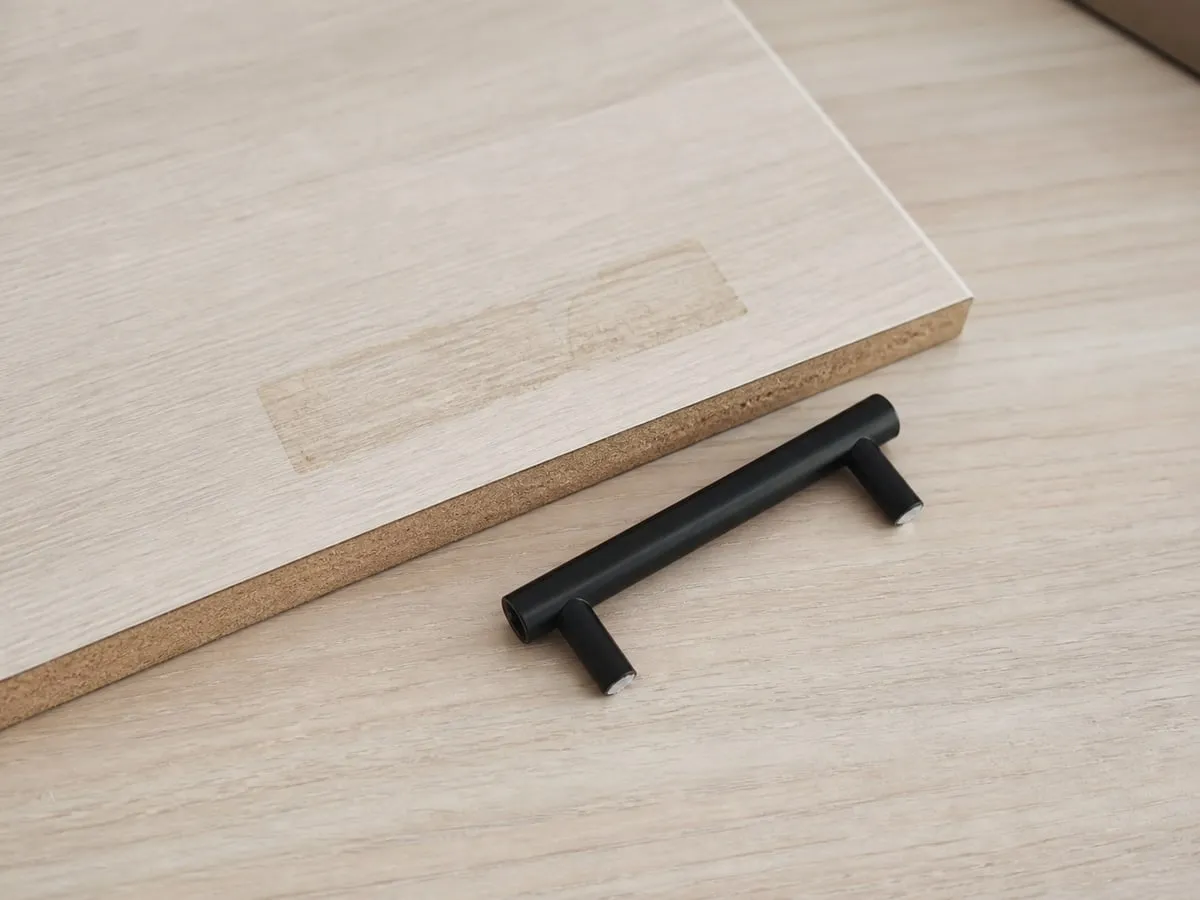
Be conservative on rental furniture, expensive built-ins, and glossy panels where finish damage would be annoying. Heat or cleaning solvents can also affect the finish, so removal is not something to treat casually.
Rough surfaces are the wrong match
Raw wood, textured paint, wallpaper, leather, fabric, dusty panels, and uneven surfaces are poor candidates. Curved or grooved fronts also reduce the contact area.
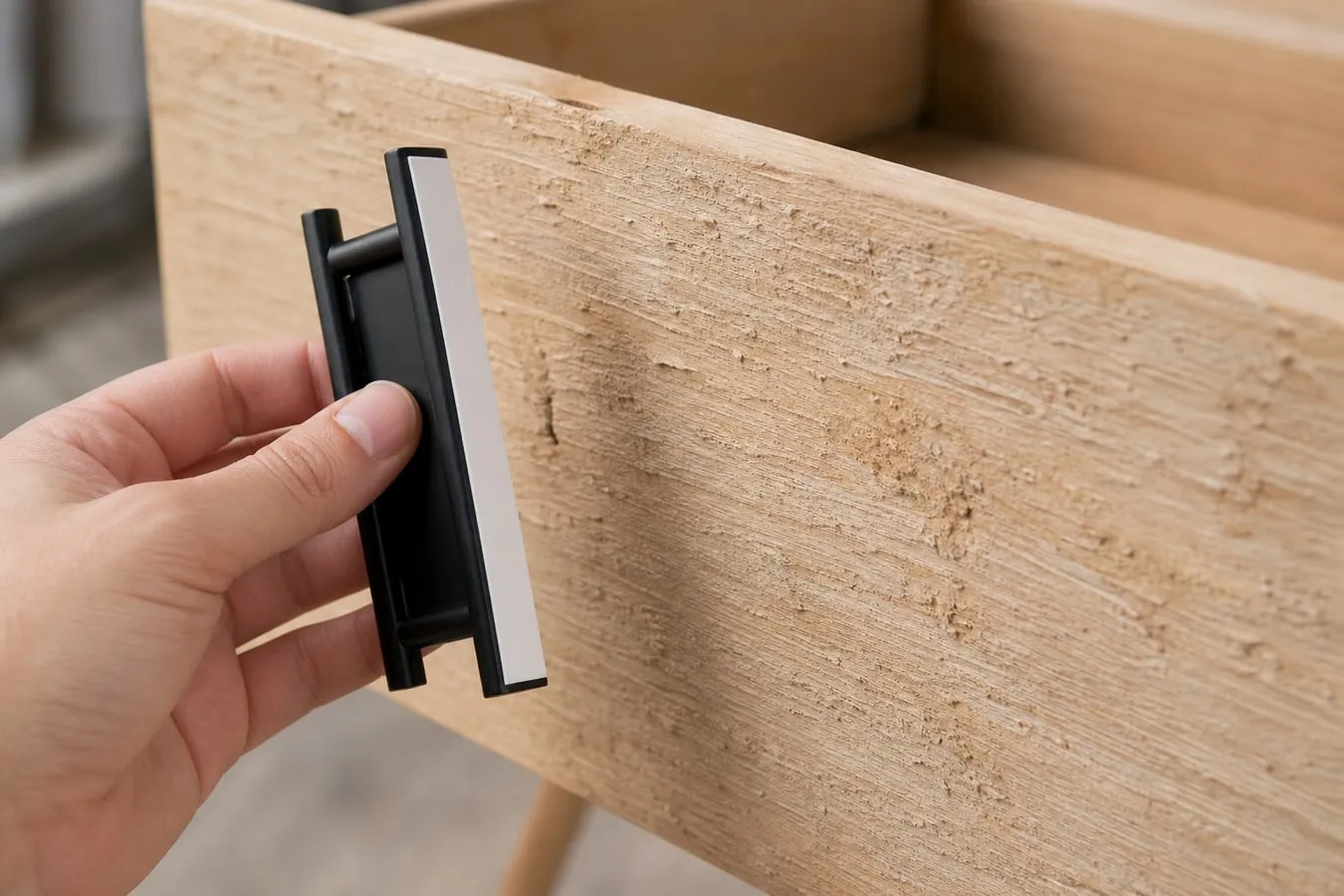
Older kitchen film and veneer fronts deserve the same caution. The handle may stay attached, but repeated pulling can start lifting the surface layer.
Bar pulls and round knobs feel different
Small round adhesive knobs can look less noticeable on tiny doors. A slim bar pull gives the fingers more room and can feel easier on wider drawers or sliding panels.
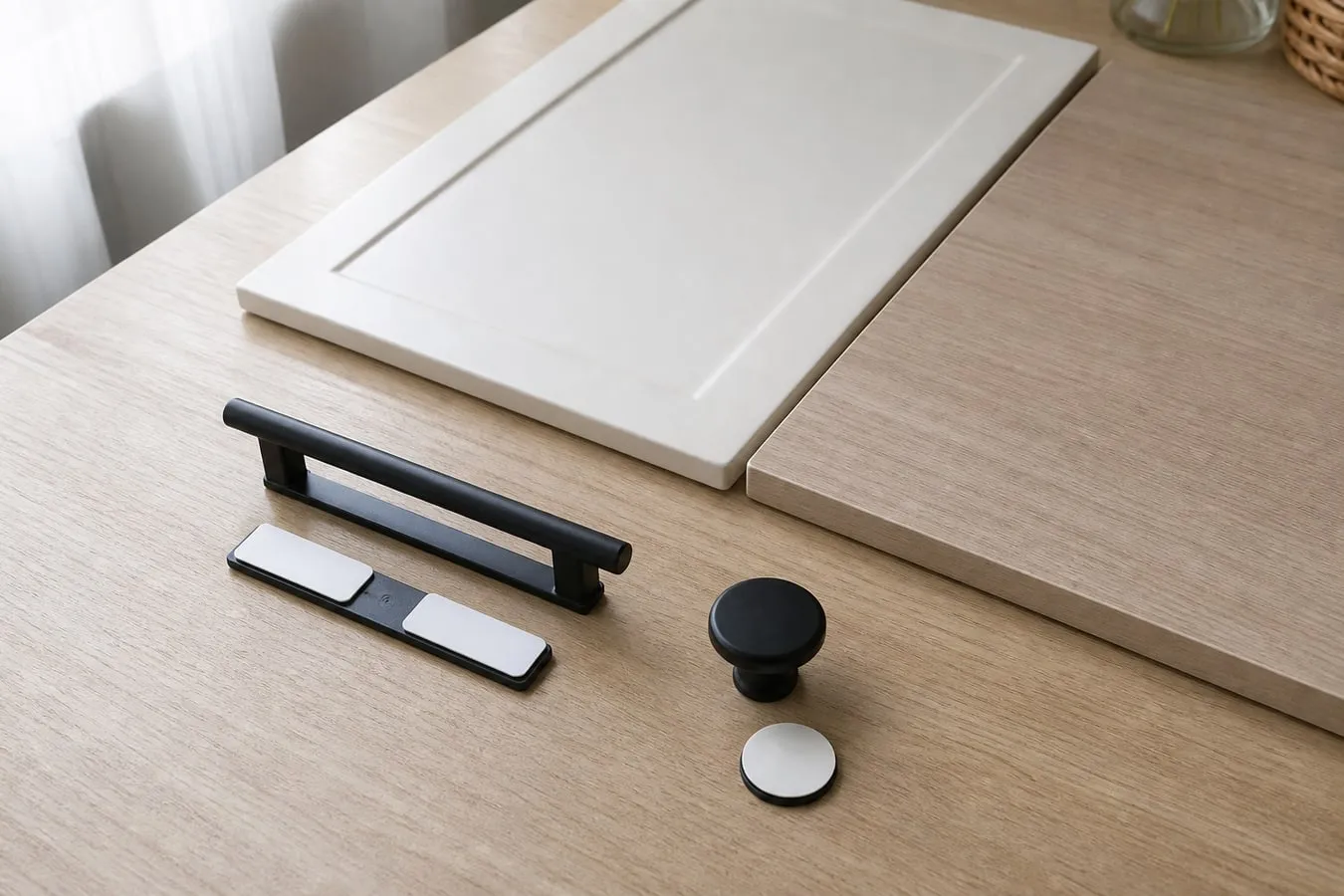
The round shape concentrates force in a smaller area, while the bar shape needs a wider flat surface. Surface fit and pull direction matter more than the style.
Verdict
The self-adhesive auxiliary drawer pull handle is worth a look when a light drawer or door only needs a simple grip point. The key checks are surface smoothness, adhesive contact area, pull force, placement, and removal risk.
It is not the right answer for heavy drawers, stuck rails, weak films, rough surfaces, or places that get pulled hard every day. For those, a screw-mounted handle or a real repair path makes more sense.