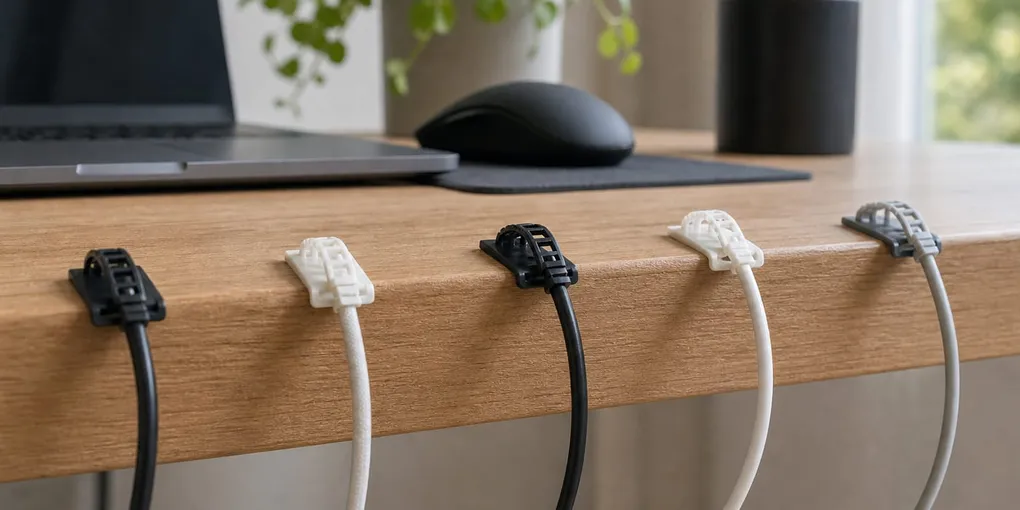
Ali review
Adhesive cable clips help, but only with light cable routing
A practical AliExpress review of small self-adhesive cable tie mount clips for desk cable routing, covering strap shape, surface prep, cable slack, removal marks, and adapter placement.
Charging cables and USB leads are easy to ignore until one falls behind the desk. If the same cable keeps slipping near a monitor, router shelf, or desk leg, a small adhesive clip can be enough to make the setup less annoying.
The product here is a self-adhesive cable clip set. Based on the product photos, it uses small black or white plastic adhesive bases with a ladder-style strap and a buckle-like locking point.
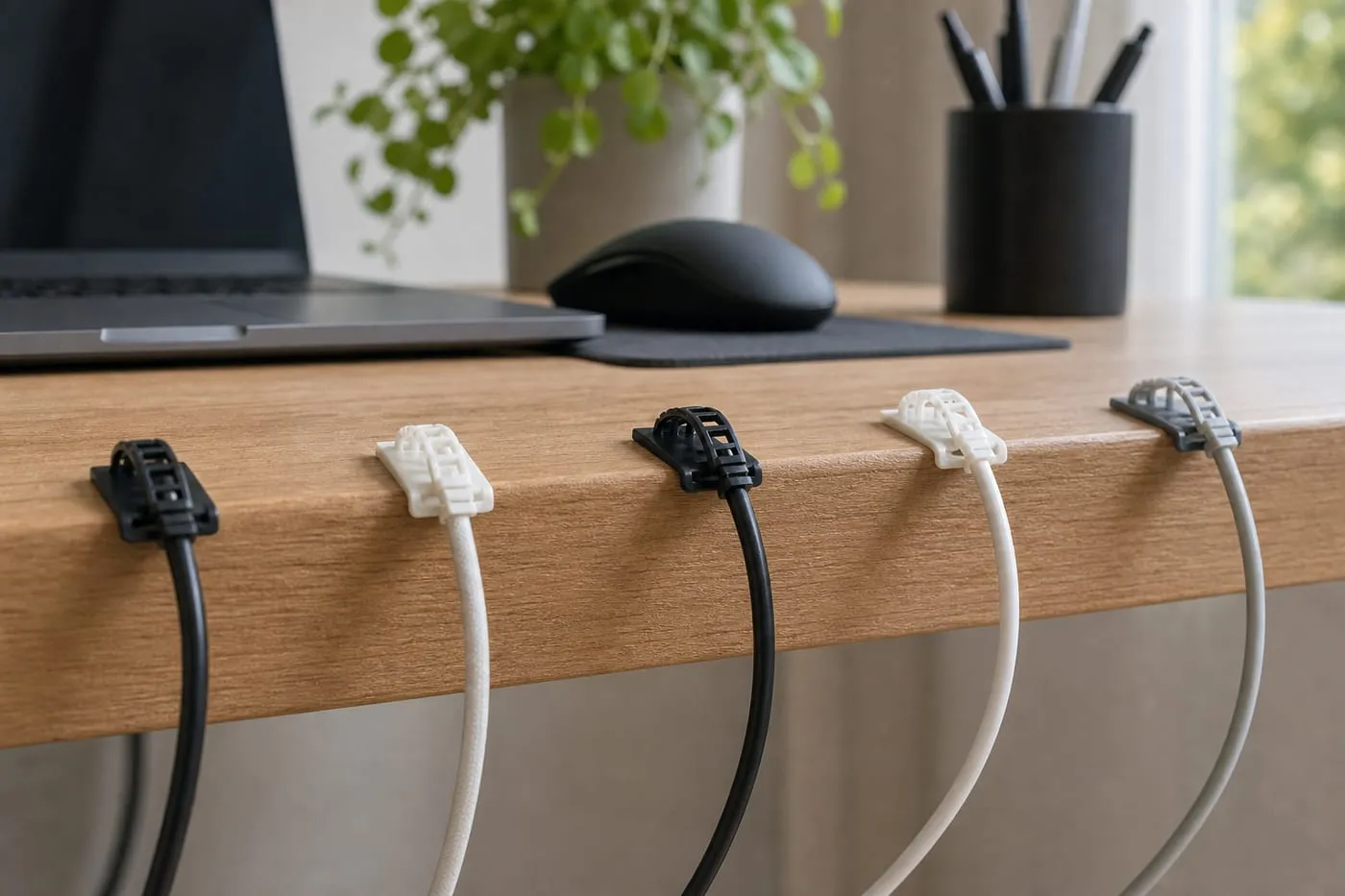
A cable guide, not a support bracket
This type of clip is best treated as a cable guide. It keeps a light cable on a route, but it should not be asked to carry equipment.
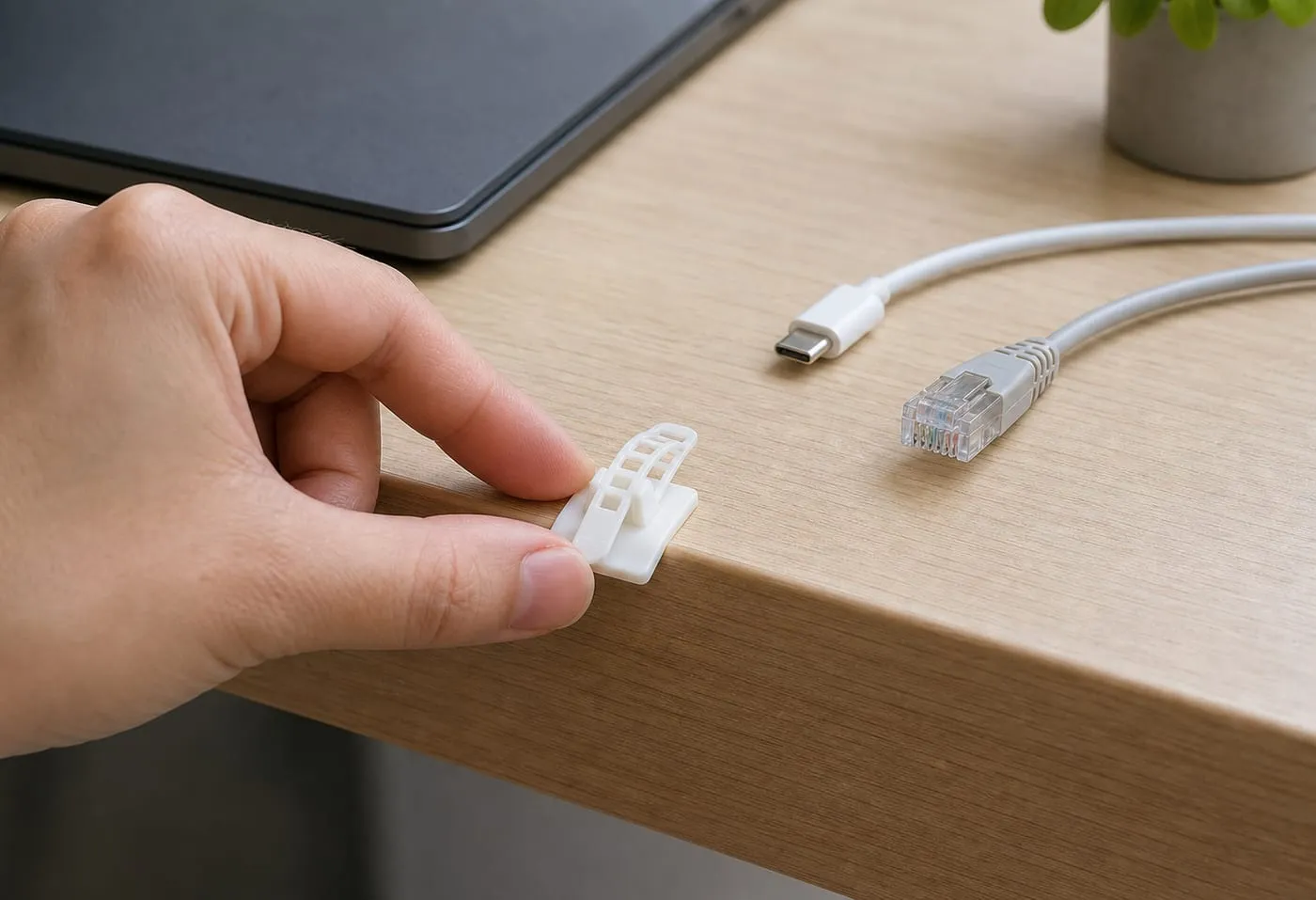
Phone charging cables, USB leads, Ethernet cables, and thin monitor cables fit the idea. Adapter bodies and power strips should sit on the floor, a shelf, or a cable tray, while the clips guide only the cable sections that leave them.
The surface matters more than the clip count
Adhesive clips work best on smooth, clean, dry surfaces such as the back of a desk, a coated shelf side, plastic, or metal. Dusty walls, wallpaper, rough paint, unfinished wood, oily spots, and damp areas are much less friendly.
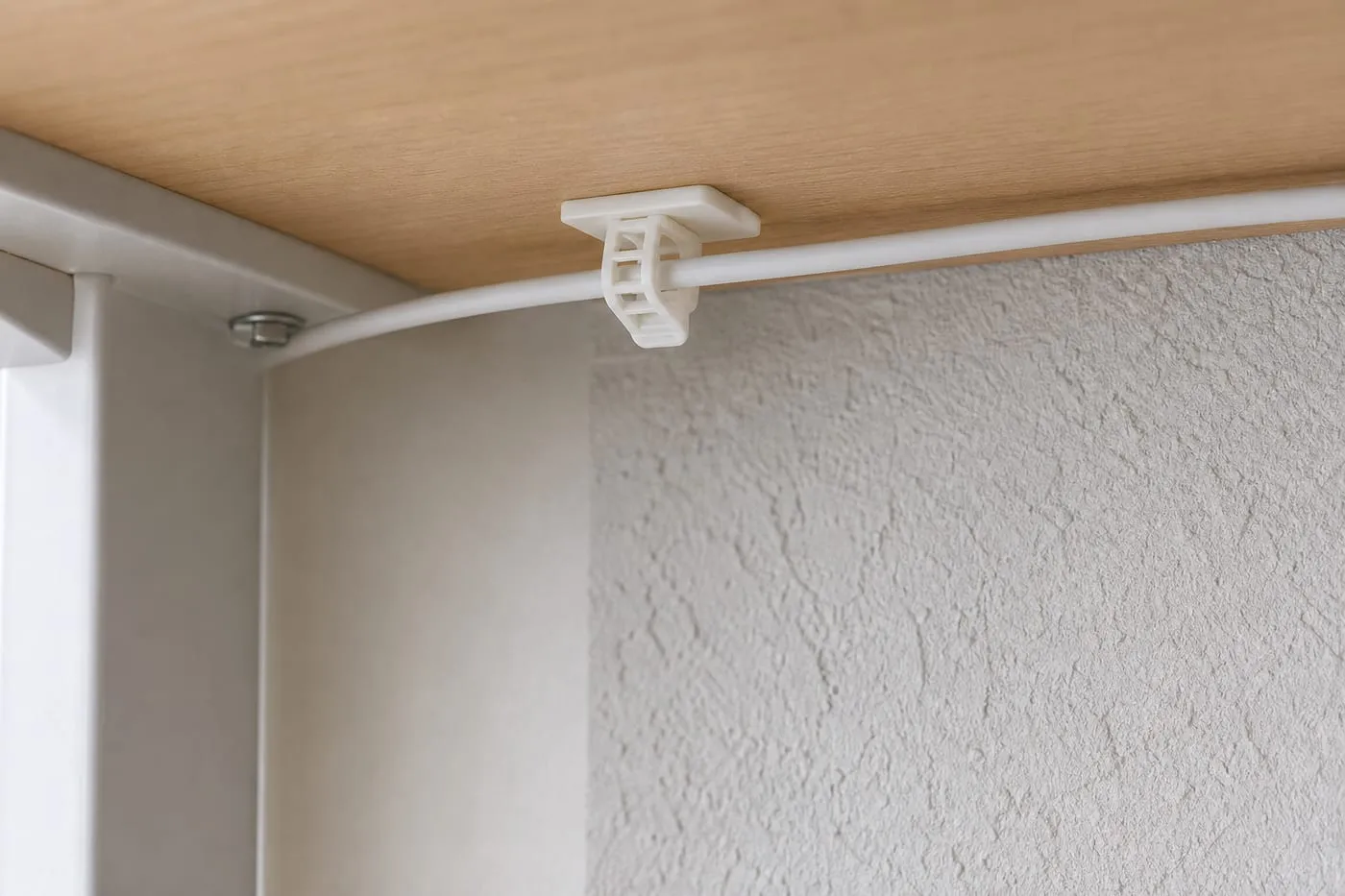
Before attaching one, wipe the surface and let it dry. It also helps to avoid pulling on the cable immediately after placing the clip, because the adhesive needs time to settle.
Leave slack instead of tension
A few clips along the back of a desk can reduce cables hanging toward the floor. The important part is to leave the cable relaxed.
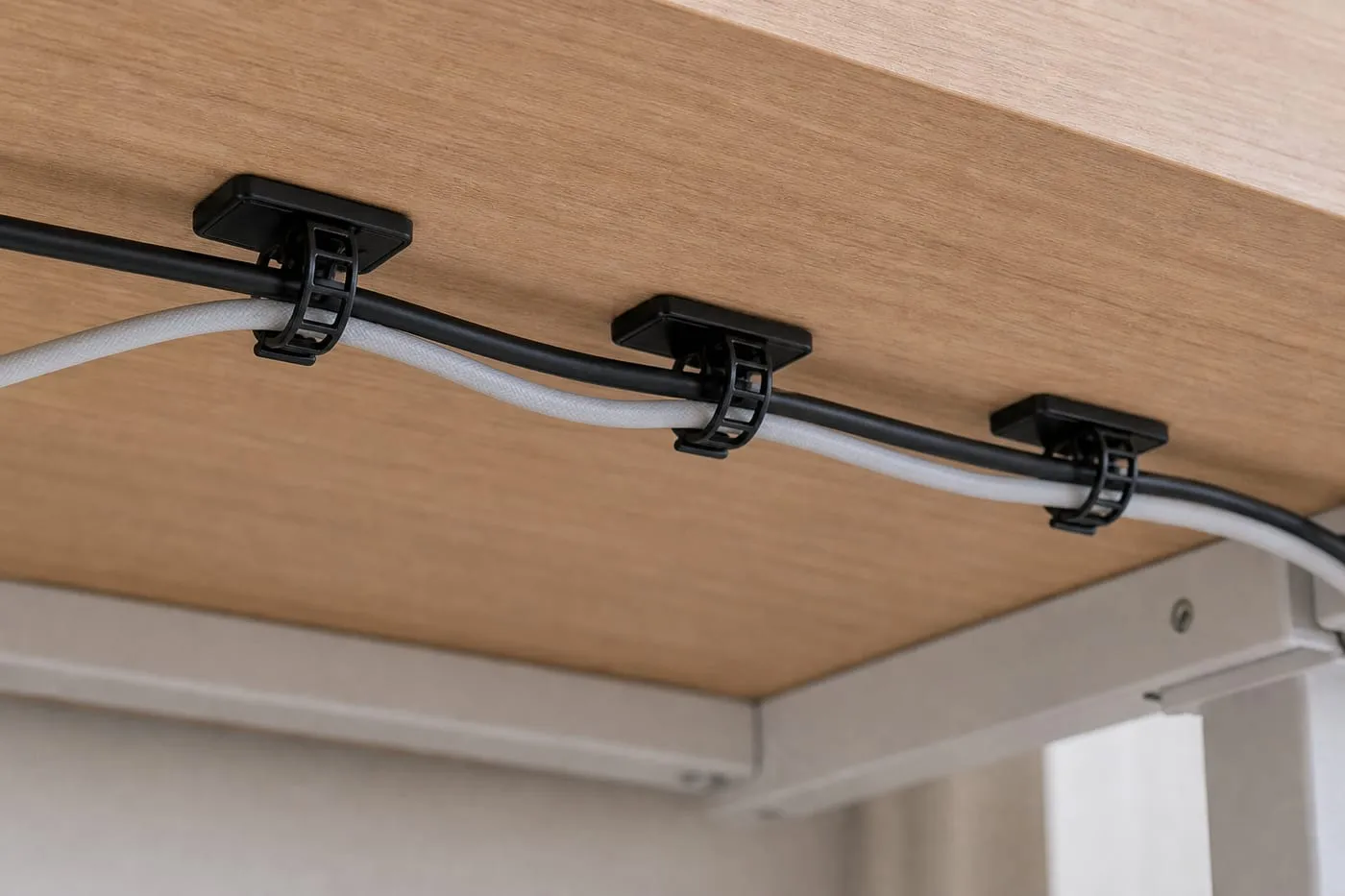
If a cable is pulled tight, the adhesive is fighting the cable all day. Sharp bends are also a poor idea for power, display, and data cables. The clip should define a gentle path, not pinch the cable into place.
Keep power gear supported separately
It is tempting to solve every cable problem with one small clip, but adapter bodies and power strips need their own support. They change the cable direction and add steady pull to the adhesive.
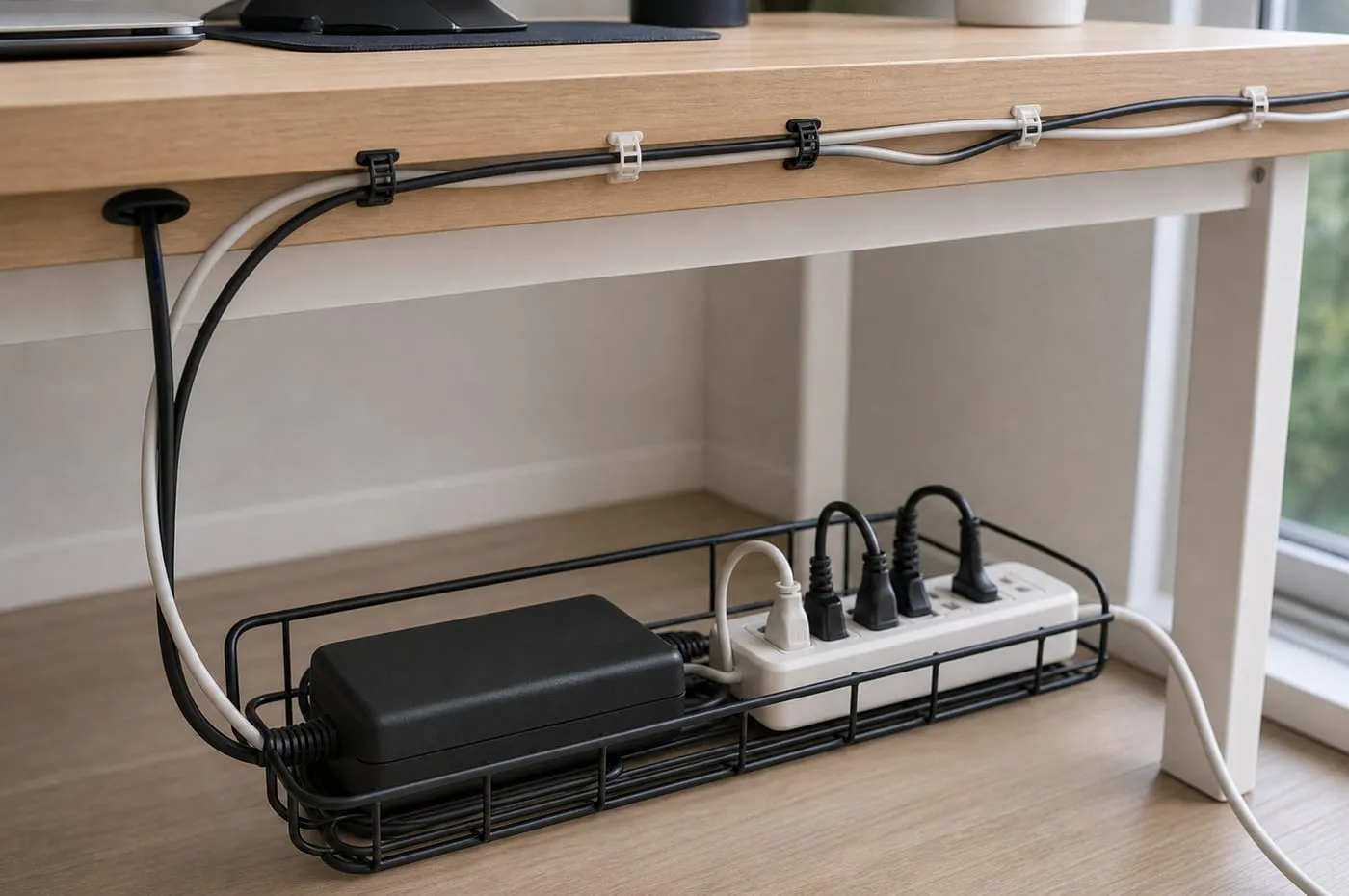
Use a tray, shelf, or floor placement for the equipment itself. The adhesive clips are a better match for the light cable run that continues from that equipment.
The strap shape is the main difference
Compared with a simple U-shaped cord clip, this product is more like a small cable tie mount. The base sticks to the surface, and the ladder-style strap wraps over the cable through a small buckle area.
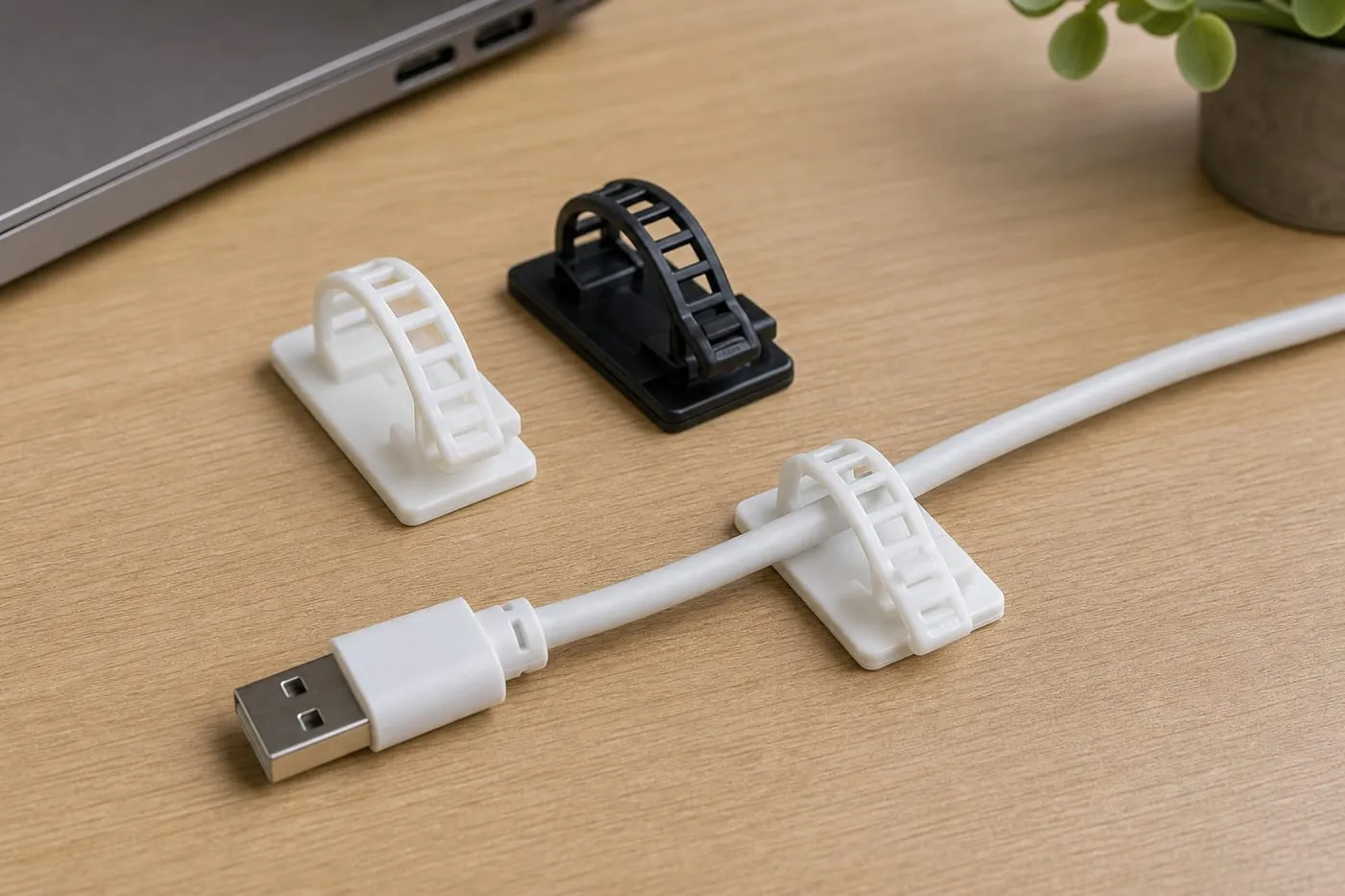
That gives a little adjustment room, but the selected option still matters. Check the color, strap length, and pack quantity before ordering. A hidden desk back is forgiving; a visible cabinet side makes the clip color more noticeable.
Removal can leave marks
Adhesive products are convenient because they avoid drilling, but removal is the catch. Paint, veneer, wallpaper, and weak coatings can lift or mark when the pad comes off. For rented rooms or visible furniture, test in a hidden spot first.
Heat, humidity, direct sun, and oily surfaces are also poor conditions for adhesive pads. Treat the clip as a small routing helper, not a permanent fixture.
Verdict
The self-adhesive cable clip set is worth considering when light desk cables keep falling behind the furniture or dragging toward the floor. The strap-and-buckle shape makes sense for guiding thin cable runs.
Just keep the limits clear: smooth surface, relaxed cable path, possible removal marks, and separate support for adapter bodies. Used as a light cable guide, it fits. Used as a load-bearing cable system, it does not.